The Ultimate Mesopotamia Unit Study for Homeschoolers: Ancient Cities & Cuneiform
If you have ever tried to teach ancient history to a 6- to 9-year-old, you know how quickly things can go downhill. When you hand an elementary student a thick textbook filled with dates, strange city names, and dry paragraphs about agriculture, their eyes glaze over almost instantly. Kids don’t want to just read about the past—they want to live it! They want to be explorers, builders, scribes, and time travelers.
Ancient Mesopotamia—often called the «cradle of civilization»—is one of the most fascinating eras to study. It is the birthplace of writing, massive cities, and complex laws. But how do you translate these heavy academic concepts into engaging, bite-sized lessons without spending your entire weekend prepping crafts and cutting out flashcards?
Let’s dive into how you can build the ultimate mesopotamia unit study for homeschoolers, transforming your child from a passive reader into an active historical detective—all with zero prep time!
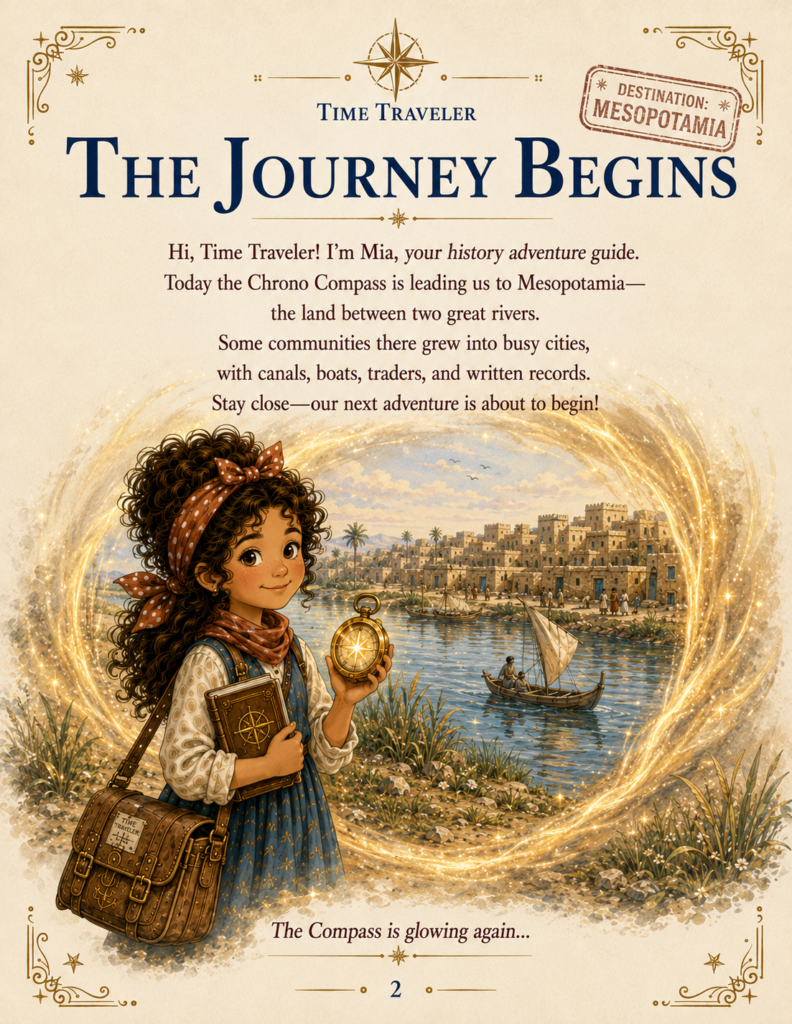
Why Mesopotamia is the Perfect History Adventure
Studying Mesopotamia naturally weaves together geography, STEM, language arts, and critical thinking. When you take your children back to the ancient city of Ur around 2500 BCE, you open the door to incredible hands-on learning opportunities:
- Geography & Earth Science: Understanding how the Tigris and Euphrates rivers created an oasis in a hot, dry land.
- Engineering: Learning how ancient people built massive Ziggurats and complex irrigation canals using simple mud bricks and reeds.
- Economics & Math: Figuring out how to trade surplus grain for precious resources like timber, copper, and lapis lazuli from far away.
- Language Arts: Decoding the mysteries of cuneiform, the wedge-shaped writing pressed into soft clay.
Here are four incredibly engaging ways to bring the «Land Between the Rivers» to life right at your kitchen table.
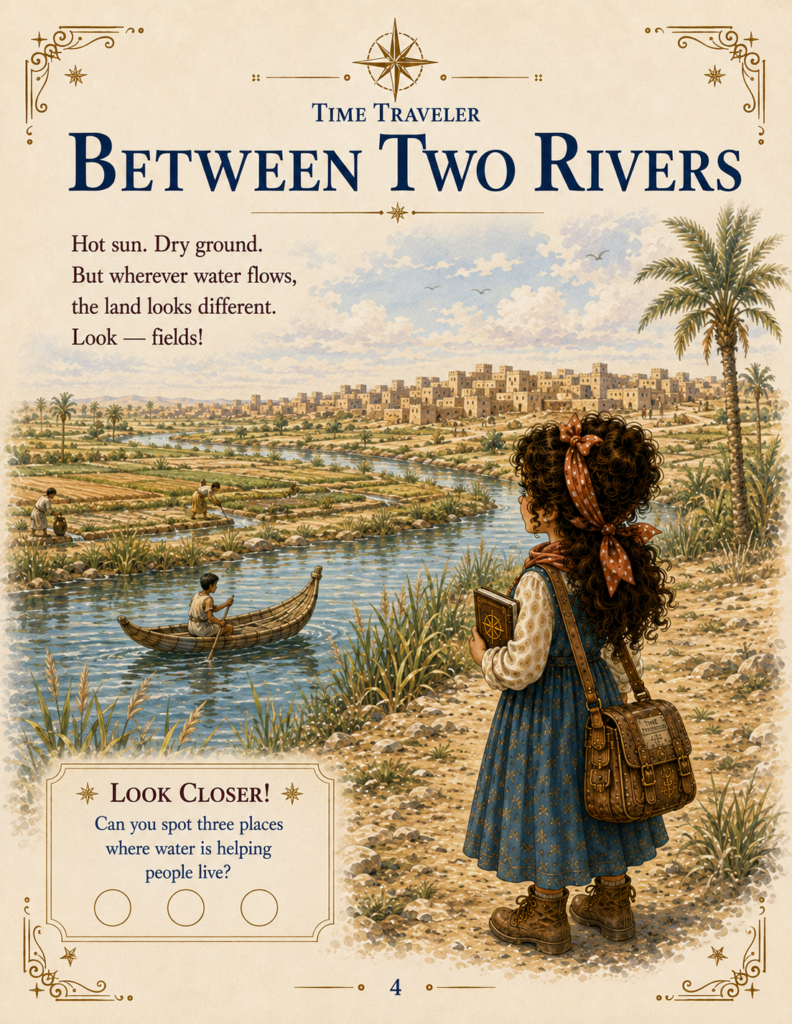
1. Control the Rivers: Irrigation & Engineering
Civilization couldn’t exist without water. Start your unit study by looking at the geography of southern Mesopotamia. Explain to your kids that while the rivers brought precious water, the fields needed it even when they weren’t right beside the riverbanks.
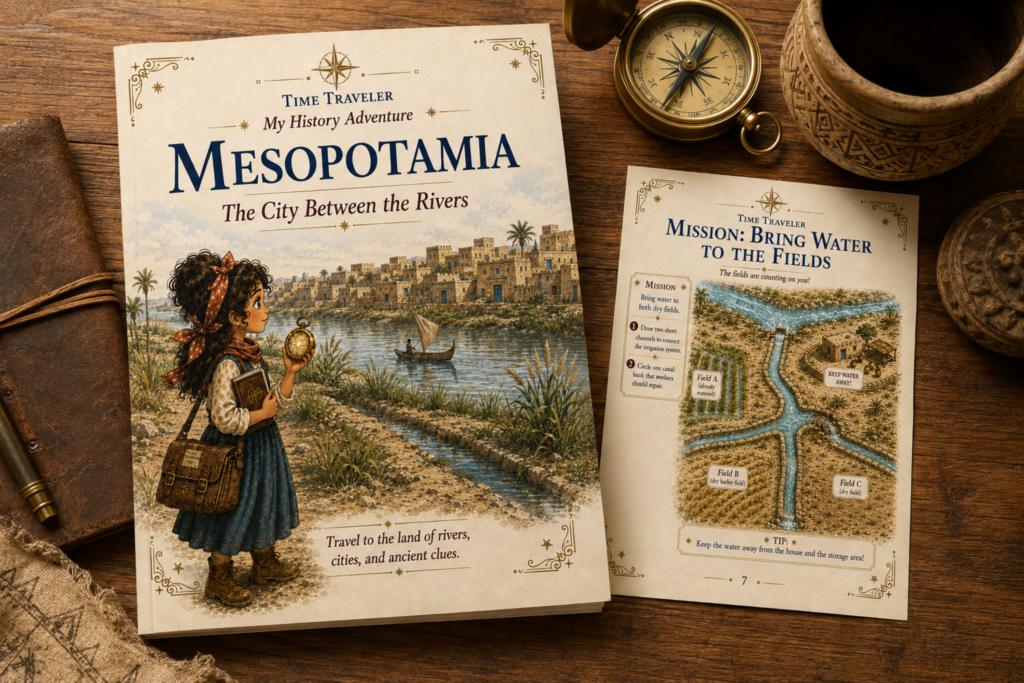
Give your child a mission: they are the city’s chief engineer! Have them draw out irrigation canals to connect dry barley fields to the main river, carefully avoiding houses and storage areas. This teaches them spatial awareness and basic problem-solving. This type of active challenge is the absolute best way to introduce project-based learning in homeschooling into your daily routine.
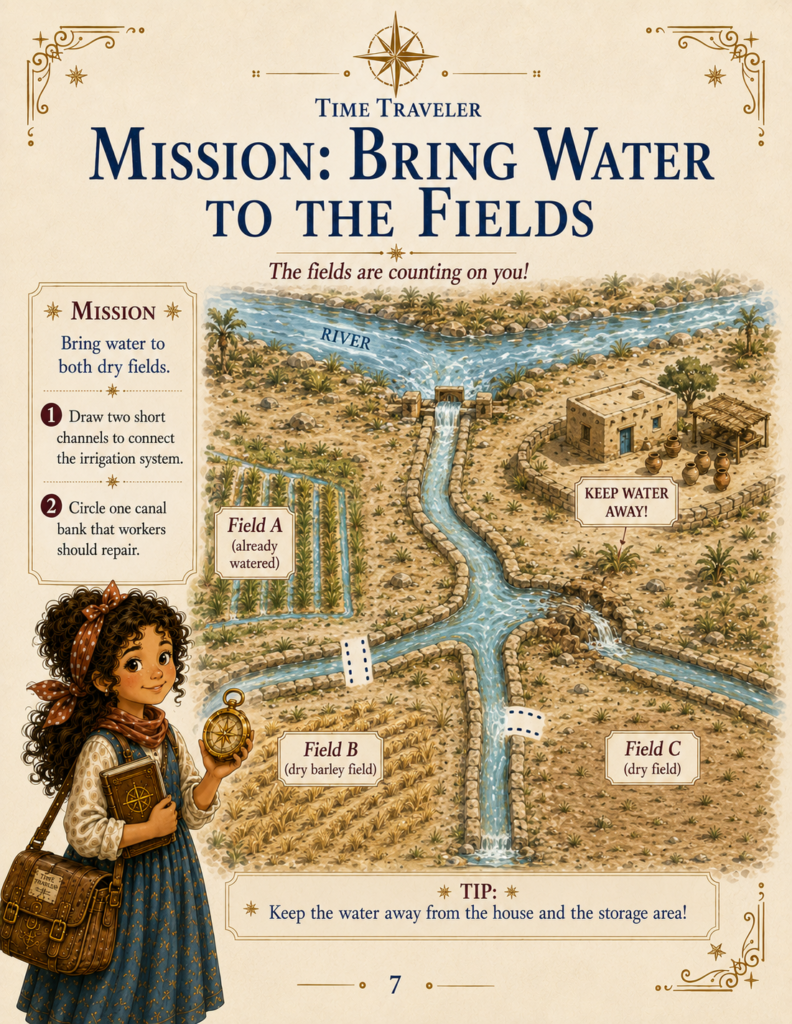
2. Trade and City Building: The Local Economy
Ancient cities like Ur were bustling hubs of movement and exchange, but they didn’t have everything they needed natively. Southern Mesopotamia had plenty of rich soil, mud, and reeds, but it completely lacked large timber, strong building stone, and metals.
Turn this into a logic game! Ask your child to act as a merchant loading a trading boat. They must select the most valuable cargo to bring from far away—like copper ingots and lapis lazuli—while understanding that local mud and clay were used to build their homes and massive Ziggurats.
3. Become an Ancient Scribe: Counting and Cuneiform
How did a busy city keep track of all those grain sacks, sheep, and trade goods? They needed records! This is where you introduce one of the most exciting parts of ancient history: cuneiform writing.
Instead of just telling them about clay tablets, let them become the scribes. Give your child an inventory of goods (like jars and baskets) arriving at the docks, and have them tally the items using ancient-inspired symbols. If you want to add a tactile element to your lesson, grab some playdough or air-dry clay and a popsicle stick, and let them press their own wedge-shaped marks into the «tablets»! These kinds of hands-on crafts make for perfect screen-free weekend activities.
![ancient mesopotamia activities for kids cuneiform worksheet]](https://tinyjoystudio.com/wp-content/uploads/2026/08/ChatGPT-Image-19-авг.-2026-г.-12_43_01-4-792x1024.png)
4. The Code of Hammurabi: Logic and Justice
When thousands of people live and work together, disagreements are bound to happen. What should be done if a farmer doesn’t repair his canal and ruins a neighbor’s field? What if a worker leaves a brick wall unfinished?
Jump forward in time to Babylon around 1750 BCE to introduce King Hammurabi and his famous written laws. Present your kids with simplified «ancient court cases» and ask them: «What would be a fair way to solve this problem?». Discussing responsibility and fair consequences is a brilliant way to build empathy and critical thinking skills in young learners.
The Ultimate «Open-and-Go» History Curriculum
We know that parents are incredibly busy. You want to provide these rich, thought-provoking historical experiences, but you simply don’t have the hours to draw maps, invent logic puzzles, and design reward systems from scratch.
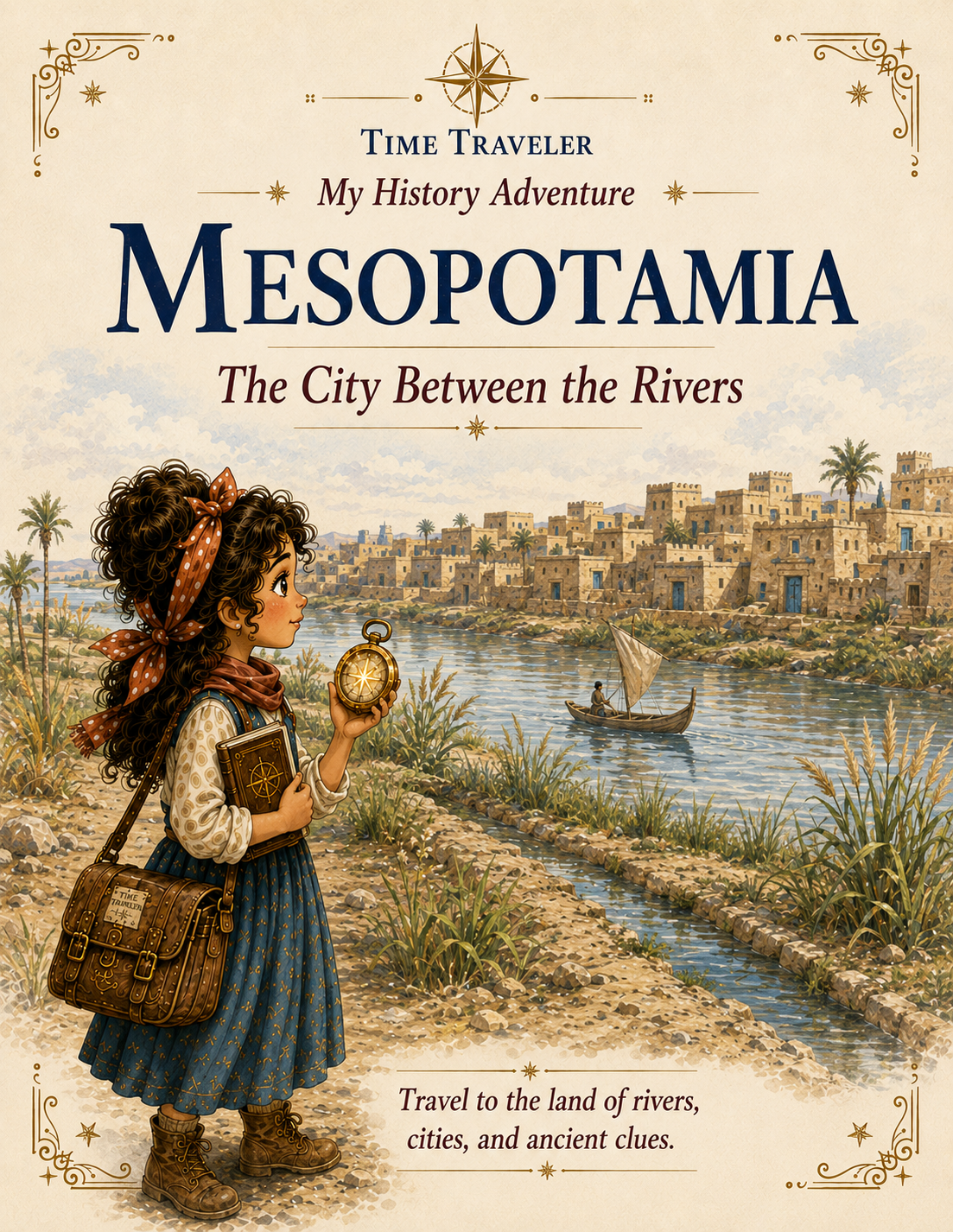
That is exactly why we created the Time Traveler: Mesopotamia interactive workbook at Tiny Joy Studio!
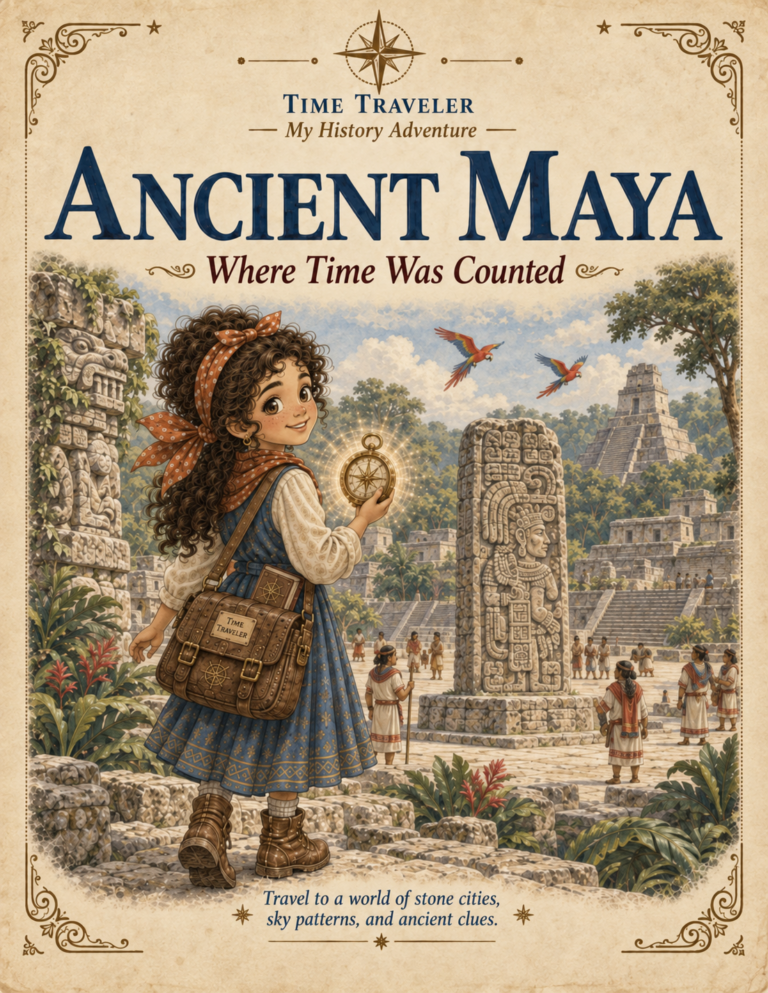
Guided by Mia, your child’s personal history adventure guide, this beautifully illustrated digital book takes the heavy lifting completely off your shoulders. Armed with their glowing Chrono Compass, your child will travel back in time to manage river canals, trade precious lapis lazuli, decode cuneiform tablets, and solve ancient city disputes.
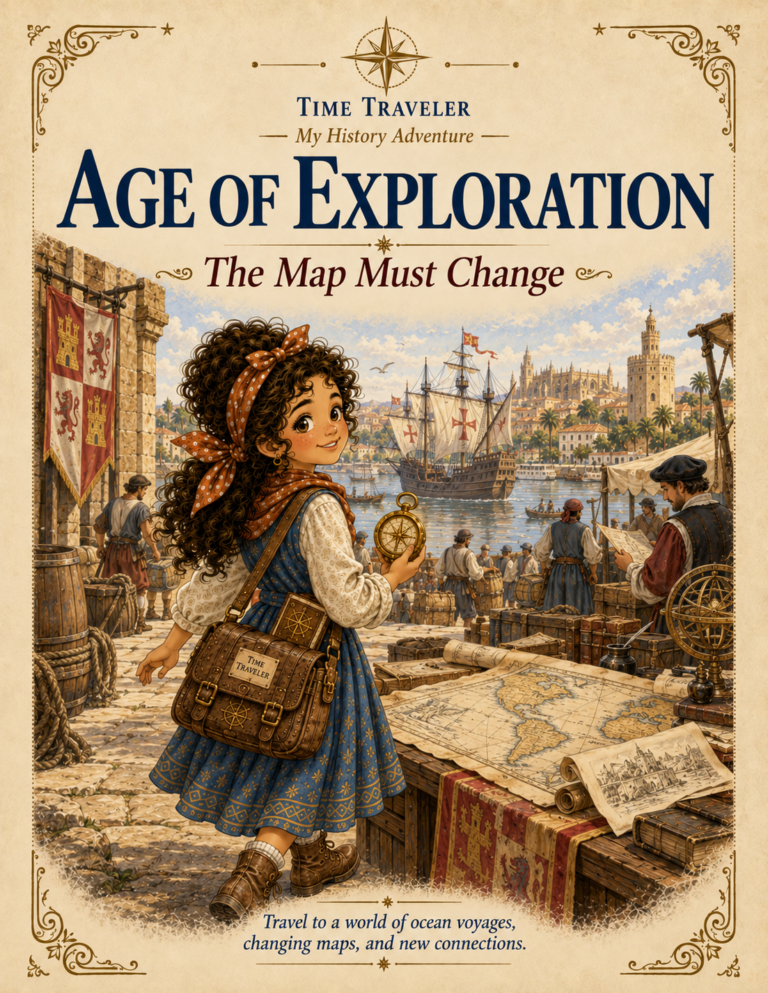
The Magic of Gamification: This isn’t just a workbook—it’s part of a massive historical quest! Once your child successfully completes their adventure in the Land Between the Rivers, they unlock their official Mesopotamia Time Seal. They get to cut out this seal and paste it proudly into their overarching Time Traveler’s Chronicle journal! This gamified progression system is scientifically proven to make learning fun for kids and keeps them begging for the next history lesson.
![time traveler kids history chronicle mesopotamia seal]](https://tinyjoystudio.com/wp-content/uploads/2026/08/7-1024x683.png)
Are you ready to step into the Chrono Compass and explore the ancient world without the stress of lesson planning?