5 Engaging Animal Habitats Activities for Kids: A No-Prep Science Unit
When it comes to elementary science, few topics capture a child’s imagination quite like the animal kingdom. Kids are naturally curious about where animals live, how they build their homes, and what they eat. However, teaching this effectively means going beyond just looking at cute pictures. To truly understand biology and geography, children need to learn how an animal’s environment shapes its survival.
Finding high-quality, comprehensive animal habitats activities for kids that don’t require hours of prep work, crafting supplies, or boring textbooks can be a struggle for busy homeschool parents. If you want to transform your science lessons into a thrilling, open-and-go adventure, you are in the right place!
Meet Your Science Guide: The Habitats Around the World Book
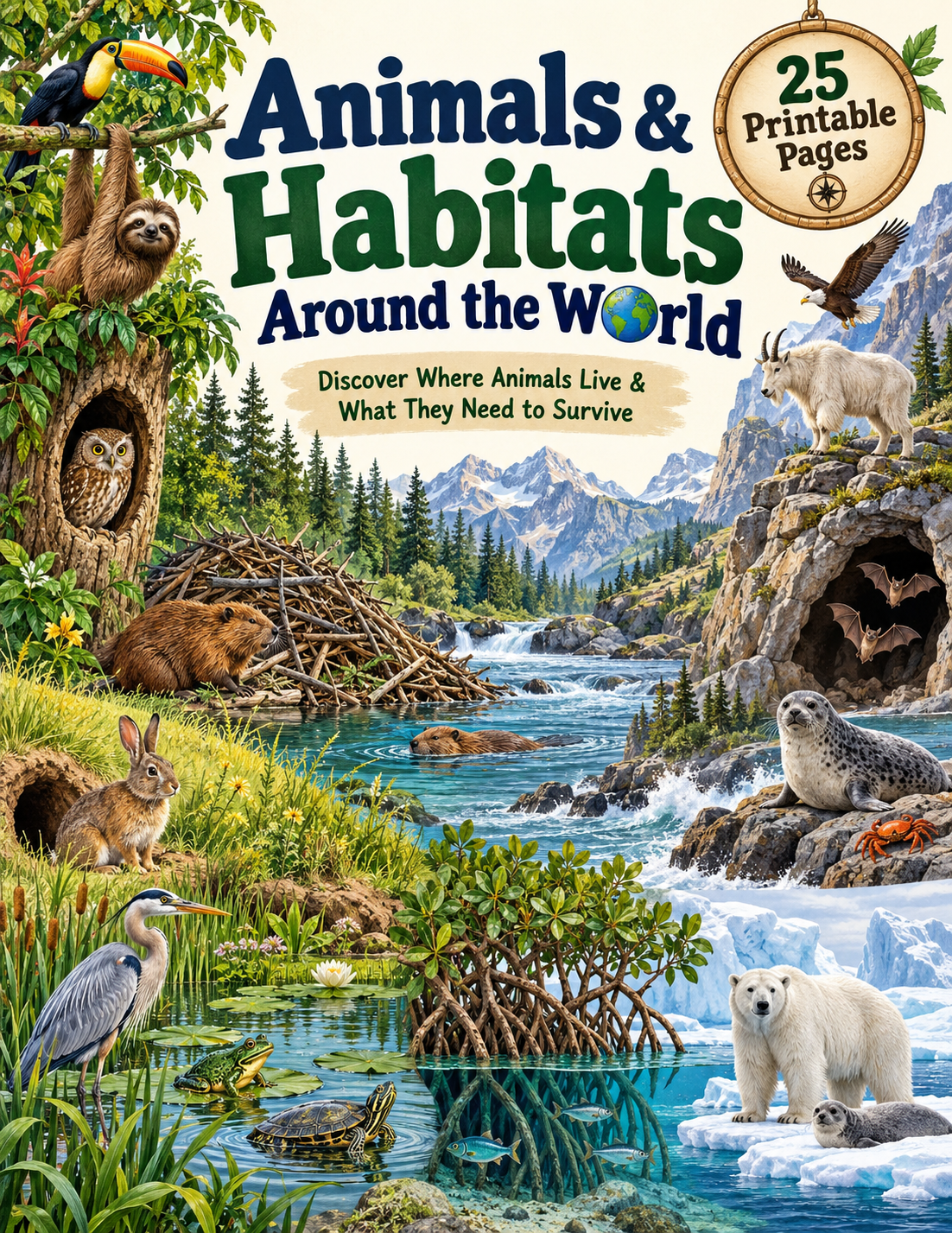
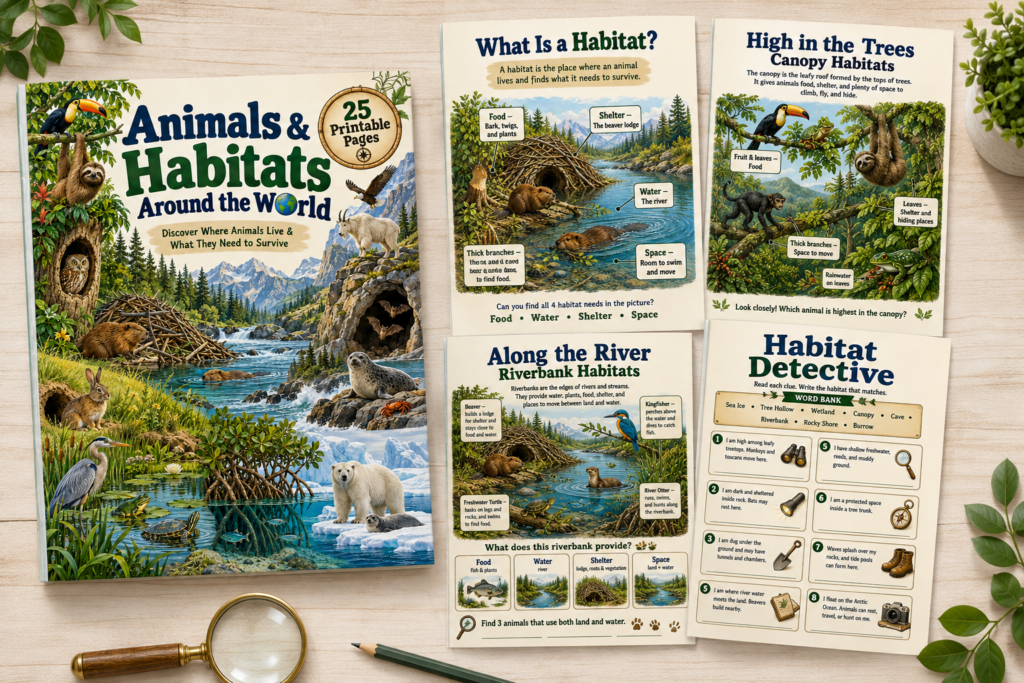
Instead of handing your child a dry worksheet, the Habitats Around the World activity book invites them to become an official «Habitat Explorer». Designed specifically for curious 6- to 9-year-olds, this interactive workbook explores the amazing places animals call home—from the top of the rainforest canopy to the dark depths of underground caves.
Let’s look at five hands-on ways this workbook will transform your homeschool science curriculum!
1. Understand the Four Basic Needs of Survival
Before diving into specific biomes, children must understand the foundation of all habitats.
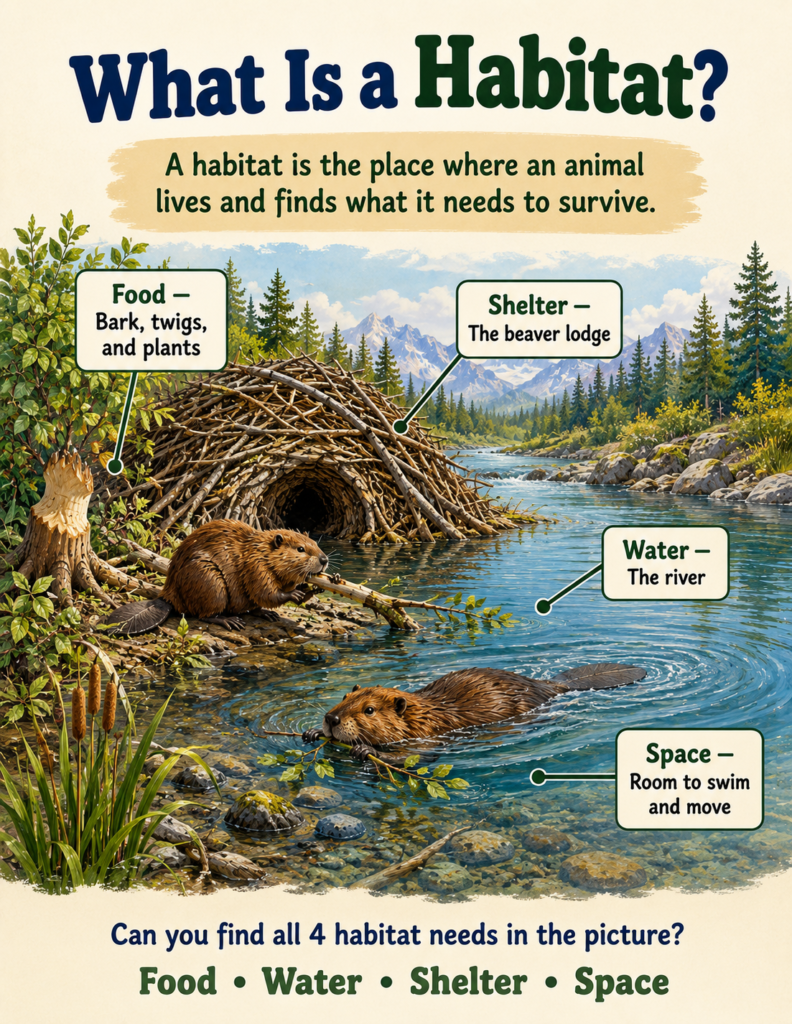
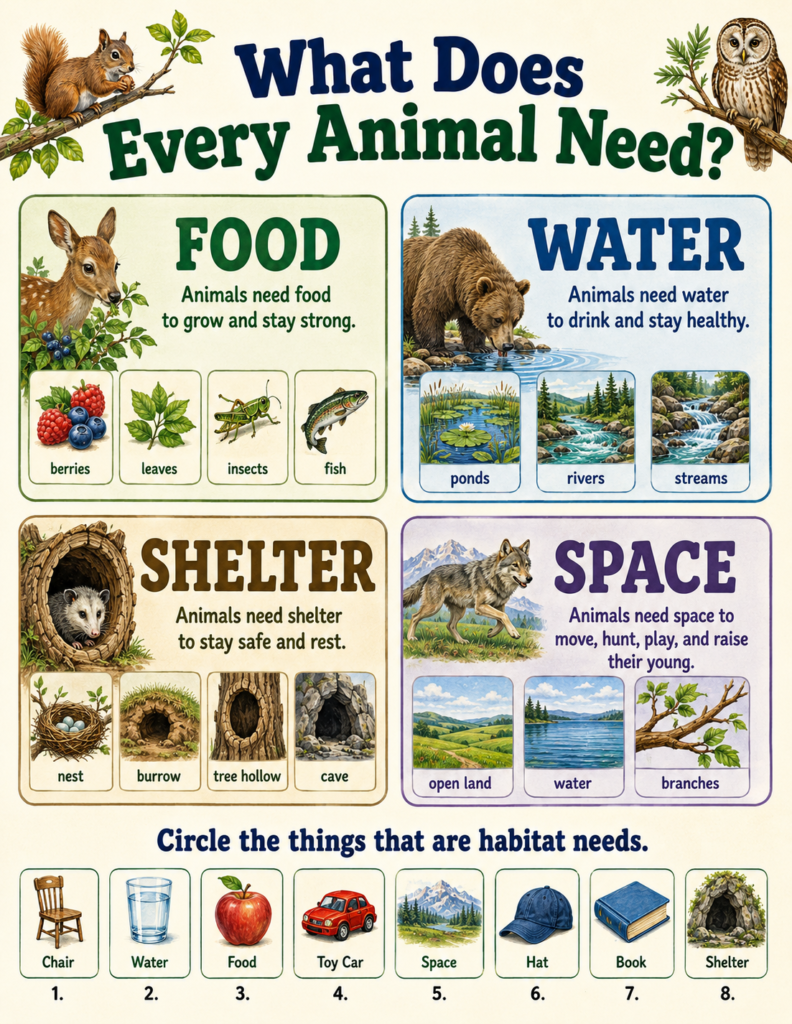
- What’s Inside the Book: The workbook clearly introduces the four critical things every animal needs to survive: Food (to grow and stay strong), Water (to drink and stay healthy), Shelter (to stay safe and rest), and Space (room to move, hunt, and raise young). Kids complete fun identification challenges, like circling the true habitat needs out of a lineup of everyday objects, and analyzing a beaver’s riverbank home to spot all four elements in action.
- How to Bring It to Life at Home: Take a walk in your backyard or a local park. Ask your child to play «Habitat Detective» and identify the food, water, shelter, and space for a local squirrel or bird. This real-world application is a prime example of project-based learning in homeschooling!
2. Discover Extreme and Unique Ecosystems
The world is vast, and animal homes are incredibly diverse. This workbook takes kids far beyond the standard forest or desert.
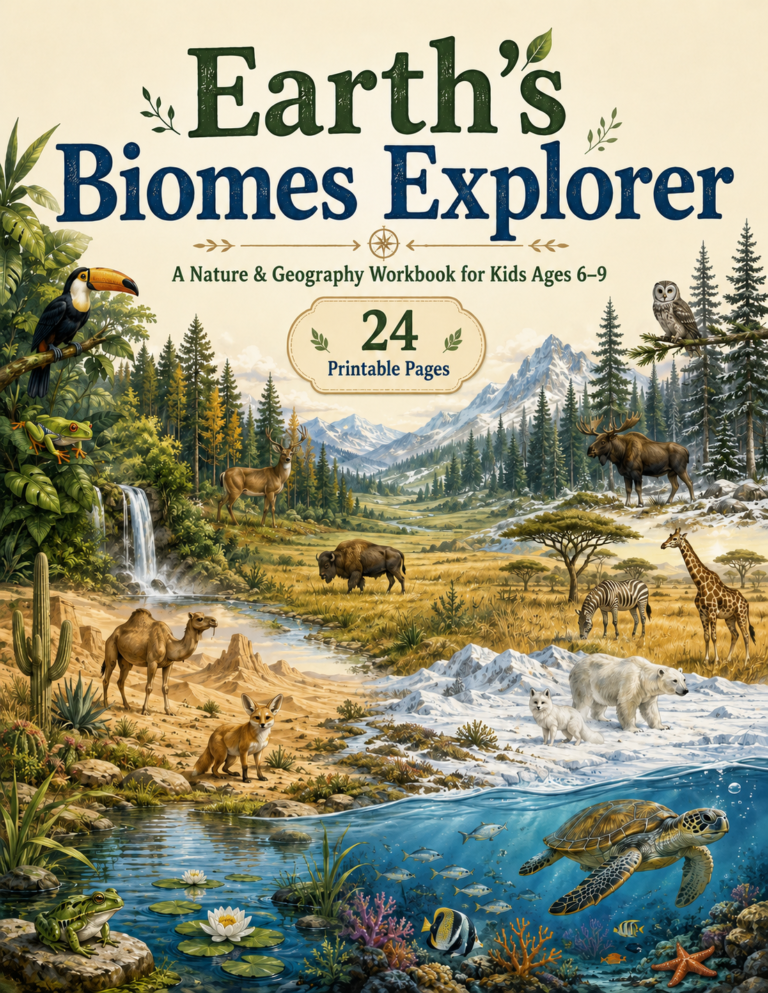
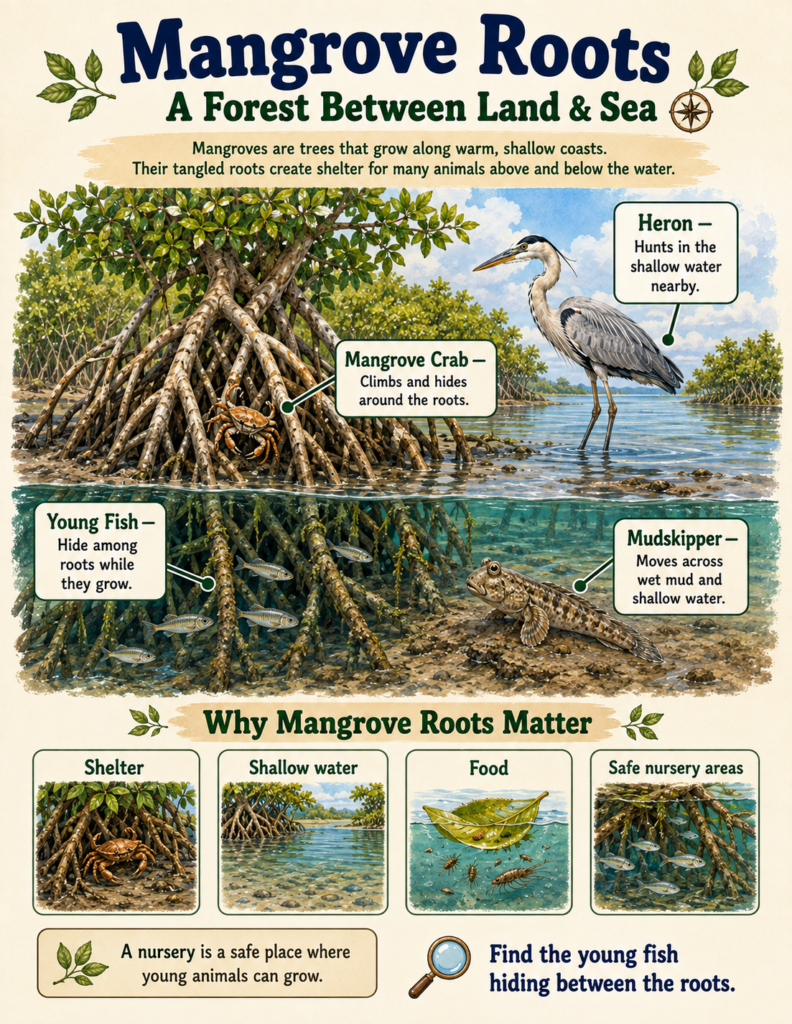
- What’s Inside the Book: Your young explorer will travel to the Sea Ice to learn how polar bears hunt and ringed seals swim. They will explore rocky coastal cliffs where puffins nest, and dive into warm, shallow Mangrove roots that act as safe nursery areas for young fish and climbing crabs. They will even venture into dark Cave habitats to discover how bats and blind cave fish survive with very little light.
- How to Bring It to Life at Home: This visual and thematic variety is the perfect way to prevent summer slide. Kids stay engaged because every page turn reveals a completely different corner of the globe!
3. Gamify the Learning with Quizzes and Clues
Kids learn best when they are challenged to think critically, rather than just memorizing facts.
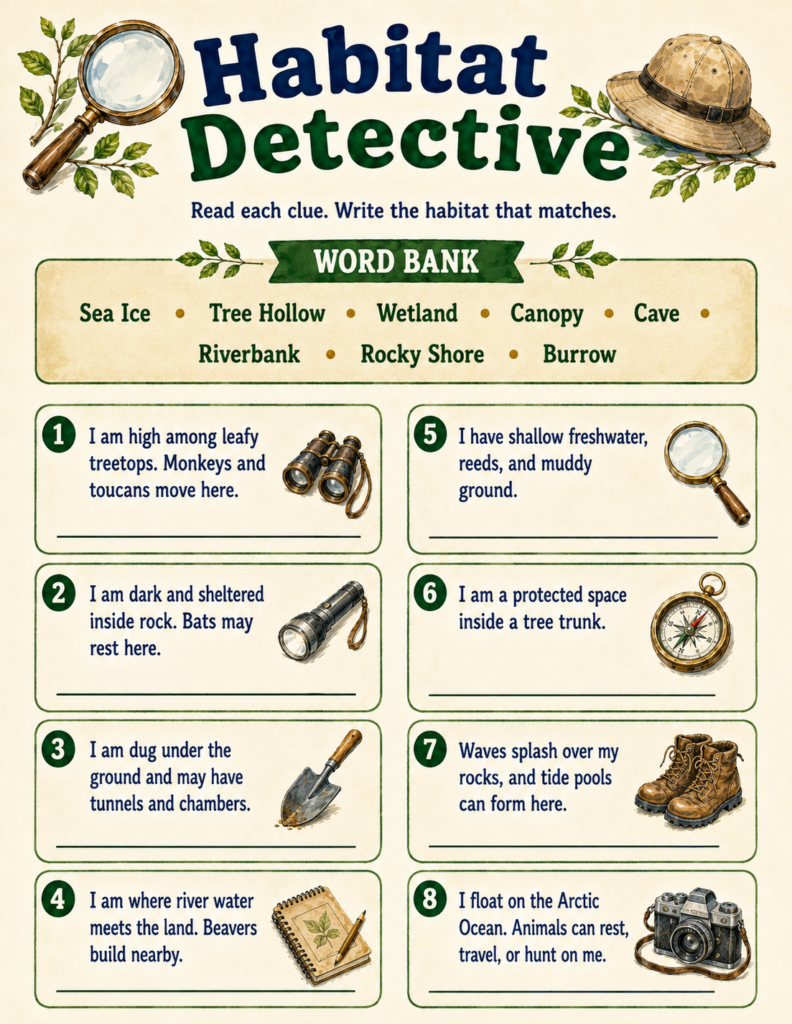
- What’s Inside the Book: To make the knowledge stick, the workbook uses brilliant, gamified review sections. In the «Habitat Detective» activity, kids read clues like, «I am dark and sheltered inside rock. Bats may rest here,» and must match it to the correct word bank answer (Cave). They also complete classification games, deciding if animals like the Toucan, Fennec Fox, or Prairie Dog live above ground, underground, or near water.
4. The Capstone Project: Build the Perfect Habitat!
The ultimate test of knowledge is creation. We want kids to synthesize what they’ve learned and apply it creatively.
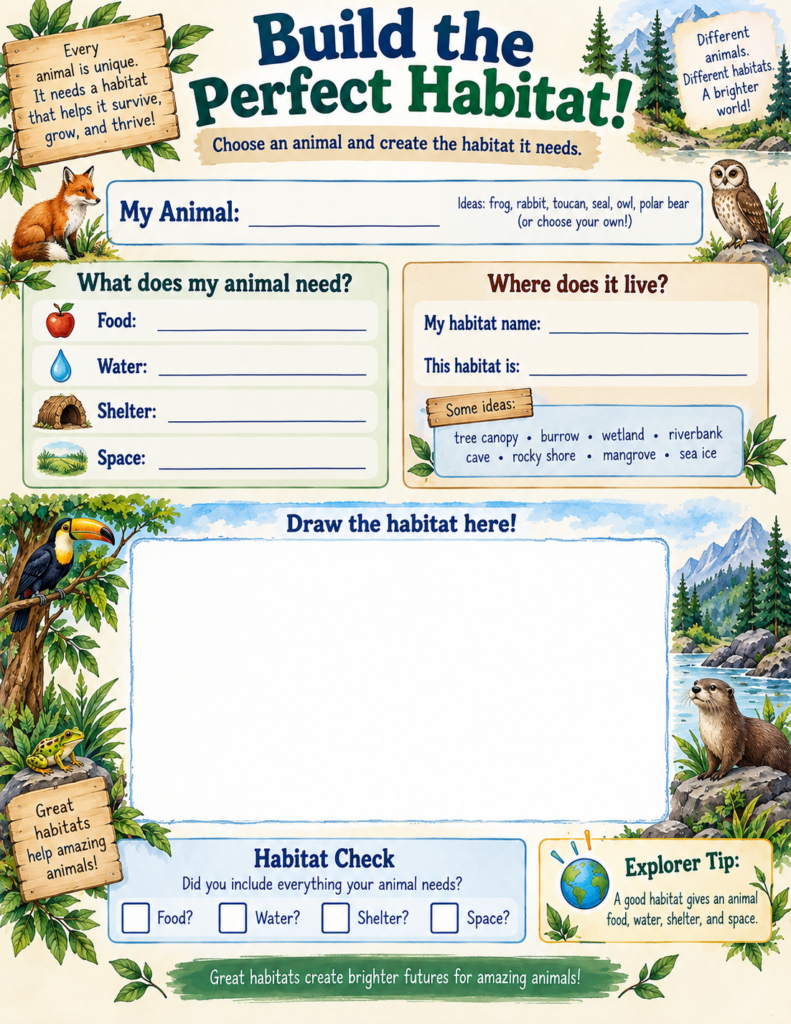
- What’s Inside the Book: The adventure concludes with a fantastic creative reflection page called «Build the Perfect Habitat!». Your child chooses an animal (like a frog, owl, or polar bear) and must explicitly draw and list the specific food, water, shelter, and space that animal requires. Finally, they give their new habitat a name.
- How to Bring It to Life at Home: Letting kids design and draw is a core reason why educational games help kids learn better. It transforms a science lesson into an art project and solidifies their understanding of ecosystems.
Ready to Start Your Wildlife Expedition?
You don’t need to spend your weekend planning science lessons or searching for printable worksheets. The Habitats Around the World activity book provides a complete, beautifully illustrated, and deeply educational journey that your kids will actually beg to complete!
Give your child the gift of curiosity and watch them transform into a passionate wildlife explorer!
👉 Grab the Habitats Around the World Activity Book in the Tiny Joy Studio Etsy Shop Today!