How to Build an Engaging Chile Unit Study for Kids at Home
Putting together a Chile unit study for kids often falls short when generic printables reduce an entire country to coloring a flag and memorizing a capital city. Stretching more than 4,000 kilometers from the hyper-arid Atacama Desert in the north to windswept Patagonian glaciers and fjords in the south, Chile gives elementary learners ages 6 to 9 an extraordinary geographic and scientific canvas.
When children explore why world-famous space telescopes sit high in Chile’s northern desert or how colliding tectonic plates built the Andes Mountains right beside Santiago, world geography turns into real analytical inquiry.
Why Chile Connects Geography With Space and Earth Science
Chile’s long, narrow shape between the Pacific Ocean and the Andes Mountains creates dramatic shifts in climate and geology within a single nation. Comparing five distinct landscape worlds—Atacama North, Central Chile, the Lake & Volcano Region, Patagonia, and the Far South & Fjords—helps children see how latitude, elevation, and ocean currents shape ecosystems and human settlements.
Rather than treating science and social studies as separate subjects, studying Chile naturally unites them. Kids examine how coastal cities like Valparaíso use hillside ascensores (funiculars) to navigate steep slopes, how desert oasis communities rely on scarce water sources, and how seismologists monitor active volcanoes and earthquakes along the Pacific Ring of Fire.
Moving From Passive Trivia to Field Investigation
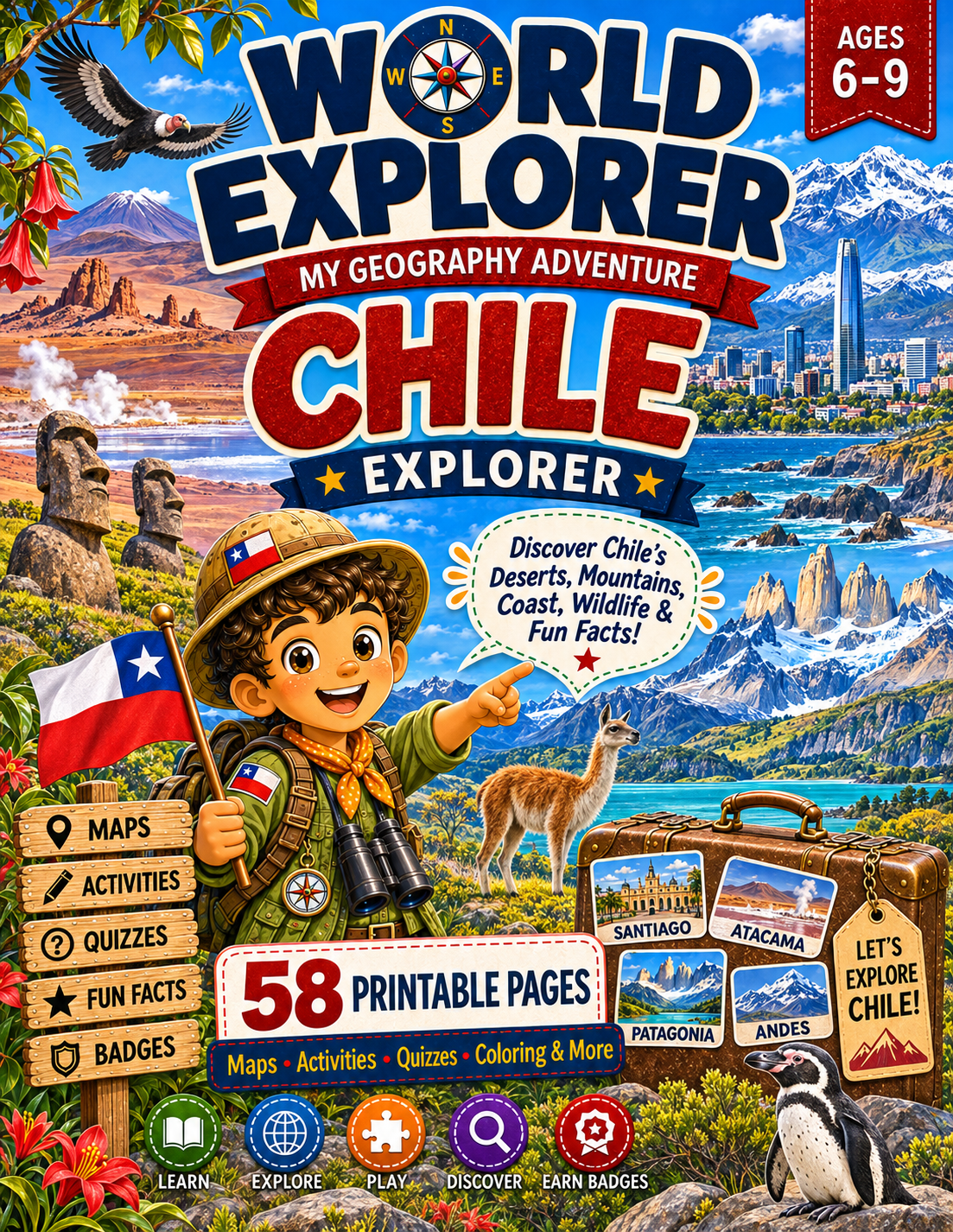
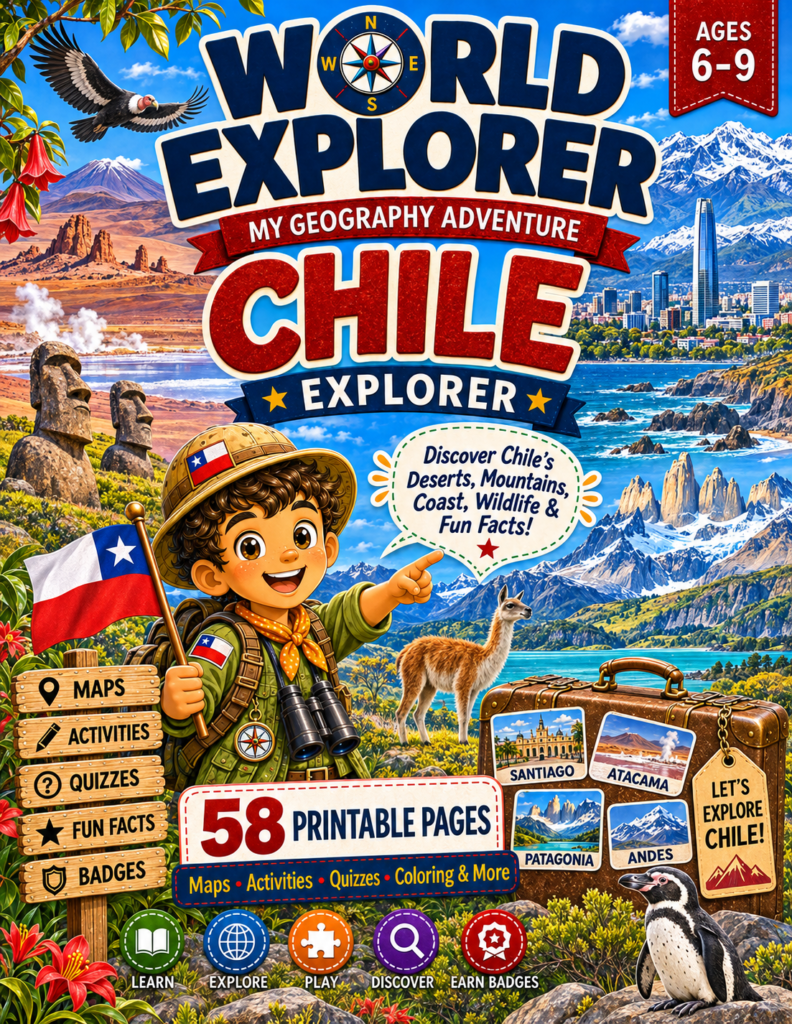
Elementary learners retain geographic concepts when they read maps, sequence scientific processes, interpret seismograph readings, and test engineering ideas. That active, inquiry-driven structure anchors the TinyJoy Studio Learning Library and shapes the World Explorer Series: Chile Explorer workbook.
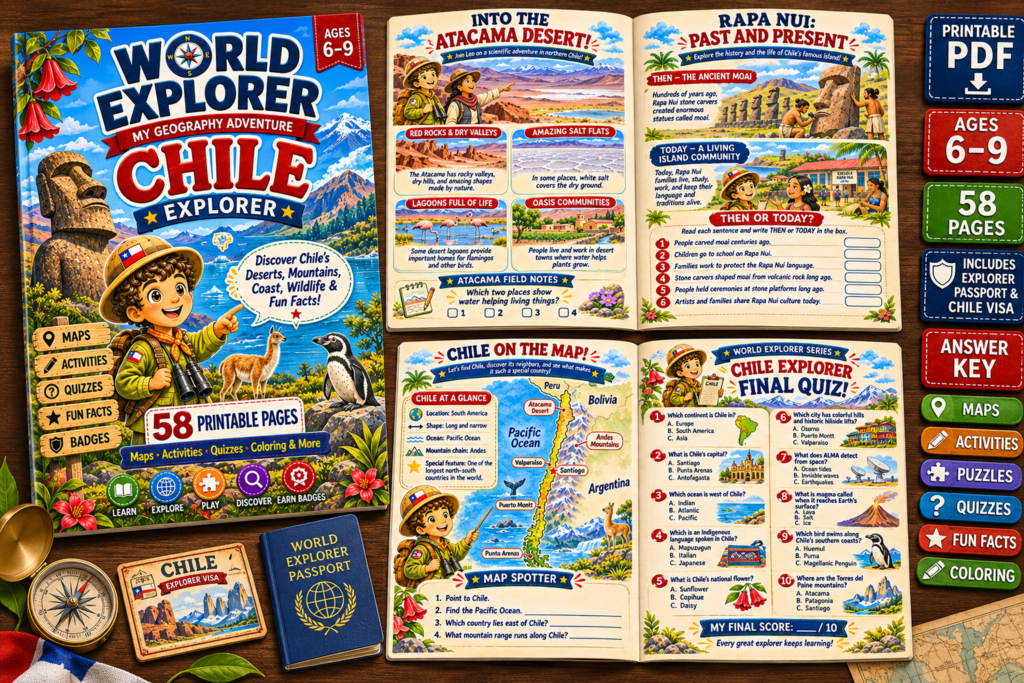
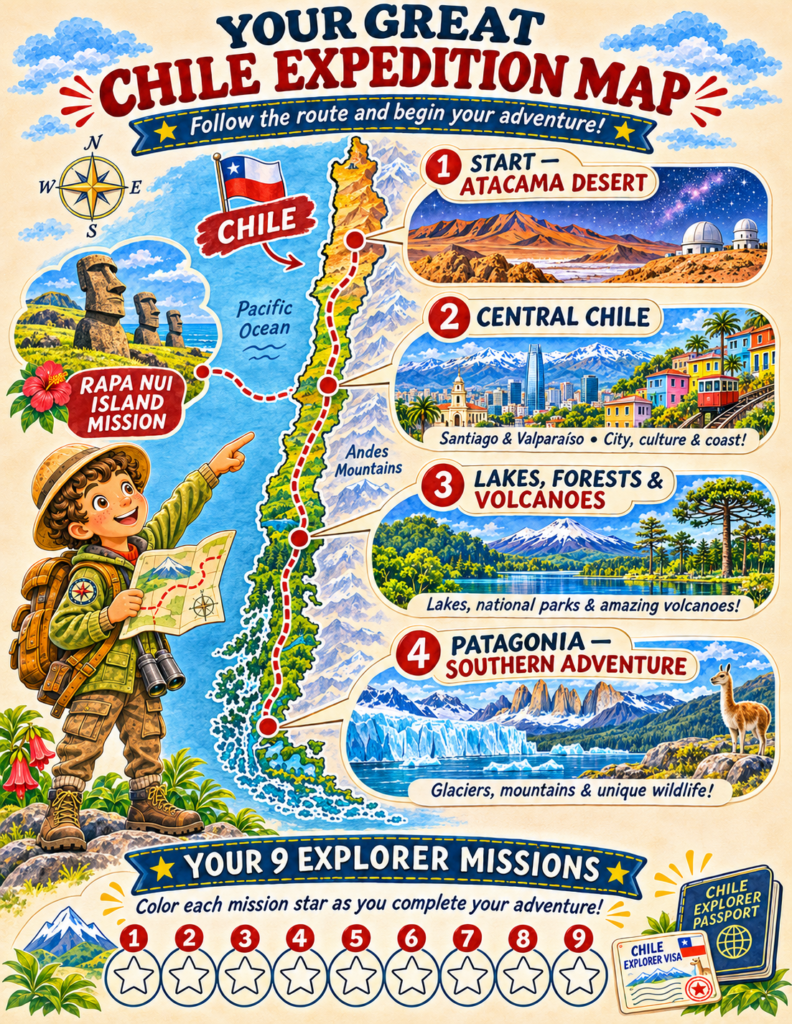
Designed for ages 6–9, this 58-page printable packet pairs young learners with Leo the Explorer across nine progressive missions—moving from regional mapping and cultural landmarks to Atacama astronomy, plate tectonics, wildlife conservation, and coordinate grid puzzles.
How the Chile Unit Study for Kids Progresses
Each chapter introduces clear visual models followed by hands-on “detective” challenges that ask children to apply what they just learned:
- Map Literacy and Five Landscape Regions: Students locate Chile in South America, identify neighboring Peru, Bolivia, and Argentina, and compare five distinct regions before placing Antofagasta, Valparaíso, Santiago, Puerto Montt, and Punta Arenas on a map in the Chile Map Challenge.
- Landmarks and Cultural Continuity: Kids match six iconic places—Torres del Paine, Valle de la Luna, Valparaíso’s hillside lifts, Osorno Volcano, Patagonia’s Marble Caves, and Chiloé’s stilt houses (palafitos)—and sort historical vs. modern life on Rapa Nui in Rapa Nui: Past and Present.
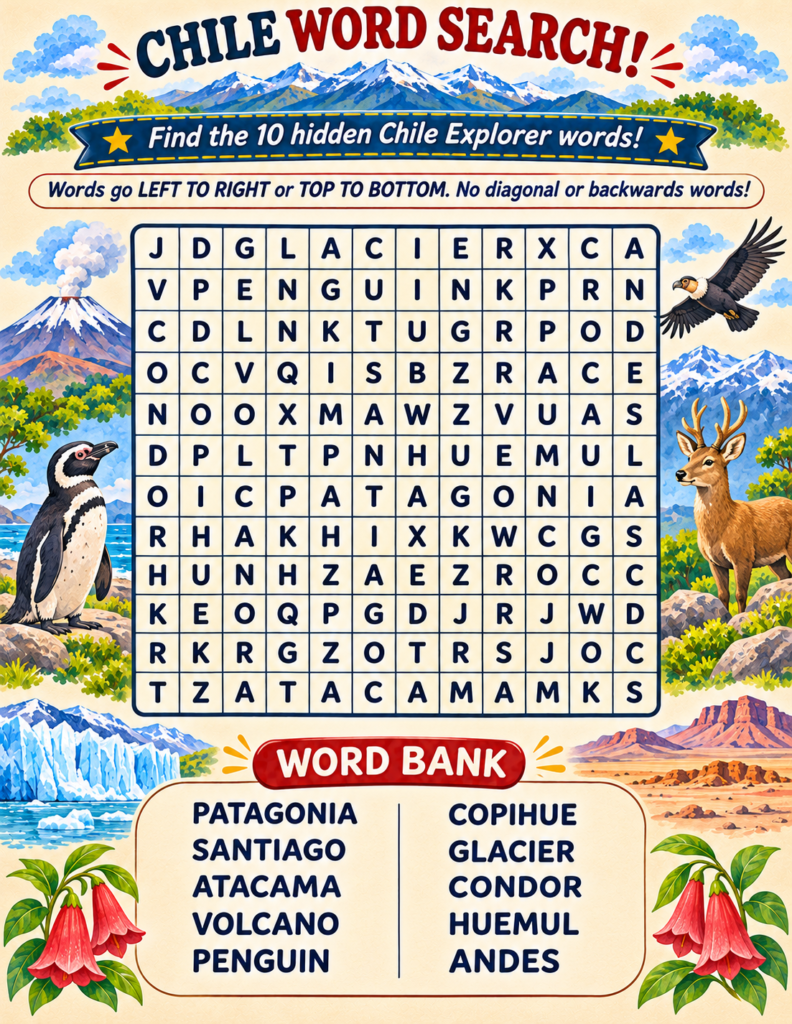
- Language, Traditions, and Chilean Trailblazers: Cultural lessons introduce everyday Spanish expressions (¡Hola!, Buenos días, Gracias, Por favor, Chao) while recognizing Indigenous languages such as Mapuzugun, Aymara, and Rapa Nui. Children also discover national symbols (the copihue flower, huemul deer, and Andean condor), traditional foods like empanadas and pastel de choclo, the cueca dance, Nobel laureate poet Gabriela Mistral, and astronomer María Teresa Ruiz.
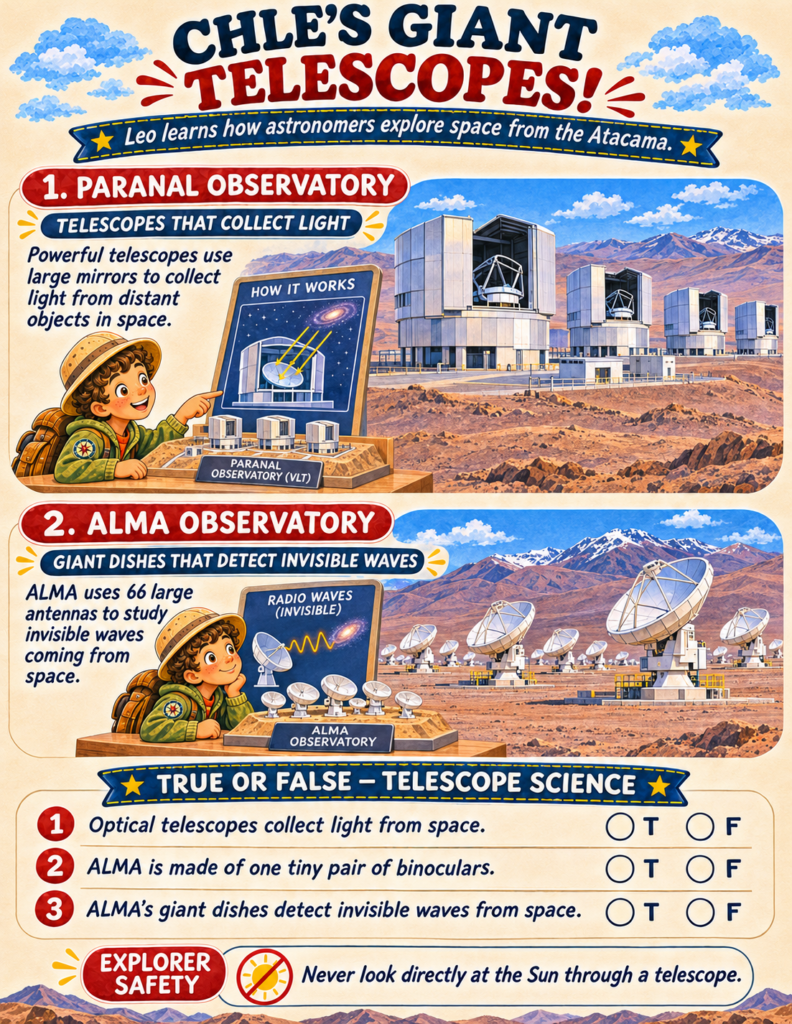
- Atacama Desert Science and Giant Telescopes: In northern Chile, students trace how evaporation leaves mineral salt flats behind, discover why high, dry, dark desert skies are ideal for stargazing, and compare optical mirrors at Paranal Observatory with the 66 radio antennas of ALMA.
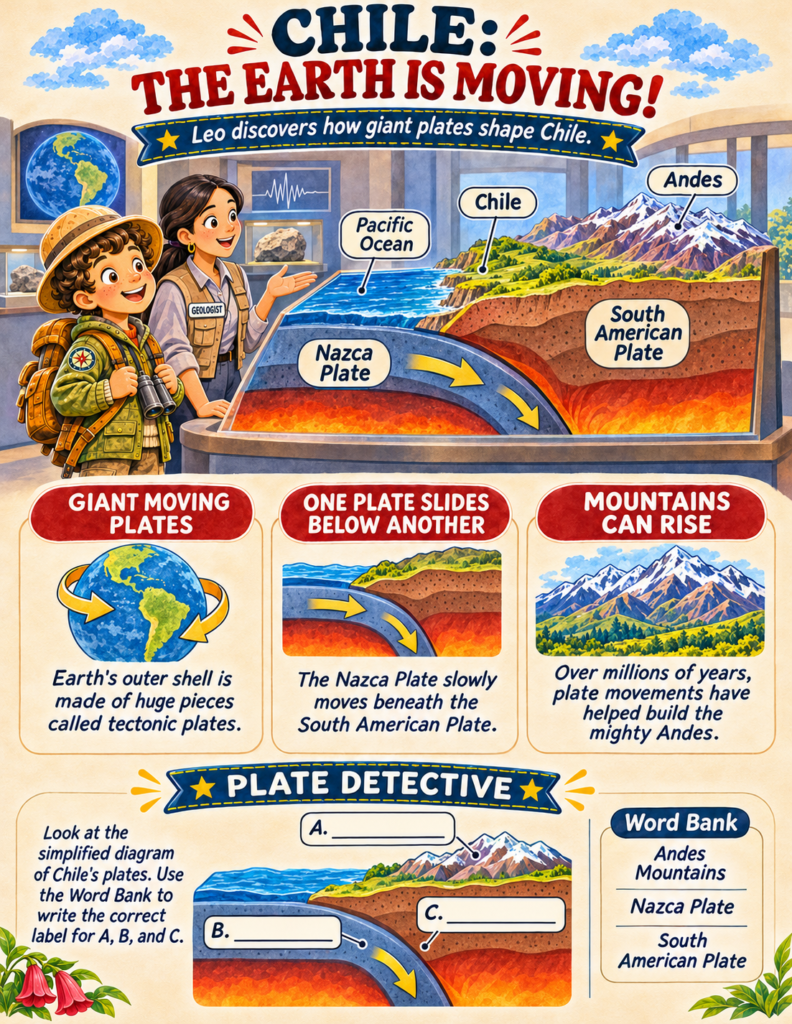
- Tectonic Plates, Volcanoes, and Earthquake Safety: In the Living Earth unit, kids label how the Nazca Plate slides beneath the South American Plate to push up the Andes, compare seismograph wave amplitudes, label magma, lava, crater, and volcanic ash on Villarrica Volcano, and practice earthquake safety choices before designing an earthquake-resistant model building.
- Habitats, Endemic Wildlife, and Park Stewardship: Ecology lessons examine wildlife across four habitats—including the tiny pudú deer, monito del monte marsupial, vicuña, Darwin’s fox, marine otter, and Magellanic penguin—paired with CONAF park ranger conservation rules.
- Coordinate Grids, Logic Puzzles, and Synthesis: Screen-free games strengthen analytical focus through a Patagonia trail maze, a 6-difference campsite visual puzzle, a number cipher, an odd-one-out logic check, and Chile Explorer Grid Challenge using A1–G7 coordinates.
Practical Ways to Use This Workbook in Your Routine
With 58 printable pages and a complete three-page Answer Key included at the back, the packet adapts smoothly to different family and classroom schedules:
- Three-to-Four-Week Homeschool Unit: Complete two or three pages per session. Pair the Taste of Chile page with baking empanadas or sopaipillas, or read poems by Gabriela Mistral during morning basket time. Families mapping out a year of learning adventures at home can easily pair this unit with Earth science or astronomy blocks.
- Multi-Age Sibling or Co-Op Learning: Confident readers (ages 8–9) can independently work through the map challenge, plate tectonics diagrams, and 7×7 grid coordinates. Younger siblings (ages 6–7) can join in using the wildlife mysteries, odd-one-out visual rows, find-and-count scene, and Patagonia and Chiloé coloring pages.
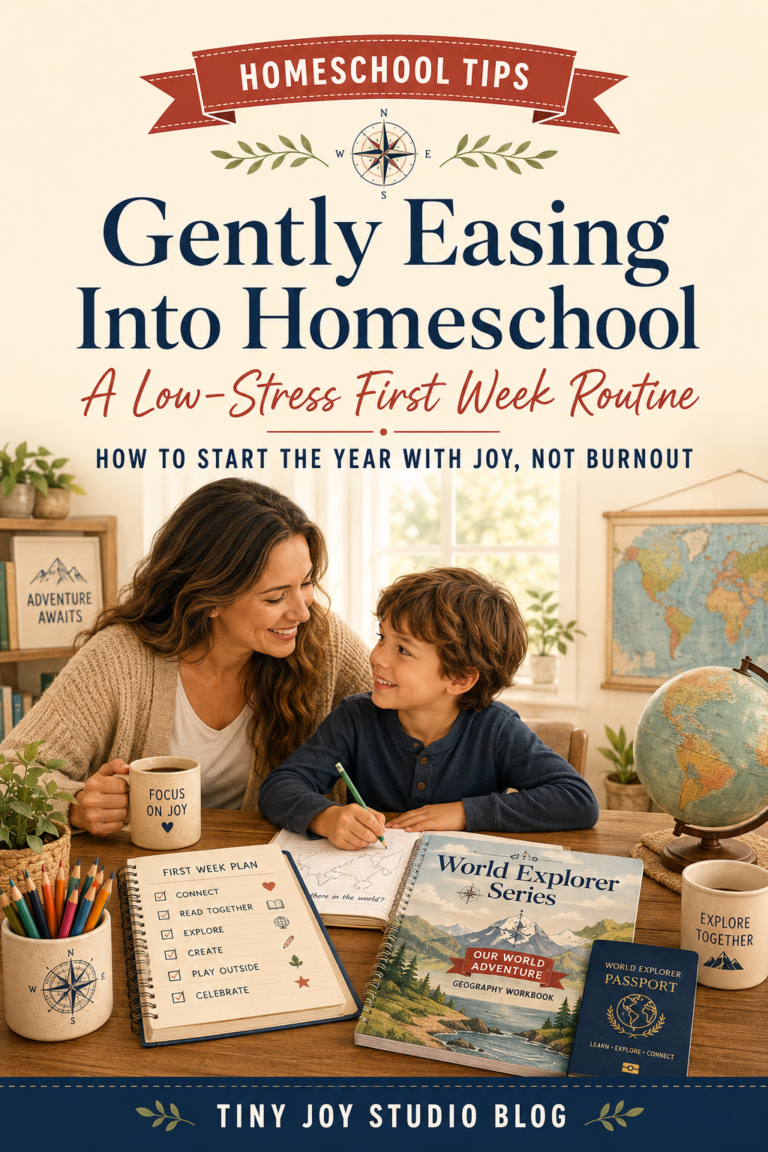
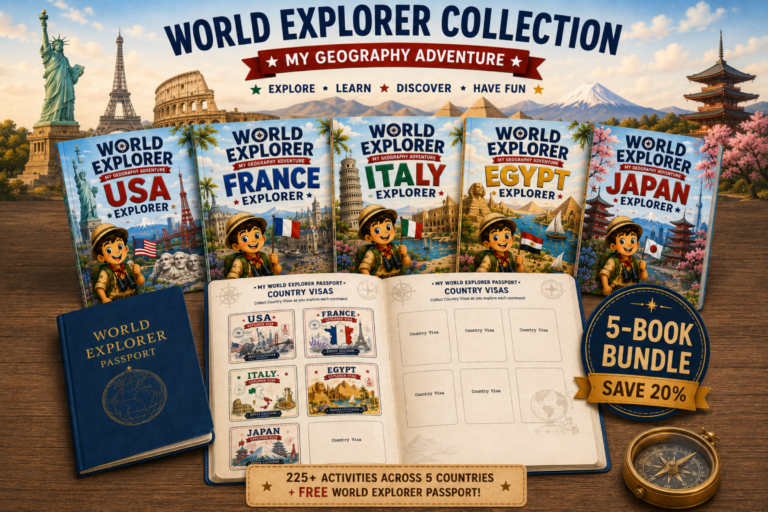
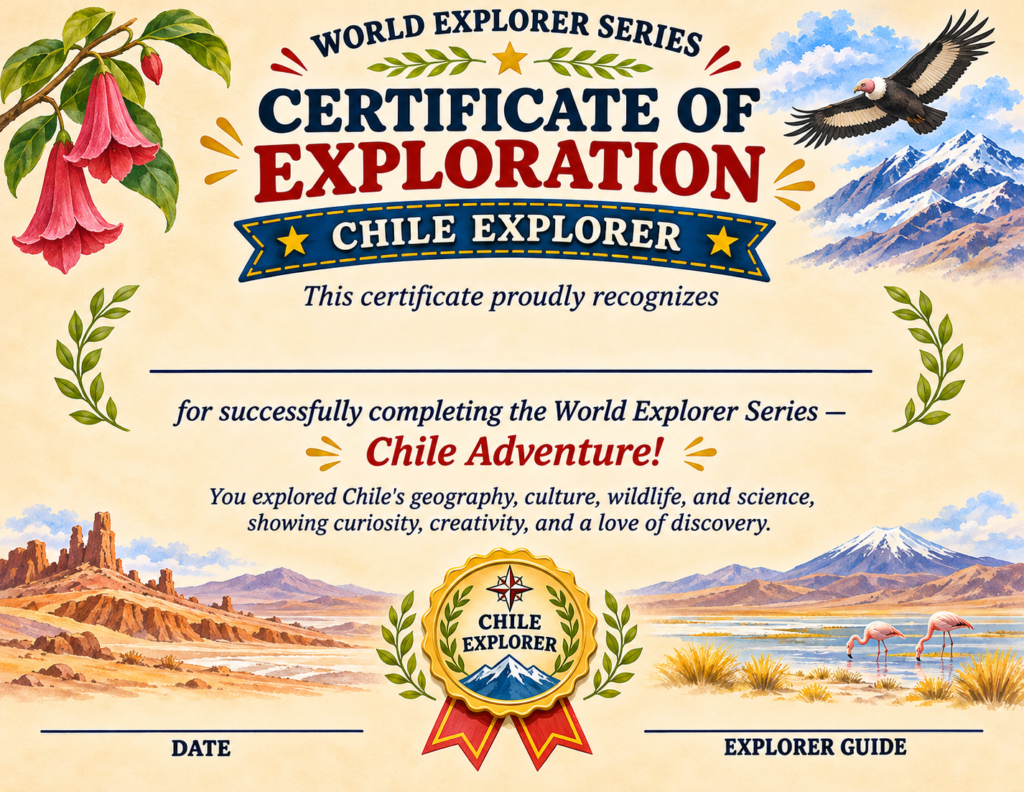
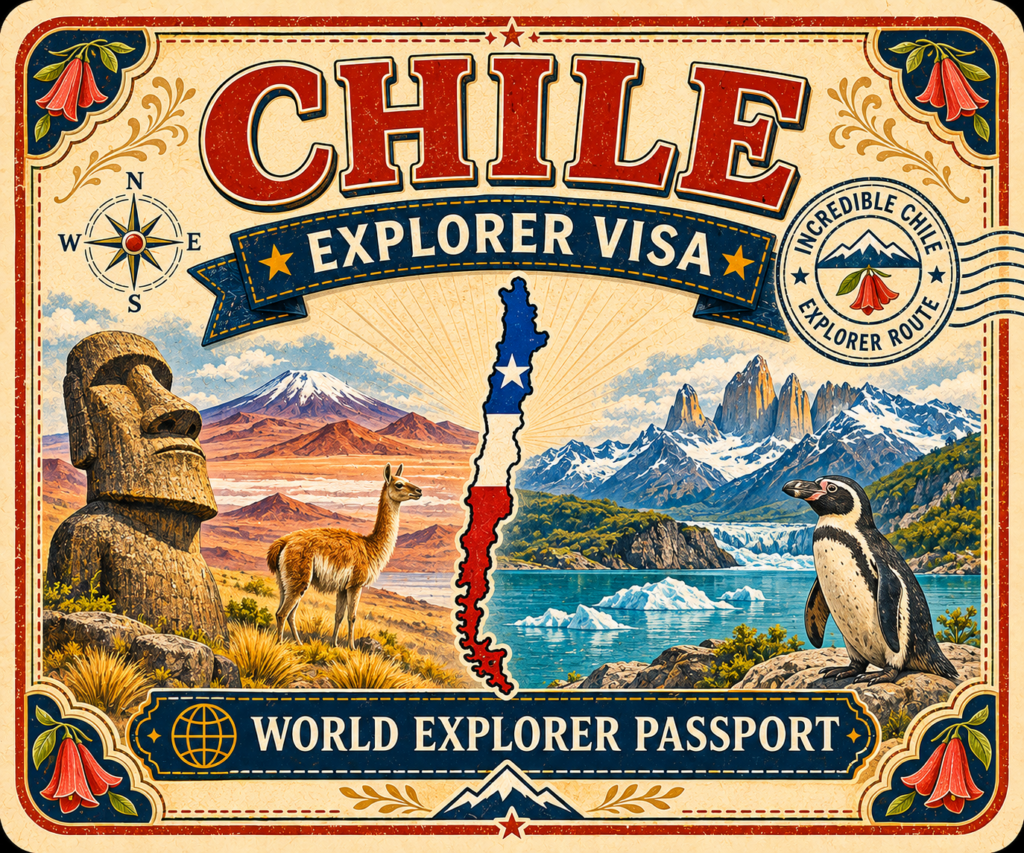
- Collectible Passport Motivation: Kids begin on page 2 by designing their own explorer badge, and wrap up by adding their Chile Explorer Visa to their World Explorer Passport and signing their Certificate of Exploration. If your family is following our structured geography learning path for kids, each completed visa creates a visual milestone of their growing world knowledge.
Ready to Begin Your Chile Expedition?
If you are looking for a thorough, screen-free Chile unit study for kids that brings Atacama astronomy, plate tectonics, map skills, and Patagonian wildlife together in one organized printable, World Explorer Series: Chile Explorer is ready to print and explore. You can also browse our complete world geography curriculum for kids to choose your next destination.