Why Kids Remember Countries Better Through Famous Landmarks
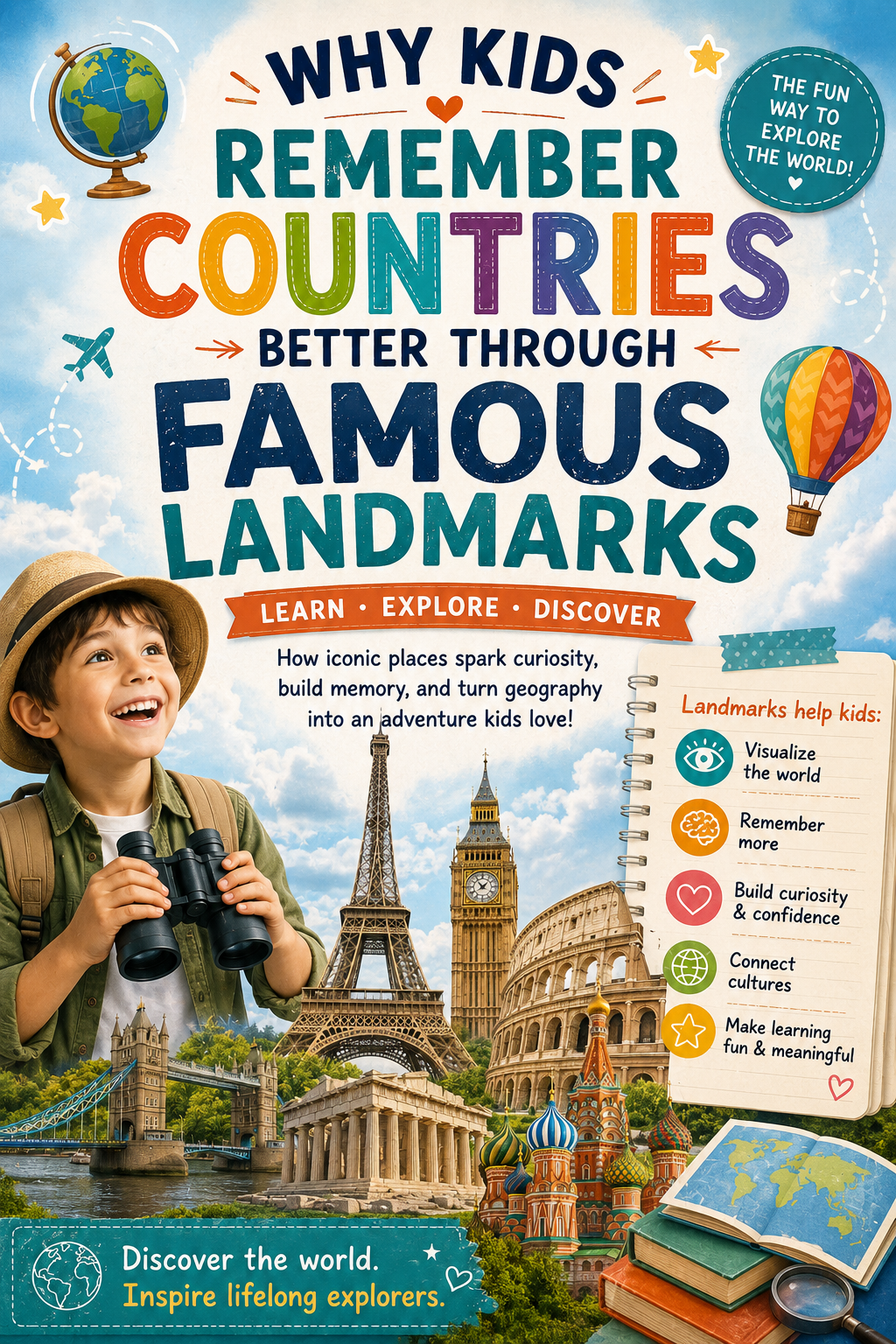
Famous landmarks for kids are one of the most exciting ways to explore geography, discover different countries, and learn about the world through visual learning and hands-on activities.
Learning geography can sometimes feel overwhelming for children. Country names, maps, and locations may seem like random information that is difficult to remember. While maps are important, many children learn more effectively when they can connect places to something visual and meaningful.
This is where famous landmarks become powerful learning tools. Children may forget the location of a country on a map, but they are much more likely to remember the Eiffel Tower, the Colosseum, or Big Ben. Once they connect a landmark to a country, geography becomes easier, more engaging, and far more memorable.
Let’s explore why famous landmarks help children learn about the world and develop a deeper understanding of geography.
1. Landmarks Make Geography Visual
Children are naturally visual learners. They often remember pictures and experiences more easily than lists of facts or place names.
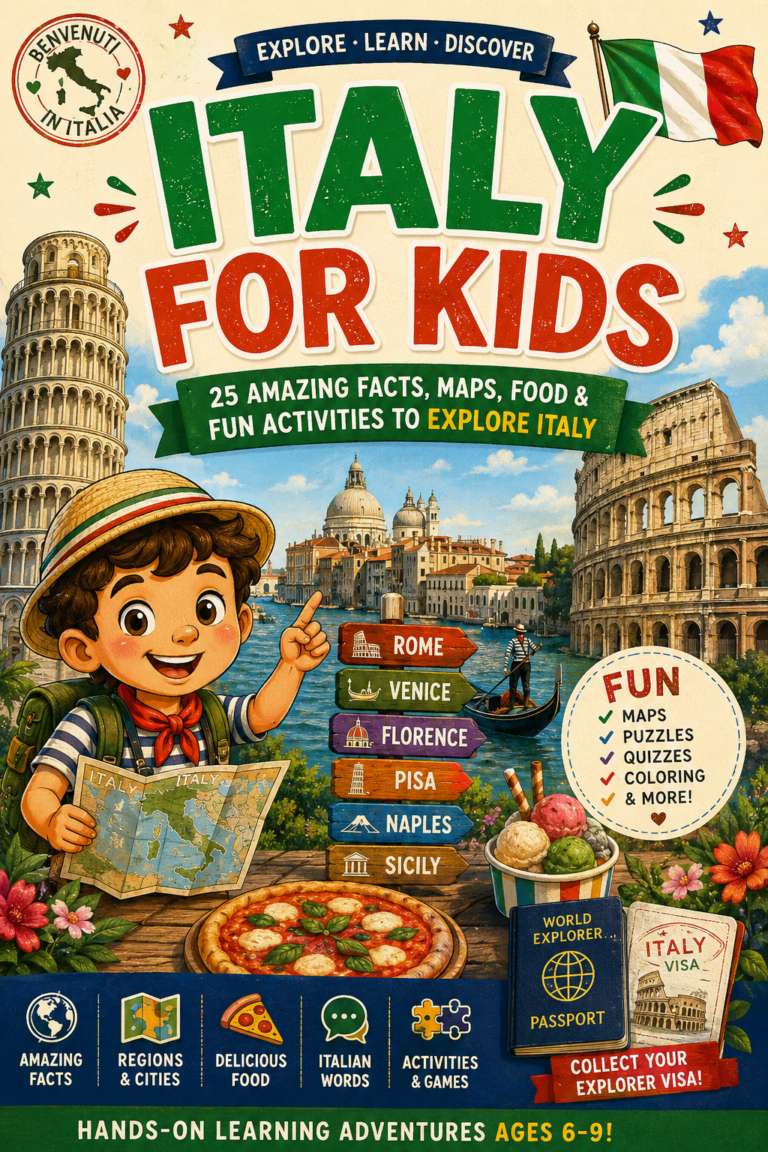
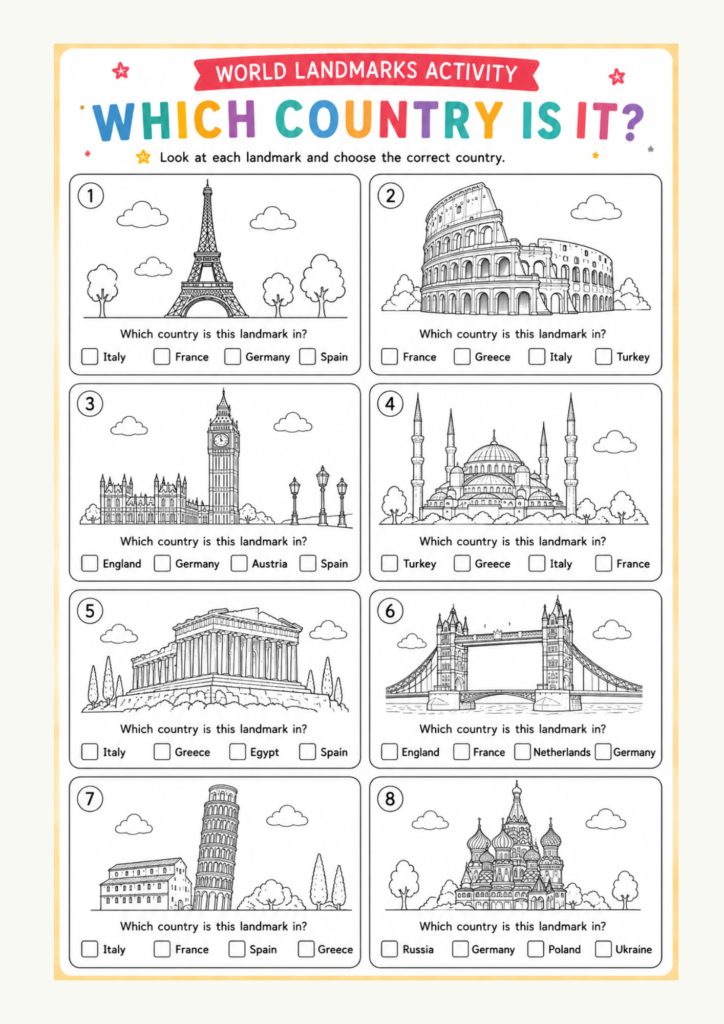
When a child sees the Eiffel Tower, they begin connecting it with France. The Colosseum helps them remember Italy, while Big Ben becomes associated with the United Kingdom. These visual connections make geography feel more concrete and easier to understand.
Instead of memorizing information, children start building mental images of different places around the world. These images help strengthen memory and improve long-term recall.
Visual learning also makes geography less intimidating. Rather than looking at a map full of unfamiliar names, children begin recognizing places through landmarks they can easily identify.
2. Famous Places Spark Curiosity
One of the biggest advantages of using landmarks in education is their ability to inspire curiosity.
Children naturally ask questions when they see interesting places:
- Who built this?
- Why is it famous?
- How old is it?
- Can people visit it today?
These questions create opportunities for deeper learning. A simple picture of a landmark can lead to conversations about history, architecture, culture, and daily life in another country.
Curiosity is one of the strongest drivers of learning. When children become interested in a topic, they are much more likely to remember what they discover and continue exploring on their own.
Landmarks often become the starting point for exciting educational adventures that go far beyond geography.
3. Landmarks Connect Countries and Cultures
Geography is about much more than maps and borders. It is also about understanding people, traditions, and cultures around the world.
Many famous landmarks for kids also provide opportunities to learn about history, traditions, architecture, and everyday life in different countries.
Famous landmarks help children make these connections naturally.
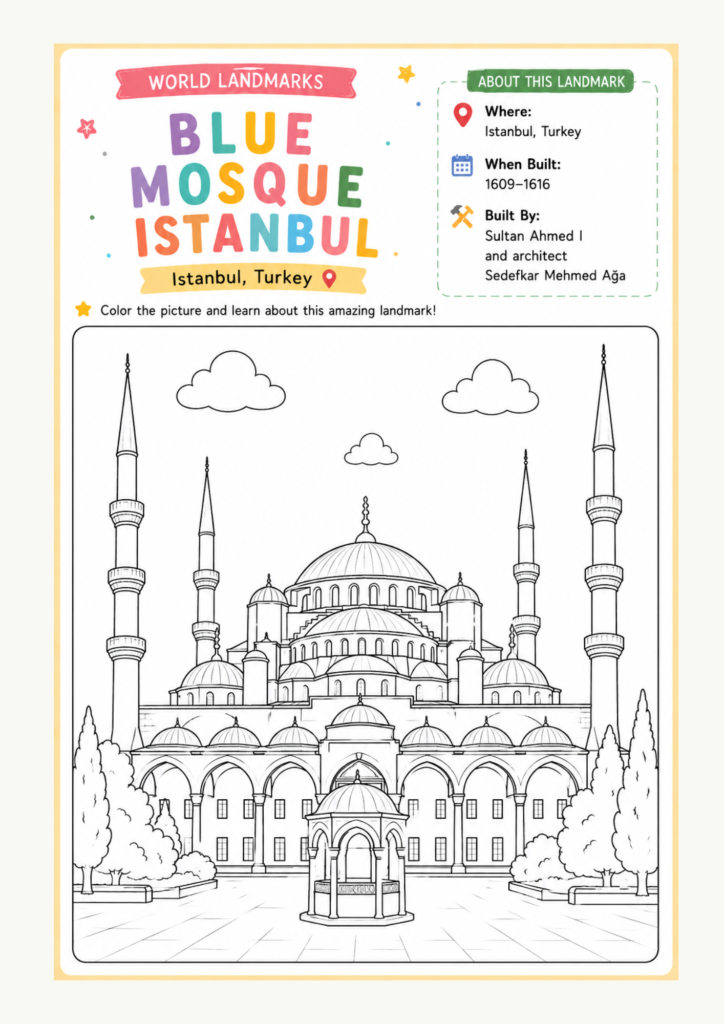
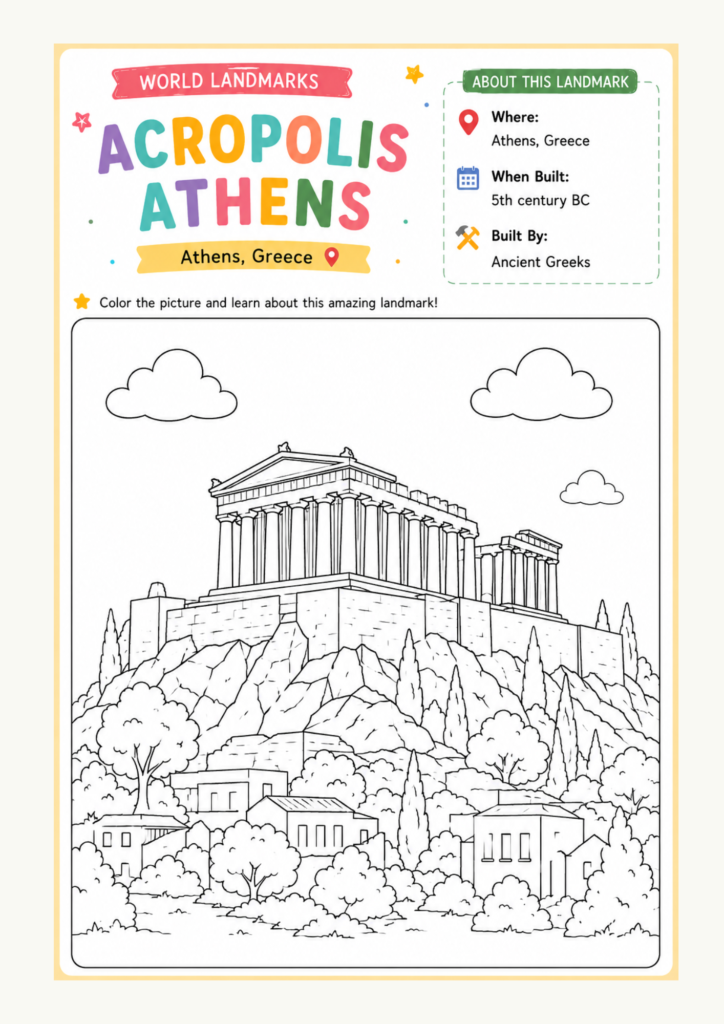
For example, learning about the Acropolis can lead to discussions about Ancient Greece. Exploring Saint Basil’s Cathedral introduces children to Russian architecture and history. The Blue Mosque can spark conversations about Turkey and its cultural heritage.
As children learn about landmarks, they begin to understand that every country has its own unique story.
This broader perspective helps children develop global awareness and appreciation for different cultures.
4. Learning Feels Like Traveling
Many children dream about visiting exciting places around the world.
Landmarks allow them to begin that journey from home.
When children learn about famous monuments, castles, bridges, and historic sites, they often imagine what it would be like to visit those places in real life. They picture walking through ancient cities, exploring famous streets, and discovering new cultures.
This sense of adventure makes learning feel exciting rather than academic.
Children stop viewing geography as a school subject and begin seeing it as an opportunity to explore the world. That shift in mindset can dramatically increase motivation and engagement.
The more enjoyable learning becomes, the more likely children are to continue exploring new topics independently.
5. Coloring Helps Information Stick
Hands-on activities play an important role in learning.
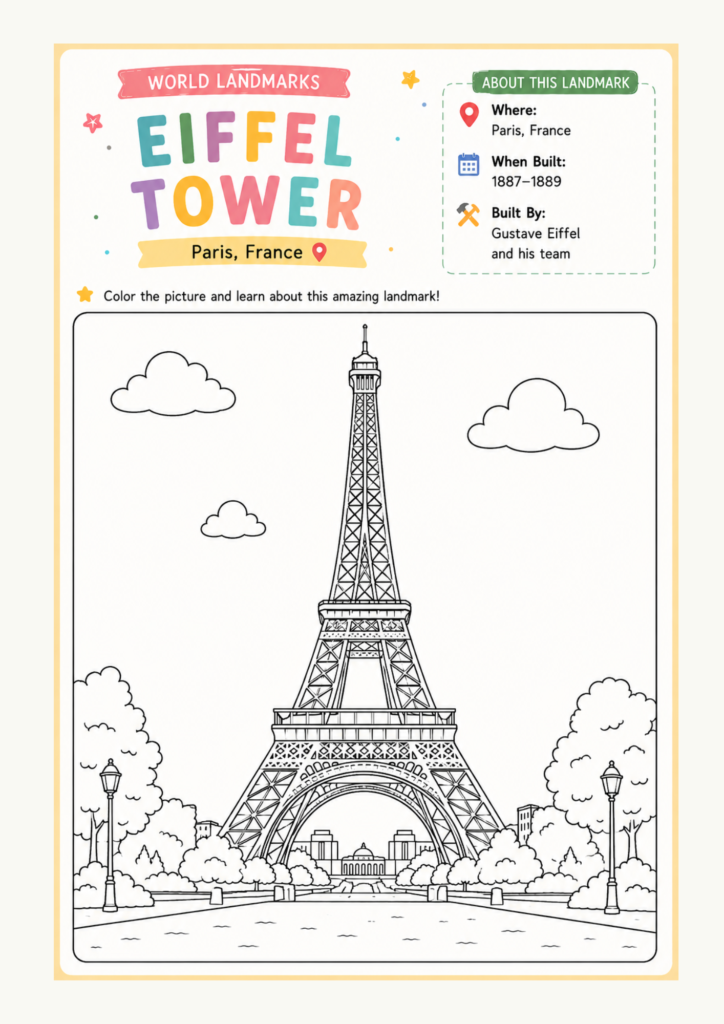
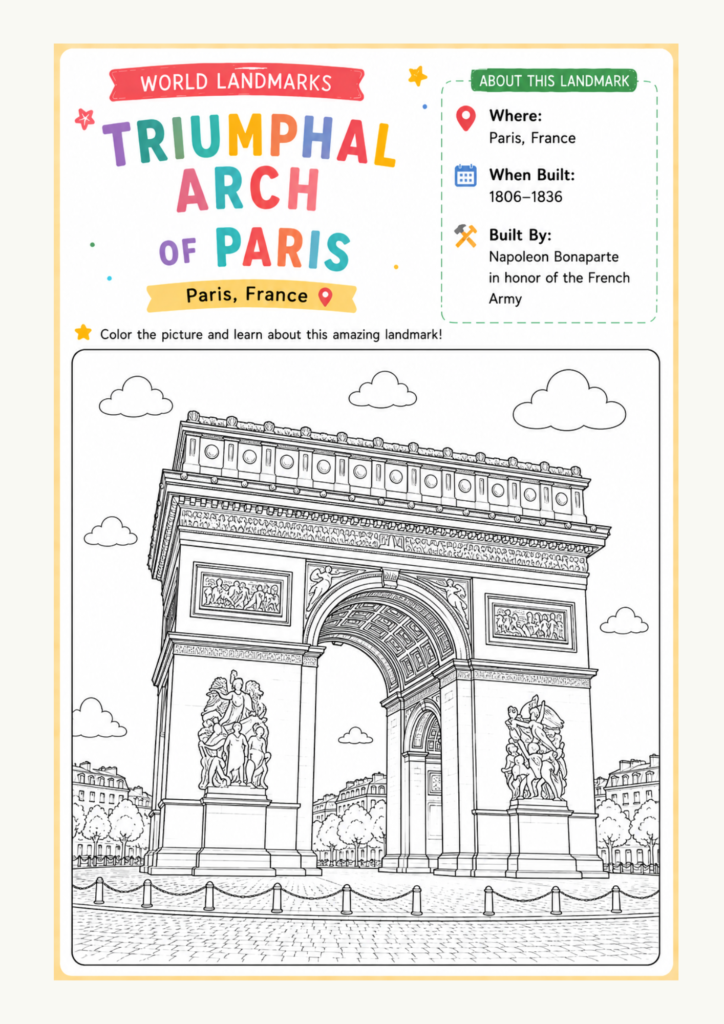
Coloring is much more than a creative pastime. It encourages focus, observation, and attention to detail while helping children engage with educational content in a meaningful way.
When children color a landmark, they spend extra time looking at its shape, structure, and unique features. This additional attention strengthens memory and helps information stay in their minds longer.
Creative activities also reduce pressure and make learning feel relaxed and enjoyable.
Instead of simply reading about a landmark, children actively interact with it. This combination of creativity and education creates a stronger learning experience and often leads to better retention.
6. Landmarks Encourage Global Awareness
Today’s children are growing up in a connected world.
Understanding different countries, cultures, and places helps prepare them to become informed global citizens.
Learning about famous landmarks introduces children to places they may never have encountered before. It encourages them to think beyond their local environment and recognize the diversity of the world around them.
As children discover famous sites from different countries, they begin to appreciate both similarities and differences between cultures.
This awareness promotes open-mindedness, respect, and a broader understanding of the world.
These are valuable life skills that extend far beyond geography lessons.
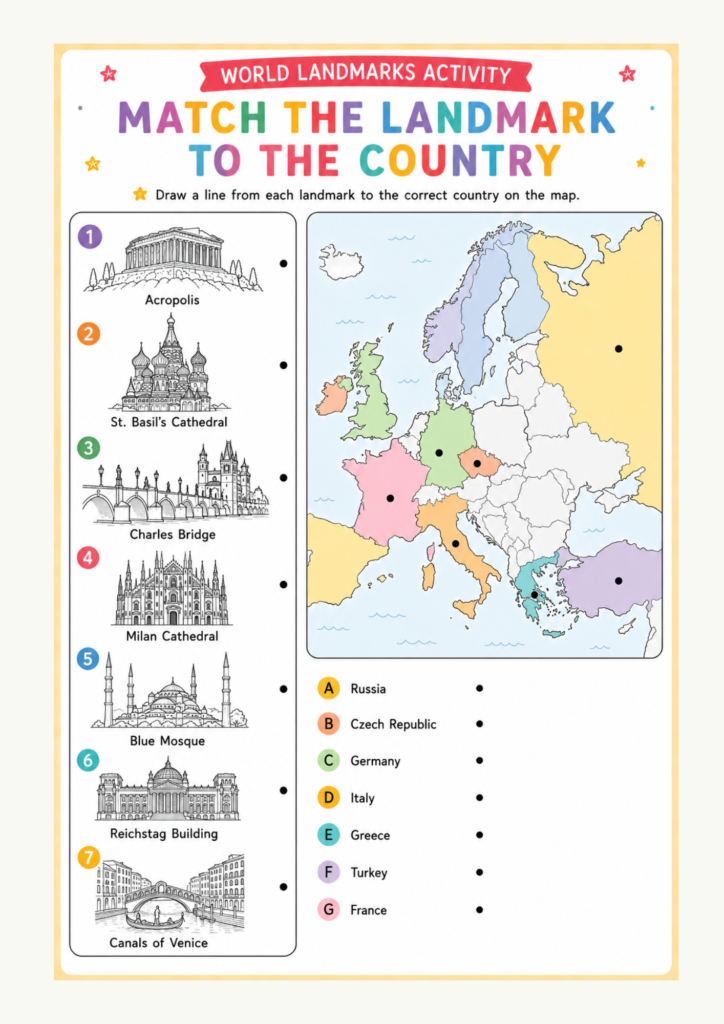
7. Geography Becomes Fun Instead of Memorization
Many children struggle when learning feels like memorization.
Trying to remember country names, capitals, and locations without context can quickly become frustrating.
Landmarks solve this problem by giving children something meaningful to connect with.
Instead of memorizing facts, they explore stories, architecture, history, and culture. Learning becomes an experience rather than a task.
When children enjoy the learning process, they naturally absorb more information and develop stronger long-term interest in the subject.
The goal is not simply to remember where countries are located. The goal is to inspire curiosity, exploration, and a lifelong love of learning about the world.
A Fun Way to Explore Europe’s Most Famous Landmarks
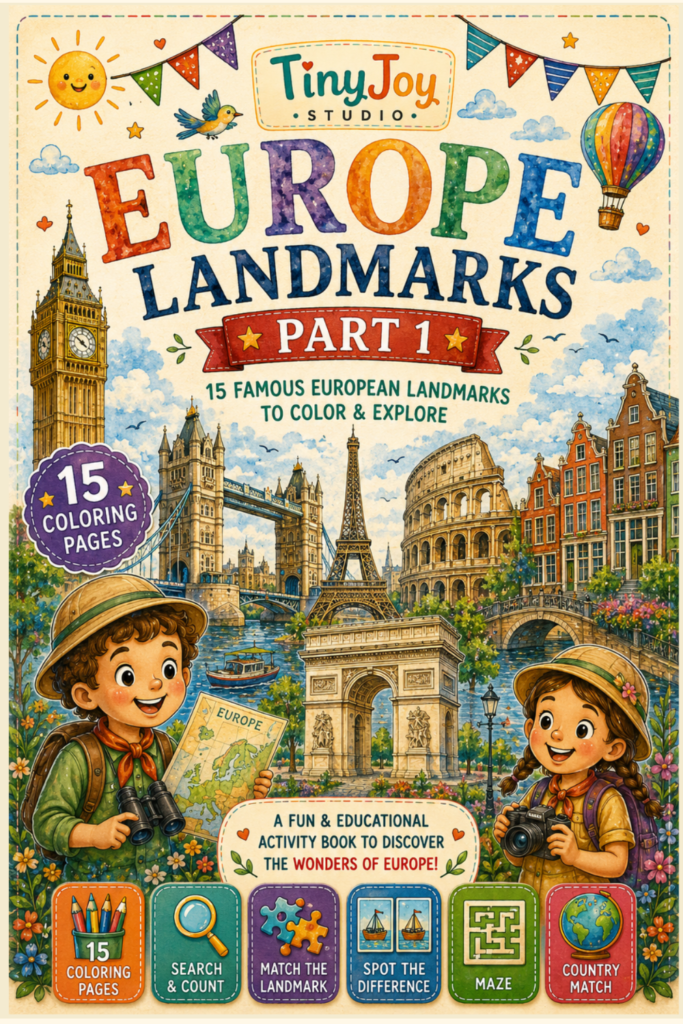
If your child enjoys discovering new places, our Europe Landmarks Activity Book offers a fun and engaging introduction to some of Europe’s most famous landmarks.
Children can explore the Eiffel Tower, Colosseum, Big Ben, Acropolis, Tower Bridge, Saint Basil’s Cathedral, and many more iconic locations through educational coloring pages and interactive activities.
The book combines creativity, geography, and cultural learning in a way that feels exciting and accessible for young learners. It’s a simple way to encourage curiosity while helping children build a stronger understanding of the world around them.
You May Also Enjoy
If you’re looking for more ways to make geography fun, check out these articles:
- Why Learning Geography Through Play Is Best for Kids
- Countries of the World for Kids
- Fun Ways to Teach Kids Geography
These resources provide additional ideas for helping children explore countries, cultures, maps, and landmarks through hands-on learning.
Conclusion
Famous landmarks transform geography into an exciting adventure.
They help children build visual connections, spark curiosity, explore different cultures, and develop a deeper understanding of the world. Through landmarks, geography becomes more memorable, more engaging, and far more enjoyable.
By combining learning with creativity and exploration, children gain knowledge while developing the curiosity that inspires lifelong learning.
Using famous landmarks for kids is a simple and engaging way to make geography more meaningful and memorable.
And sometimes, a single landmark can be the beginning of a journey that lasts a lifetime.