The Ultimate Islands of the World Unit Study for Kids (No Prep!)
When we look at a standard globe, it is easy to see the massive expanses of continents, but some of the most magical, diverse, and biologically fascinating places on Earth are tiny pieces of land completely surrounded by water. From fiery volcanic peaks rising out of the Pacific Ocean to rings of coral atolls sheltering quiet lagoons, islands capture the absolute peak of children’s imaginations.
Teaching physical geography, earth science, and ecology all at once can feel overwhelming for busy homeschool parents. If you want to move beyond dry definitions and immerse your kids in the geology, wildlife, and human communities of our planet’s most unique insular worlds without spending hours gathering supplies, we have the ultimate «open-and-go» solution.
Meet Your Global Guide: The World Explorer Series
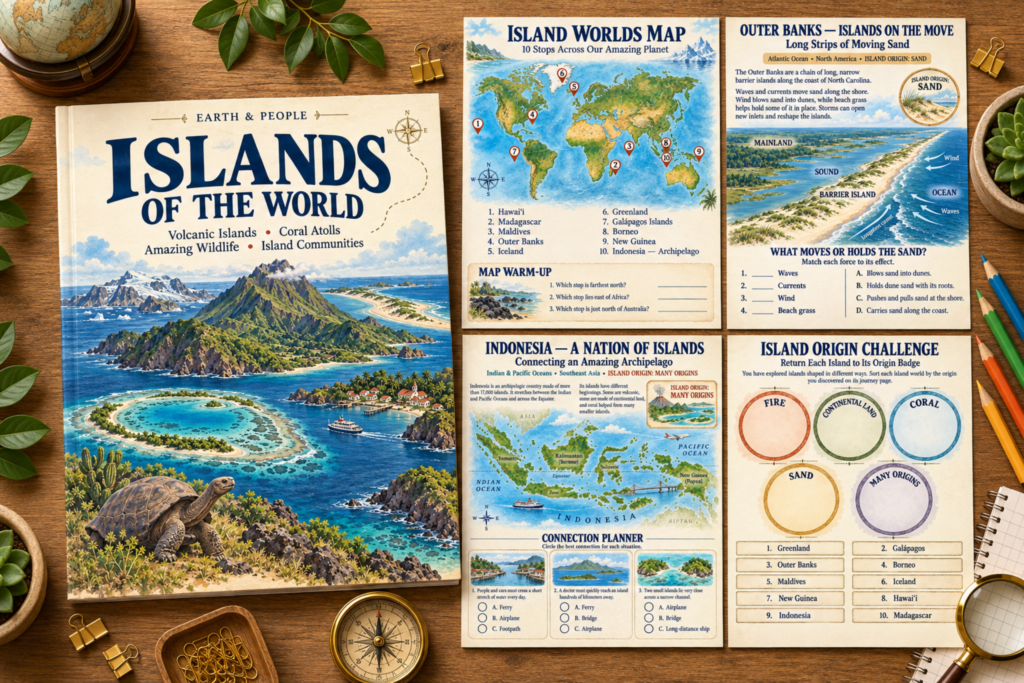
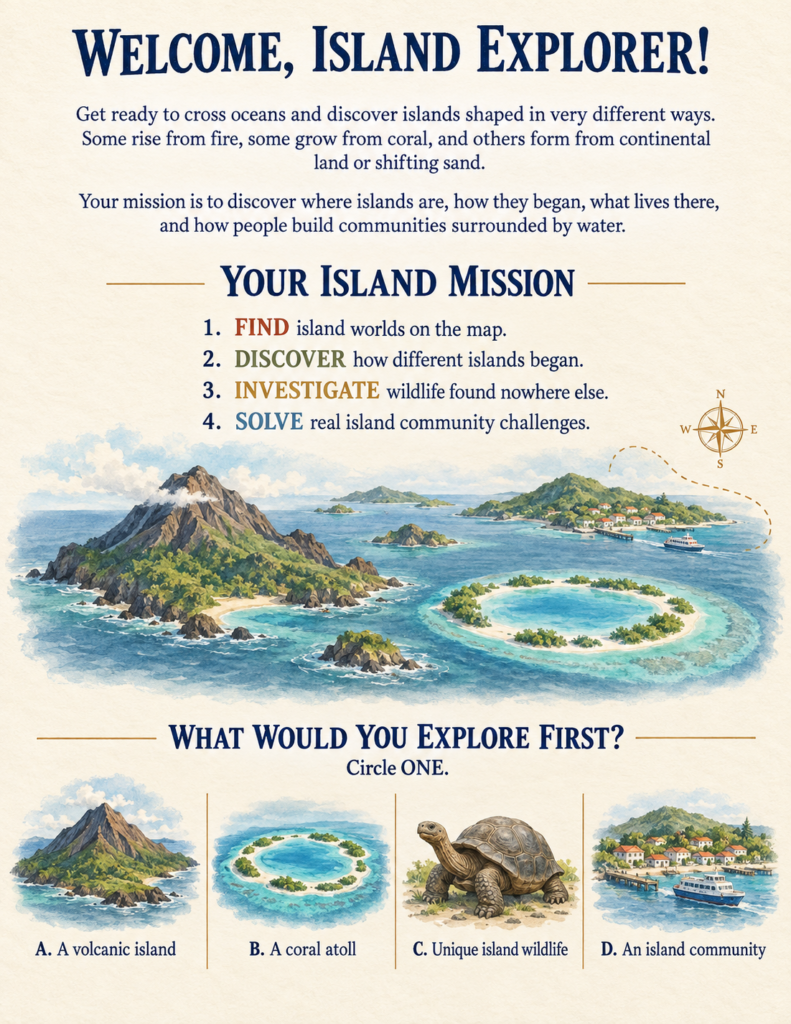
Instead of overwhelming young minds with dense textbook paragraphs, the Islands of the World: Volcanic Islands, Coral Atolls & Amazing Wildlife activity book invites your child on a guided, hands-on expedition across global oceans alongside a friendly, animated travel guide named Leo.
Designed specifically for curious 6- to 9-year-olds, this workbook acts as a personal ticket to ocean exploration. It seamlessly fits into your geography learning path for kids, taking them on a structured journey through 10 incredible island stops across our planet. Let’s explore the hands-on missions your child will complete on their journey!
1. Discover How Islands Begin: Fire, Coral, Sand, and Drift
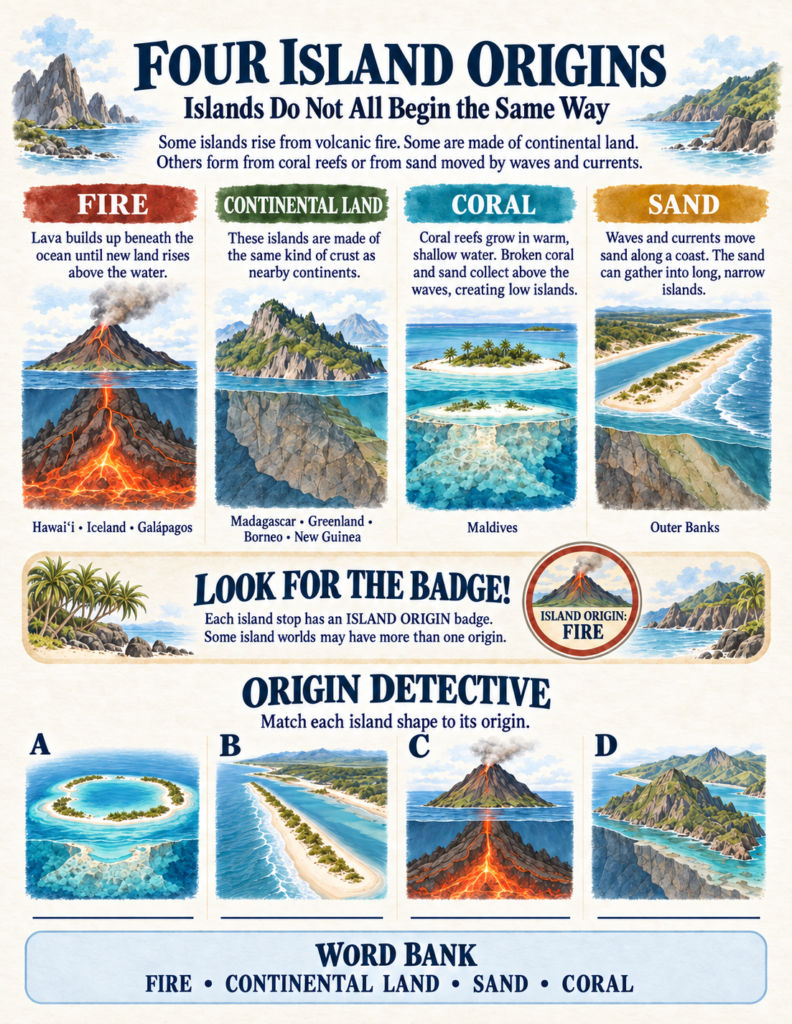
Not all islands are created equal. One of the most mind-blowing concepts for children is discovering that land does not always form the same way.
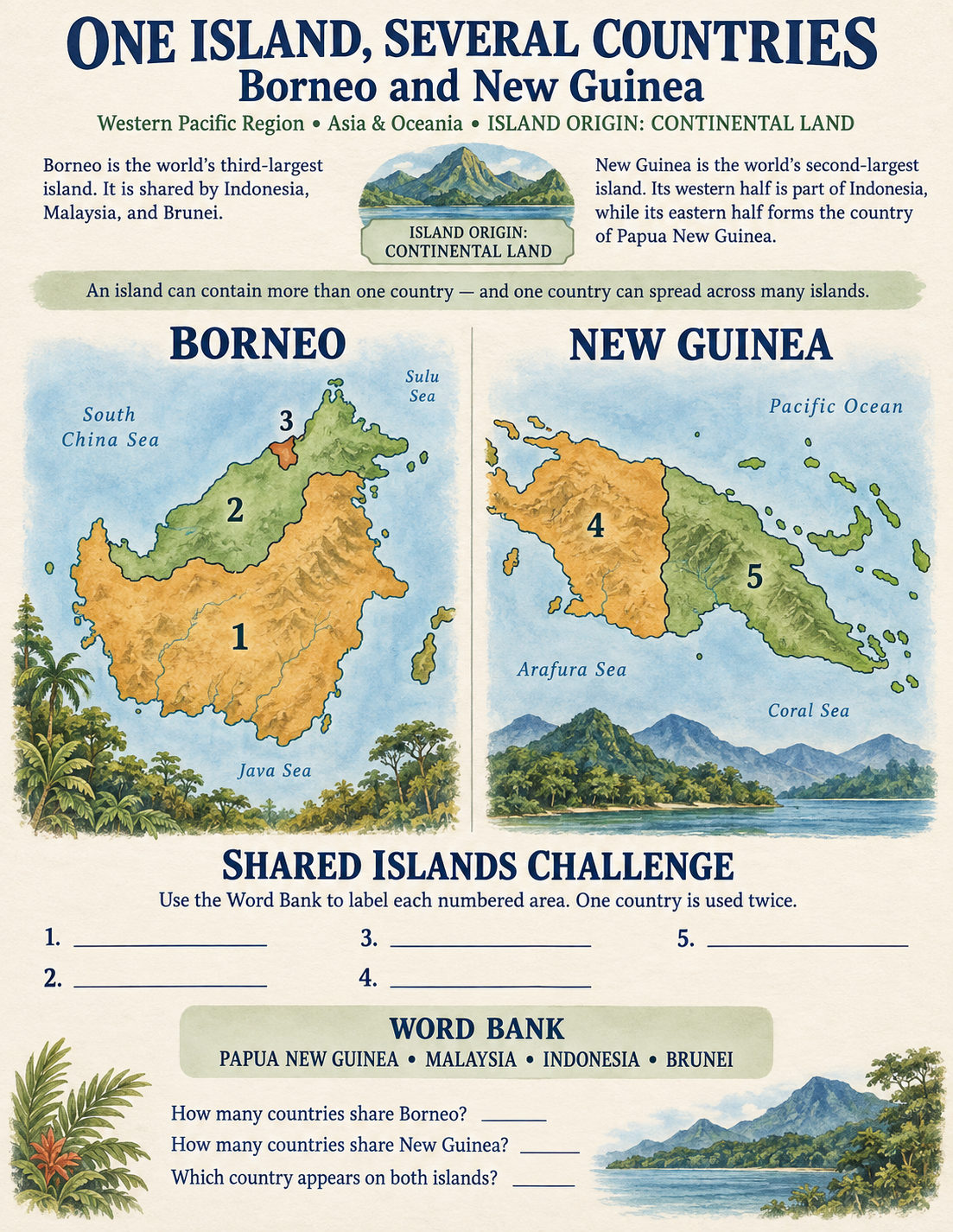
- What’s Inside the Book: Young explorers learn about the «Four Island Origins». They investigate how hot spots beneath the ocean floor build volcanic islands like Hawai’i, how tectonic plates pulling apart shape Iceland, how tiny coral polyps build low atolls like the Maldives, and how shifting waves and wind currents pile up sand along the coast to form barrier islands like the Outer Banks. They also explore continental islands like Madagascar and Greenland that drifted away from ancient landmasses.
- How to Bring It to Life at Home: This is a brilliant opportunity to discuss why project-based learning is essential! Grab some building blocks or modeling clay to physically sculpt a volcanic mountain rising out of a «blue ocean» towel, showing how layers of lava build land above the waves.
2. Evolution in Isolation: Unique Island Wildlife
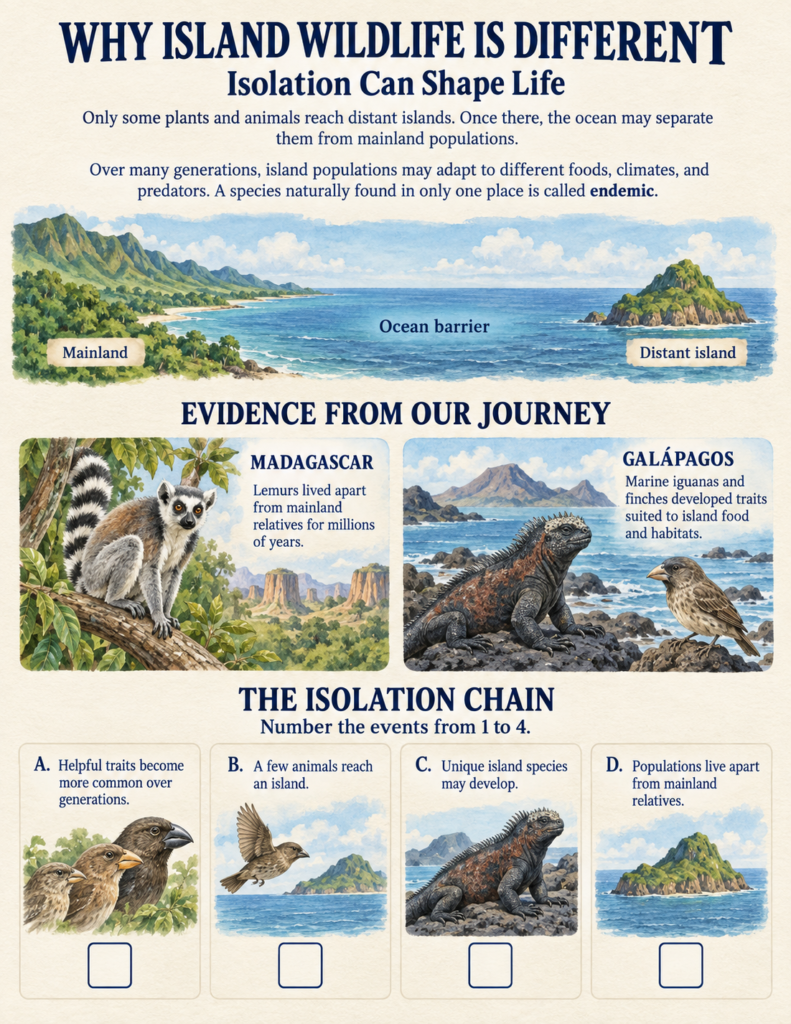
Because oceans act as massive barriers, plants and animals that reach distant islands often evolve in completely unique ways.
- What’s Inside the Book: Children dive into the biology of isolation. They discover ring-tailed lemurs in Madagascar, giant tortoises and marine iguanas with specialized feeding claws in the Galápagos, and endemic species found nowhere else on Earth. Through matching and sequencing challenges, kids trace how physical traits adapt over generations to fit specific island habitats.
- How to Bring It to Life at Home: Connect this life science focus with our guide on why kids love learning about animals by discussing how animals survive when they are cut off from the rest of the world.
3. Engineering Survival: Smart Island Communities
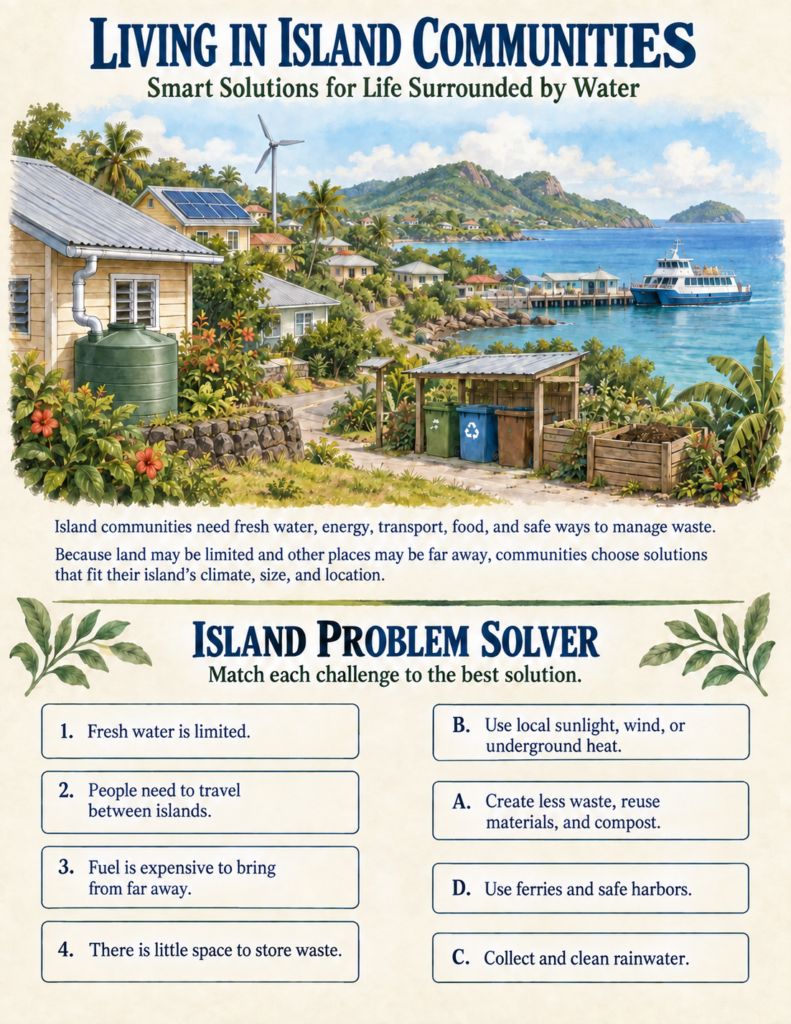
Living on an island means managing limited resources, fresh water, energy, and waste management with extreme care.
- What’s Inside the Book: Kids step into the shoes of island planners. They tackle real-world community challenges, figuring out how to collect and clean rainwater, harness local wind and solar energy, position harbors safely away from delicate coral reefs, and manage waste sustainably.
- How to Bring It to Life at Home: Set up a mini «rainwater harvesting» simulation in your backyard using a clean funnel and a measuring cup during the next rain shower to show kids how precious freshwater collection really is!
4. The Final Mission: The Discovery Island Field Report
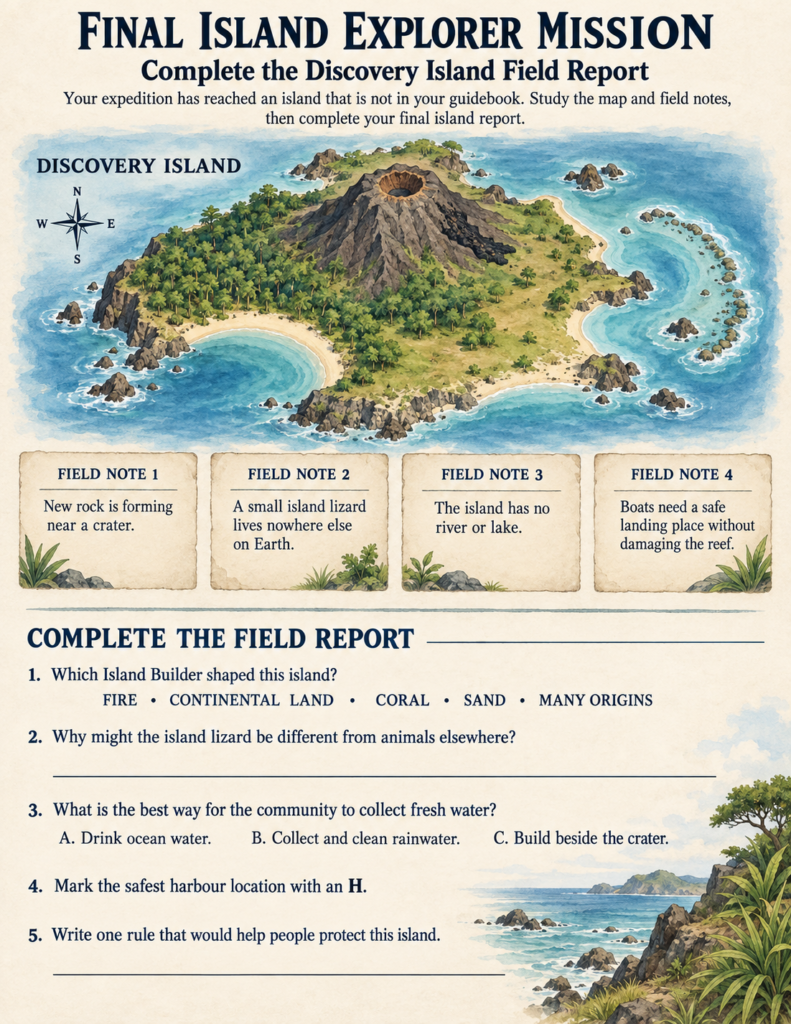
At the end of the book, everything the child has learned is put to the test in a capstone expedition.
- What’s Inside the Book: Your child encounters a brand-new, uncharted landmass: Discovery Island. Using newly acquired field notes about volcanic craters, endemic lizards, and delicate coastal reefs, they must act as lead scientists to complete their final field report, choose the best freshwater solution, and design a safe harbor location.
The Secret to Motivation: Passports and Visa Stamps
Even with the most fascinating geological mysteries and wildlife facts, children can sometimes lose momentum. The secret to keeping them engaged until the final page? Gamification in education.
Throughout the workbook, your child isn’t just passively reading; they are mapping island chains, solving isolation puzzles, designing sustainable communities, and tracking their progress across 10 global stops.
Once they complete their final field report, they earn the ultimate sense of accomplishment, proving they have mastered the ins and outs of our planet’s incredible insular ecosystems.
Are you ready to cross oceans and discover islands shaped by fire, coral, and time? Grab your colored pencils, print the workbook at home, and let the island adventure begin!