The Ultimate Biomes Unit Study for Kids (No Prep!)
If you have ever tried to explain to a six-year-old why a polar bear cannot live in a scorching desert, or why a cactus would not survive in a dense tropical rainforest, you already know that dry facts from a traditional textbook simply do not work. Children need to see, explore, and practically understand how the natural world operates.
Learning about natural zones is one of the most exciting milestones in elementary science and geography. It presents the perfect opportunity to combine climate, botany, and zoology into one powerful biomes unit study for kids.
Let’s dive into how you can transform complex scientific concepts into a thrilling, interactive adventure for your children—without spending your entire weekend preparing lesson plans!
1. Starting with the Basics: What Is a Biome?
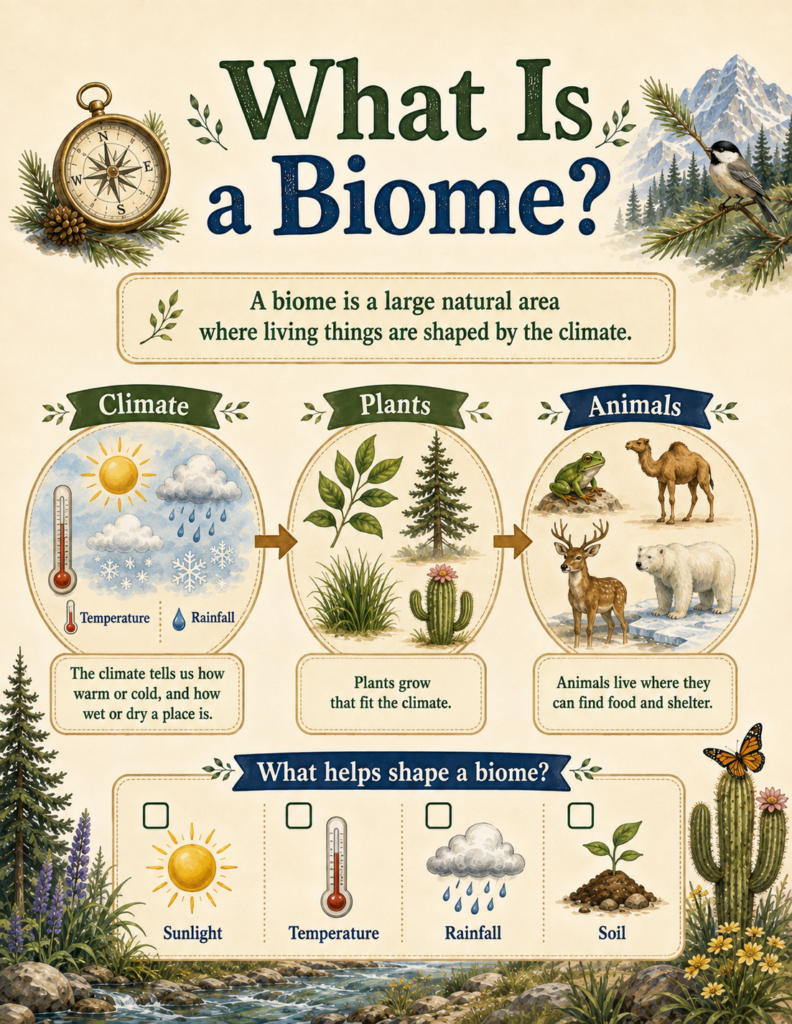
Before embarking on a virtual journey around the globe, your child needs to grasp the foundational concept. A biome is a massive natural area where the survival of plants and animals is entirely dictated by the surrounding climate.
Instead of forcing your child to memorize complicated definitions, you need to find ways to make learning fun by visualizing the concept. Teach them about the four main «gears» that work together to create any biome on Earth:
- Sunlight: How much heat and light does this specific zone receive throughout the year?
- Temperature: Does the area experience harsh, freezing winters, or is it a year-round tropical summer?
- Rainfall: Are there torrential downpours, or does the ground crack from severe drought?
- Soil: How nutrient-rich is the earth? Can it support massive trees or only tough, shallow-rooted grasses?
By breaking it down into these four pillars, kids begin to see the Earth as an interconnected puzzle.
2. Why a Biomes Unit Study is Essential for Homeschoolers
Exploring natural zones gives children far more than just basic geography trivia. It lays a critical foundation for understanding ecology, environmental science, and the delicate balance of all living things. When a child learns how animals adapt to their specific climate, they naturally begin to think analytically.
This is exactly why integrating Montessori geography principles is so effective. This educational philosophy teaches us that children retain information best through child-led discovery and tactile, hands-on materials. Giving them the tools to be active explorers rather than passive listeners changes the entire dynamic of your homeschool day.
3. Mapping the World: A Journey from Tundra to Tropics
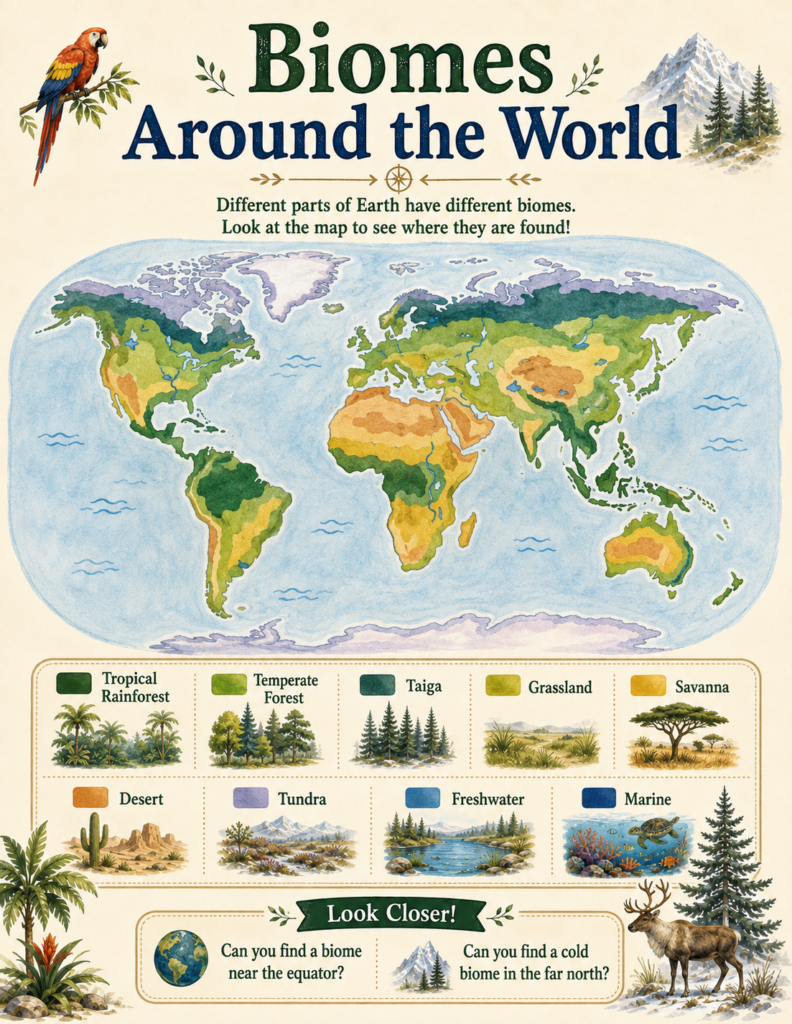
Once the basic definition of a biome is established, it is time to look at the big picture. Working with a vibrant, visual map is the best way to help kids understand where these distinct zones are located globally.
Show your child how the major biomes are distributed across our planet and discuss the unique characteristics of each:
- The Tropical Rainforest: Hot, incredibly humid, and bursting with life. Rainforests are home to more than half of all animal species on Earth!
- The Taiga & Tundra: Defined by harsh cold, permafrost, and dense evergreen forests. This is the ultimate playground for moose, wolves, and polar bears.
- The Savanna & Desert: Featuring blistering hot days, surprisingly cold nights, severe water scarcity, and incredible plant adaptations like the baobab tree and the mighty cactus.
- Freshwater & Marine Biomes: The vast underwater worlds of our oceans, rivers, and lakes, ruled by sea turtles, sharks, and colorful coral reefs.
Discussing these zones while pointing them out on a world map helps solidify spatial awareness and geographical mapping skills.
4. Hands-On Practice: The Explorer’s Journal
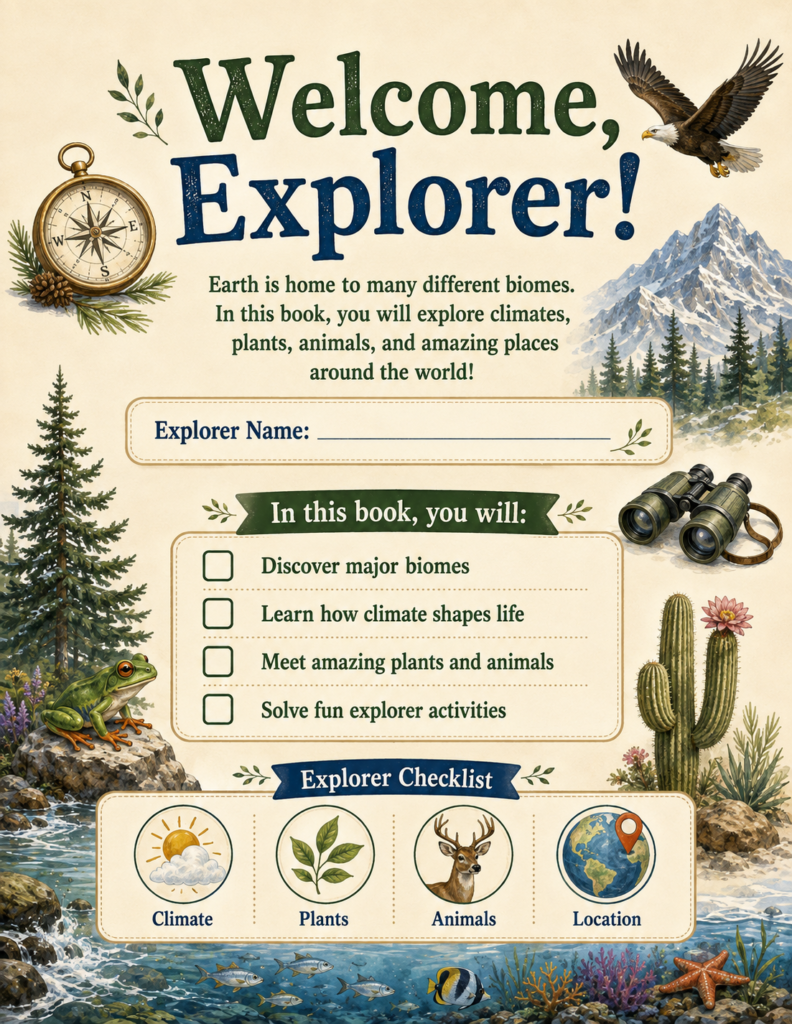
Knowledge must be anchored through practice! To make your biomes unit study for kids truly memorable, introduce a role-playing element. Hand your child an «Explorer Checklist» or field journal.
Ask them to pick any biome on the map and independently research and record the following data:
- The Climate: What is the weather like?
- The Flora: What types of plants have adapted to survive there?
- The Fauna: What animals hide in this habitat?
- The Location: Where exactly on the world map can this amazing place be found?
This type of engaging, project-based learning is an absolutely brilliant way to prevent summer slide. It keeps their reading, writing, and research skills sharp during breaks without feeling like a chore.
5. Taking It Further: Biome Dioramas and Sensory Play
If you want to add an extra layer of creativity to your unit study, bring the biomes to life right on your kitchen table!
- Shoebox Dioramas: Have your kids pick their favorite biome and build a 3D model using an old shoebox. They can use sand and rocks for a desert, or cotton balls and white clay for the tundra.
- Sensory Bins: For younger siblings joining in on the family-style learning, create a sensory bin. Fill a plastic tub with blue water beads and plastic sea creatures for a marine biome, or use dried beans, twigs, and toy lions for a savanna setup.
Activities like these bridge the gap between abstract geographical concepts and tangible, play-based learning.
The Ultimate Open-and-Go Solution for Parents
Gathering all these materials, drawing maps, and structuring checklists from scratch is a massive undertaking that can easily eat up your precious weekend. If you are looking for a way to add vibrant structure to your science and geography lessons without the burnout, we have the perfect solution!
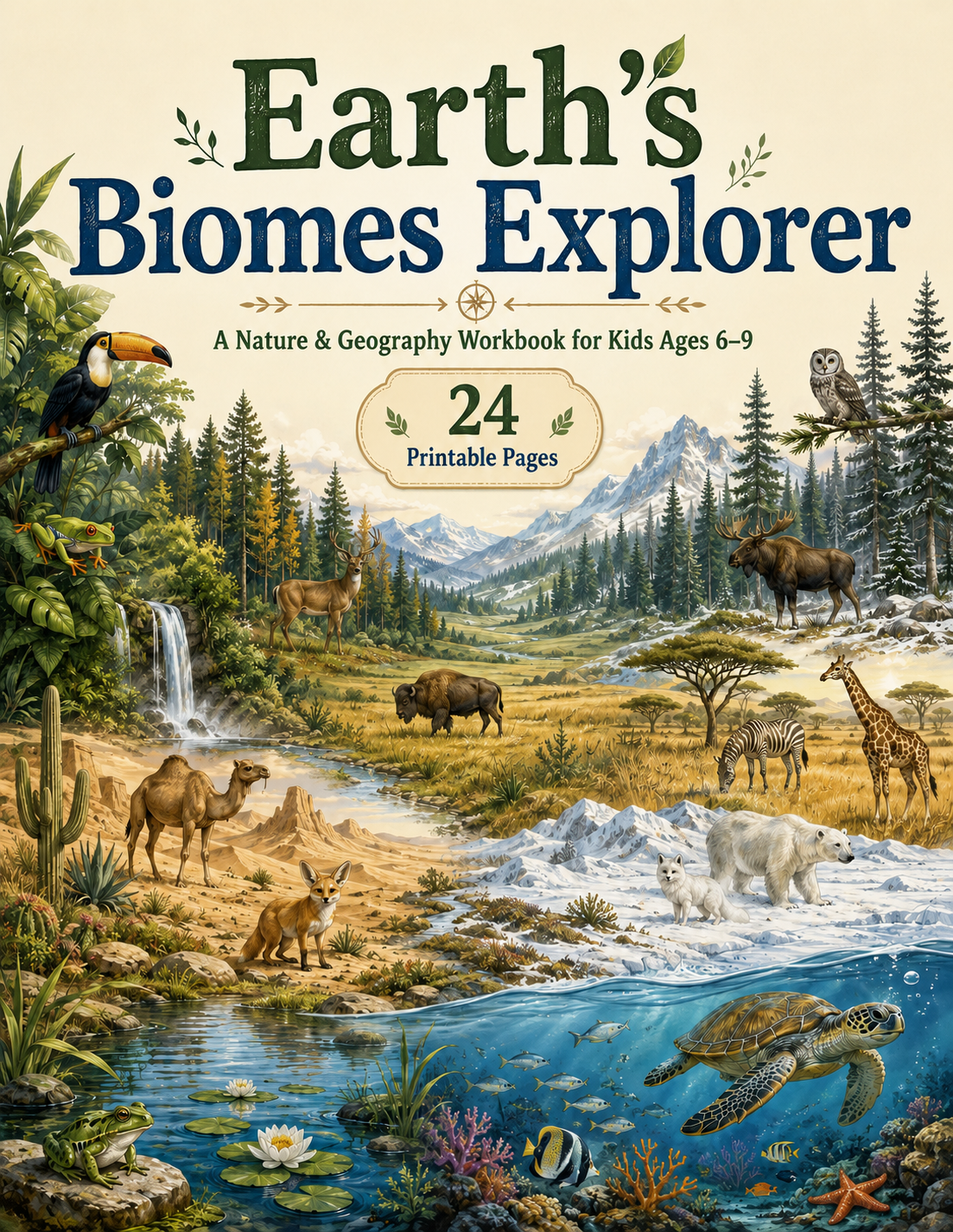
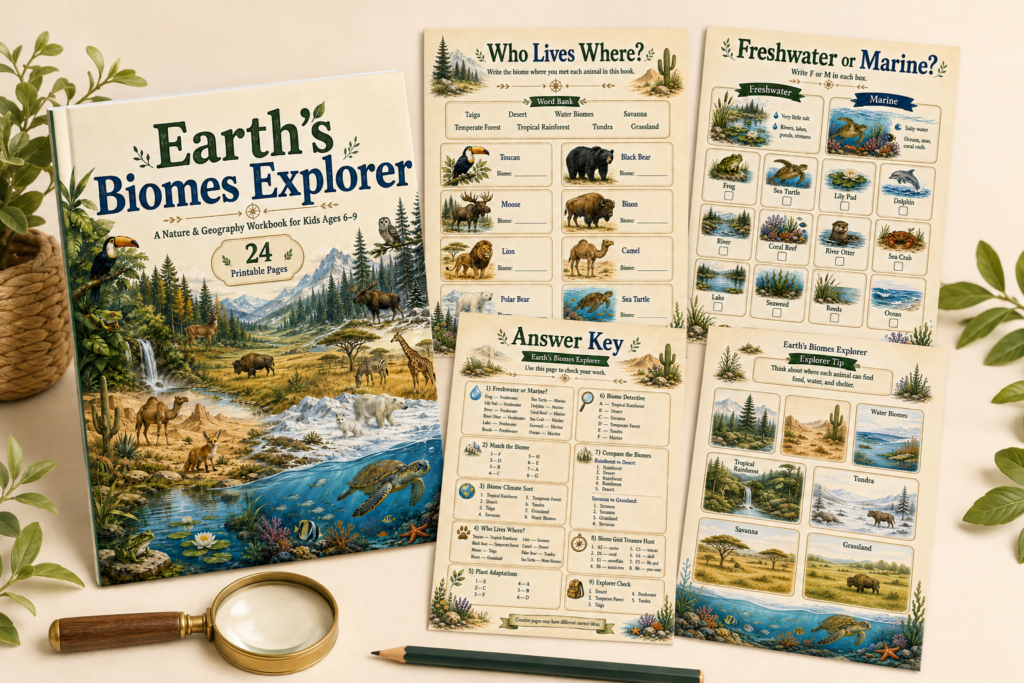
The Earth’s Biomes Explorer workbook by Tiny Joy Studio is a 24-page, stunningly illustrated «open-and-go» adventure. It contains absolutely everything you need: from breaking down climate zones and mapping activities to fascinating facts about unique plants and animals. Your child won’t just get an education; they will embark on a real expedition with Leo the Guide!
Stop planning and start exploring.