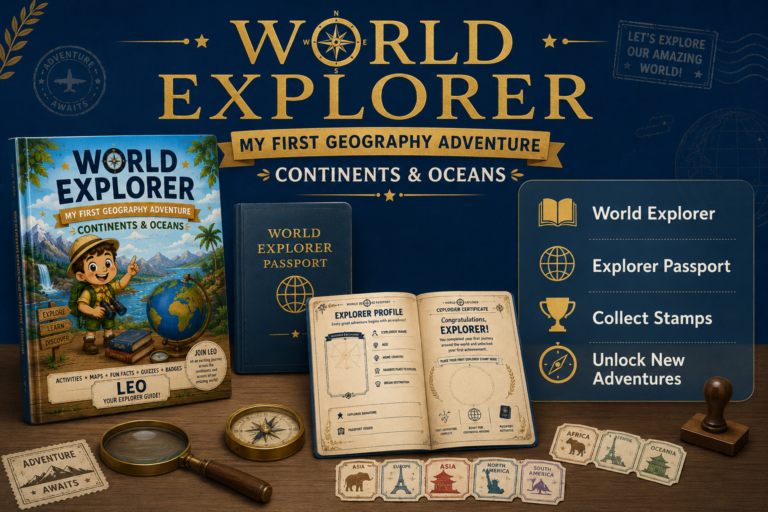
Explore Our World: A Three-Step Geography & Earth Systems Curriculum for Young Explorers
Most elementary geography programs reduce our planet to a checklist of disconnected trivia: color a flag, memorize a capital city, and label a blank map without ever understanding how terrain, climate, and human communities shape one another. Designed to build spatial literacy from the ground up for learners ages 6 to 10, the explore our world geography curriculum for kids from Tiny Joy Studio treats geography as a living, connected system rather than a flashcard drill.
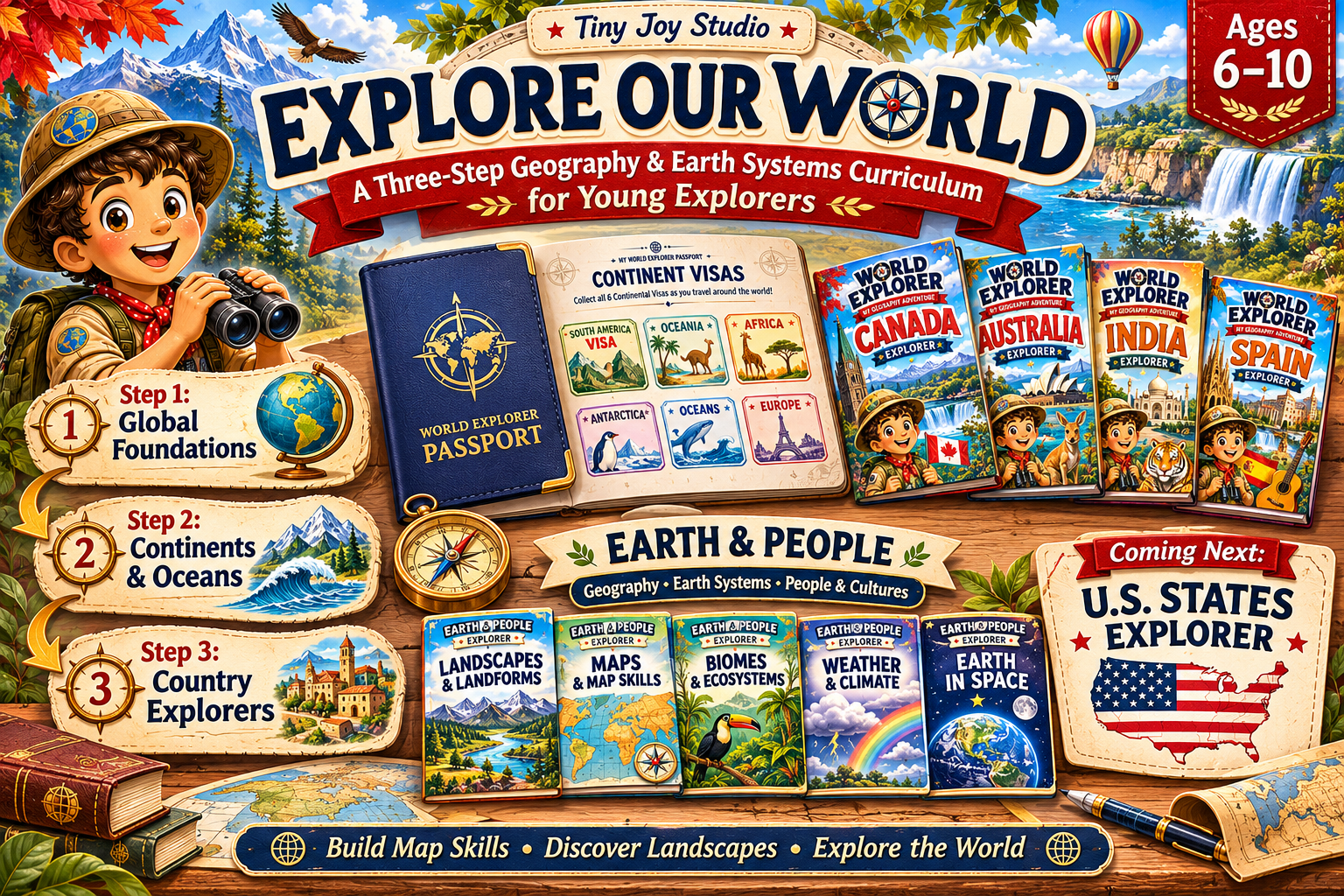
As a core pillar of the Tiny Joy Studio Learning Library, Explore Our World organizes global learning into a clear, progressive architecture: our three-step World Explorer Series (WES), our modular Earth & People thematic bundles and standalone field books, and an upcoming 50-volume U.S. States Explorer branch built on the exact same inquiry framework.

Pillar 1: The World Explorer Series (WES) — A Three-Step Geography Ladder
Children struggle with country studies when they have no mental map of how continents, climate zones, and physical barriers fit together. Our structured geography learning path for kids—the World Explorer Series (WES)—solves this by guiding young geographers up a deliberate three-step ladder:
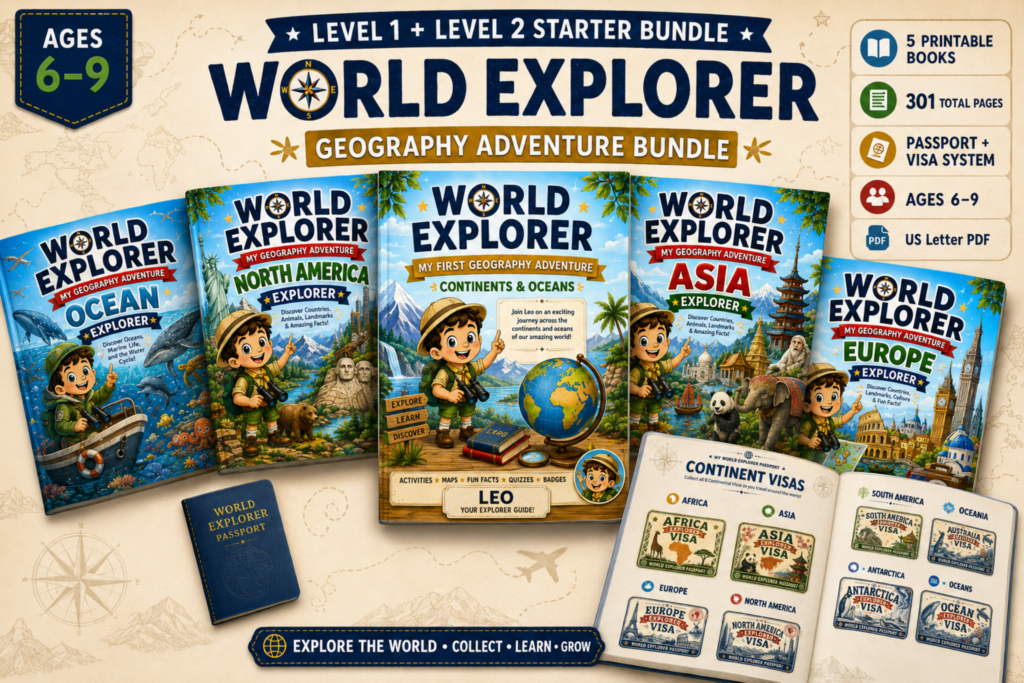
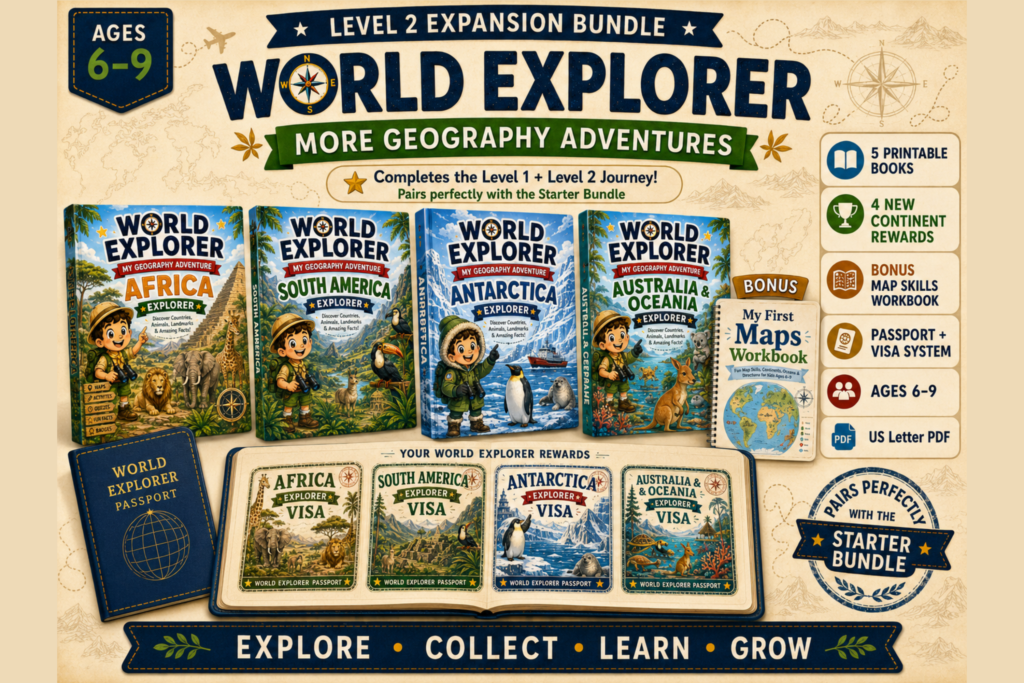
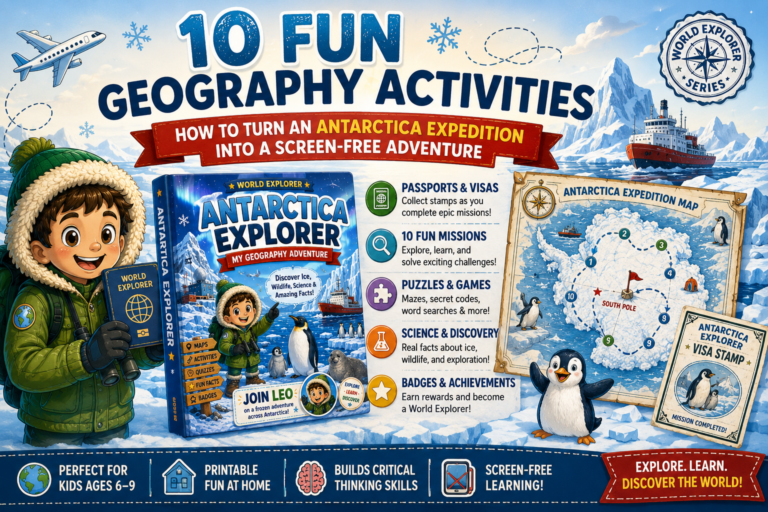
Complete Levels 1 & 2 with Two Complementary Bundles. Together, the 5-book Starter Bundle and 4-book Expansion Bundle cover the entire first two levels of the World Explorer Series — 9 printable workbooks in total. The Starter Bundle introduces essential geography skills and begins the journey across continents and oceans, while the Expansion Bundle completes the remaining regional adventures. Together, they build a strong foundation for Level 3: Country Explorers, where children dive deeper into individual nations and continue collecting visas for their World Explorer Passport.
- Step 1: Global Foundations (Continents, Oceans & Map Literacy). Before memorizing borders, learners master how a round globe translates onto flat projections, how latitude and climate bands govern temperature, and how to use compass bearings, map scales, and coordinate grids with confidence.
- Step 2: Regional Systems & Physical Corridors. Students zoom in on major continental regions to see how mountain chains, river basins, seas, and trade corridors connect neighboring territories and shape regional life.
- Step 3: Individual Country Deep Dives. With global and regional frameworks firmly in place, children investigate individual nations through authentic terrain clues, settlement patterns, cultural traditions, and everyday human adaptation—earning passport-style milestones as they build their world knowledge.

Pillar 2: Earth & People — Thematic Bundles & Standalone Field Investigations
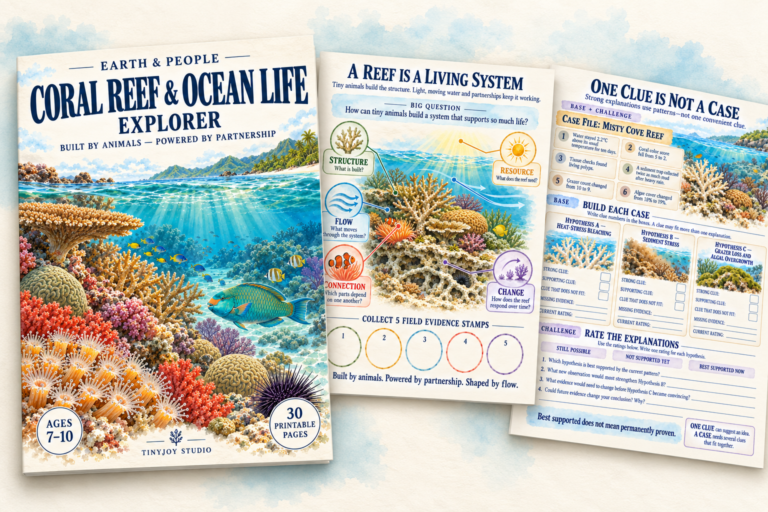
While WES provides a step-by-step geographic spine, Earth & People offers 28- to 30-page standalone investigations (and money-saving thematic bundles) that examine how physical landforms and human societies interact across six continents. Every book replaces passive reading with diagnostic model audits, real data tables, and map-based detective work:
Physical Terrain & Dramatic Landforms
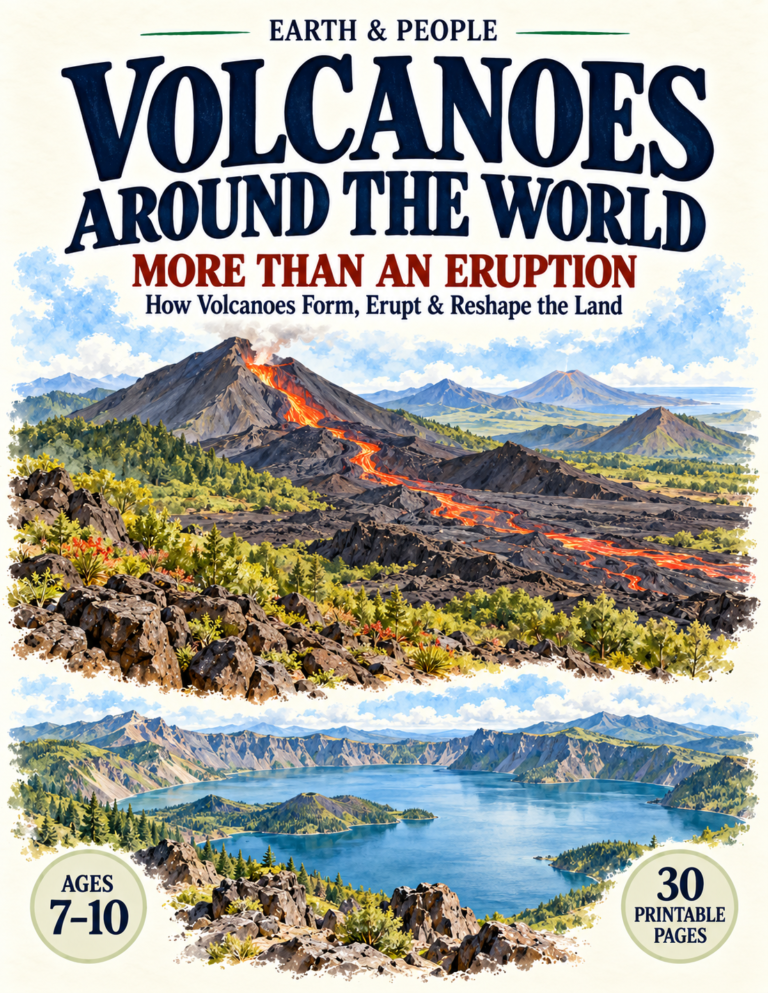
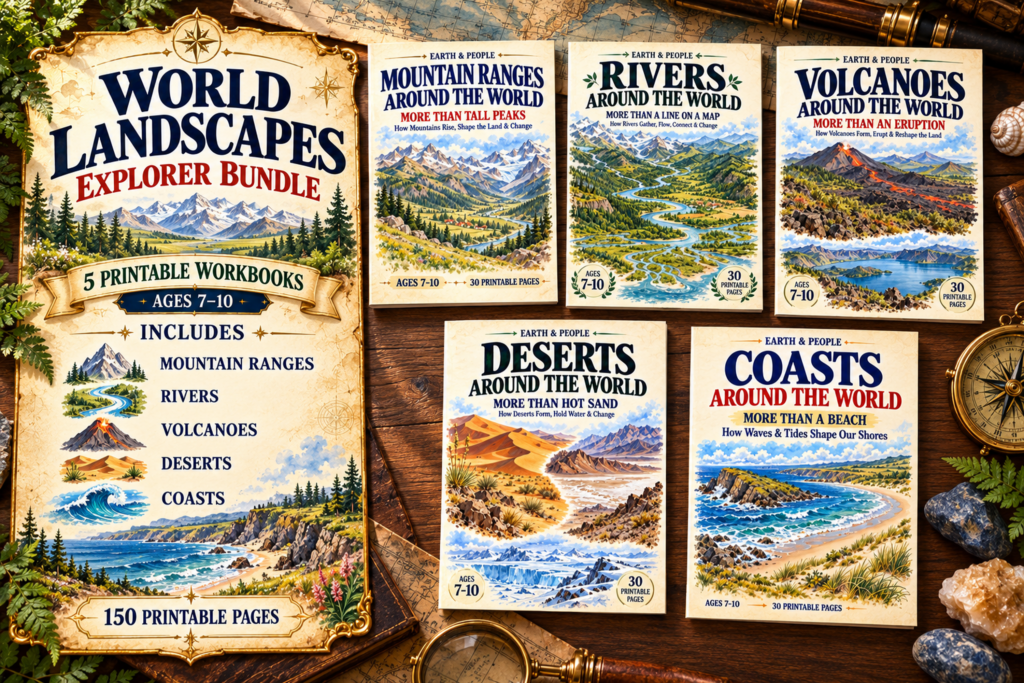
- World Landscapes Workbook Bundle for Kids: Uniting 150 printable pages across five core terrain guides, this collection teaches children to read Earth as one connected physical engine. Learners escape the “peak trap” in the Mountain Ranges Workbook for Kids, think in drainage basins rather than blue map lines in the Rivers Workbook for Kids, and track sediment budgets and tidal ranges in the Coasts Workbook for Kids—alongside dedicated field books on Volcanoes and Deserts.
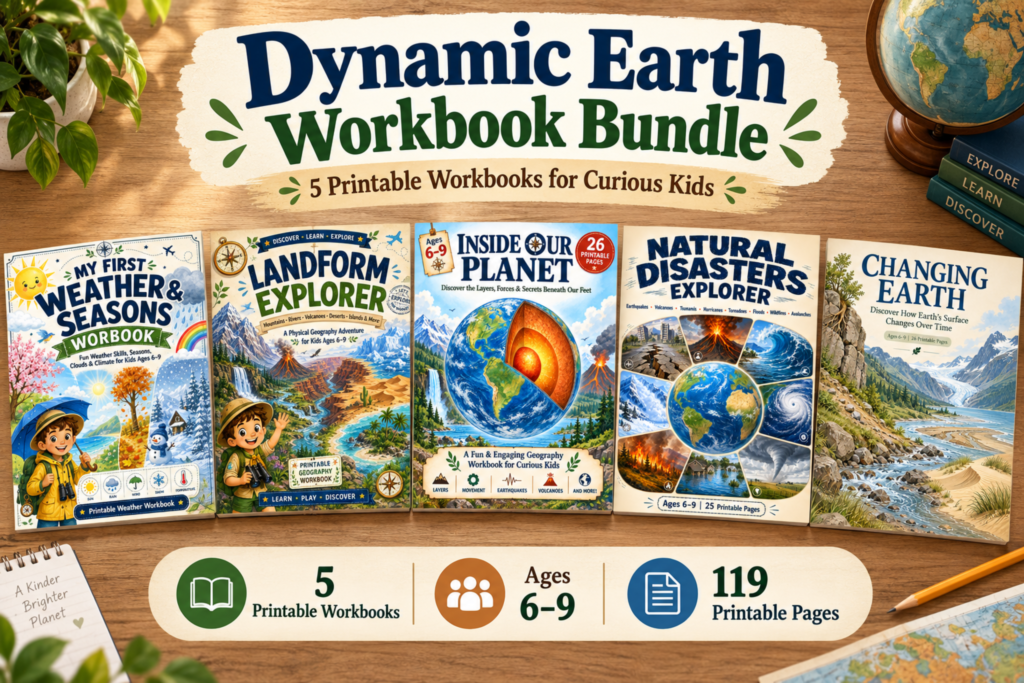
- Amazing Earth Adventures Workbook Bundle: Takes young investigators across Earth’s most extraordinary geological landmarks, canyons, caves, waterways, and protected wild regions—including conservation case studies like our National Parks Workbook for Kids, where learners think like park rangers across 12 parks on six continents.

Human Geography, Culture & Global Infrastructure
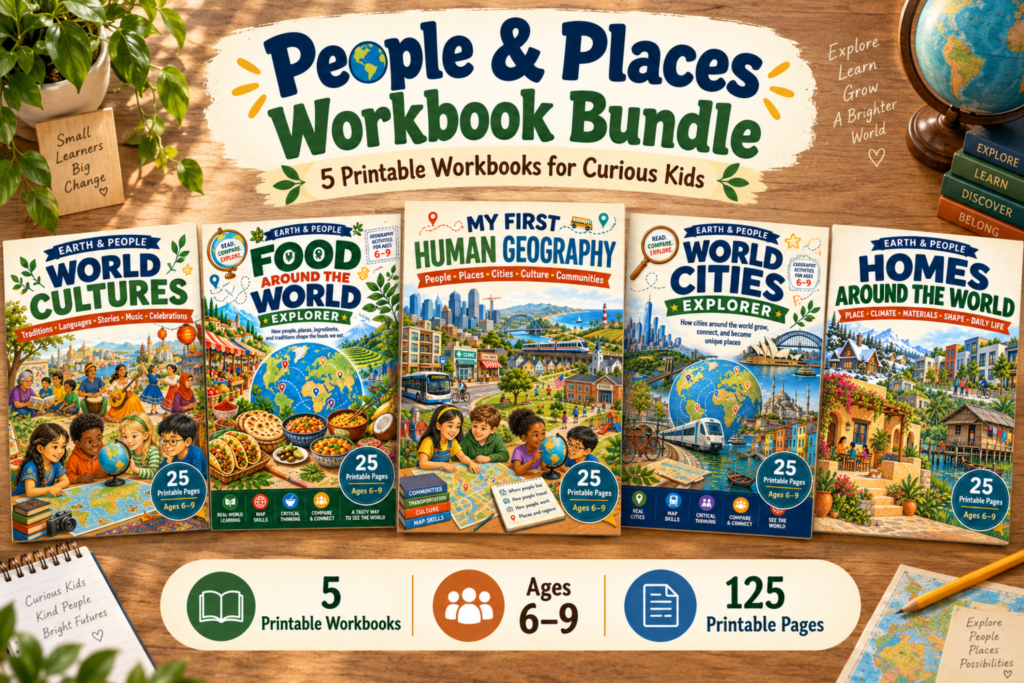
- People and Places Workbook Bundle: Investigates how human communities adapt cities, transit, schools, languages, and traditions to local geography. Within this cultural and civic wing, standalone titles dive deep into specific human systems:
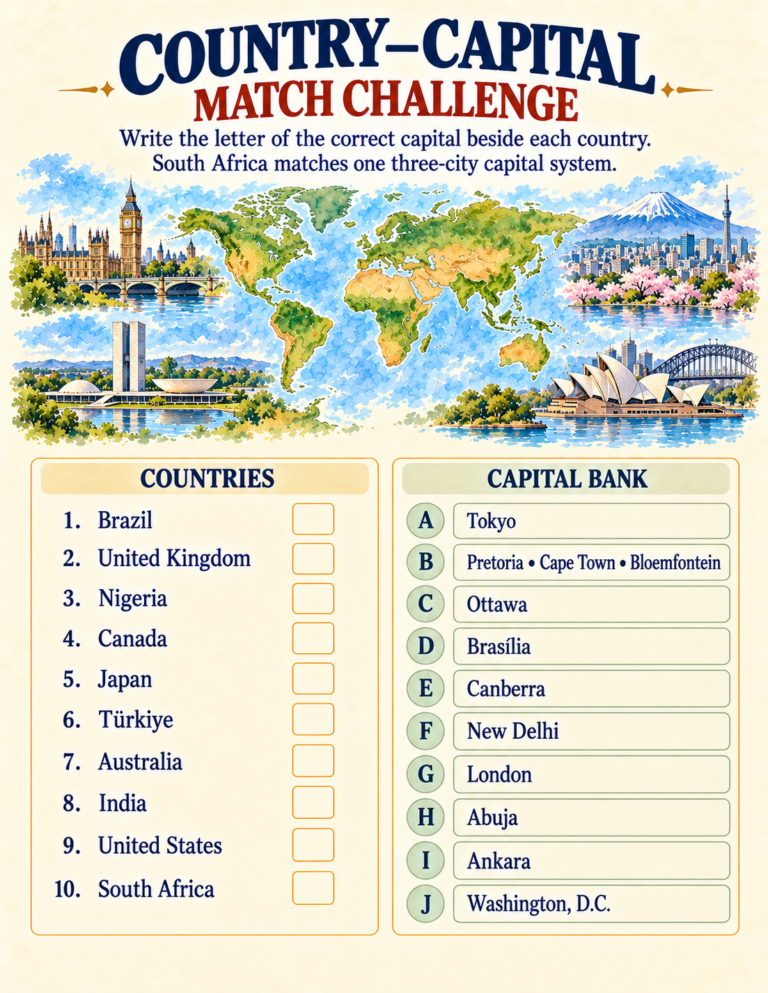
- Civic & Historical Geography: Discover why capitals are chosen through compromise, defense, or river access in our Countries and Capitals Workbook, and decode coats of arms, flora, fauna, and anthems across six continents in our National Symbols Workbook for Kids.
- Mobility & Community Adaptation: Trace how cog railways, bush planes, cargo barges, and boat schools overcome steep mountains, flooded deltas, and roadless tundra in our Transportation Workbook for Kids, alongside standalone explorations of Schools Around the World, Languages Around the World, Festivals Around the World, and Toys & Games Around the World.
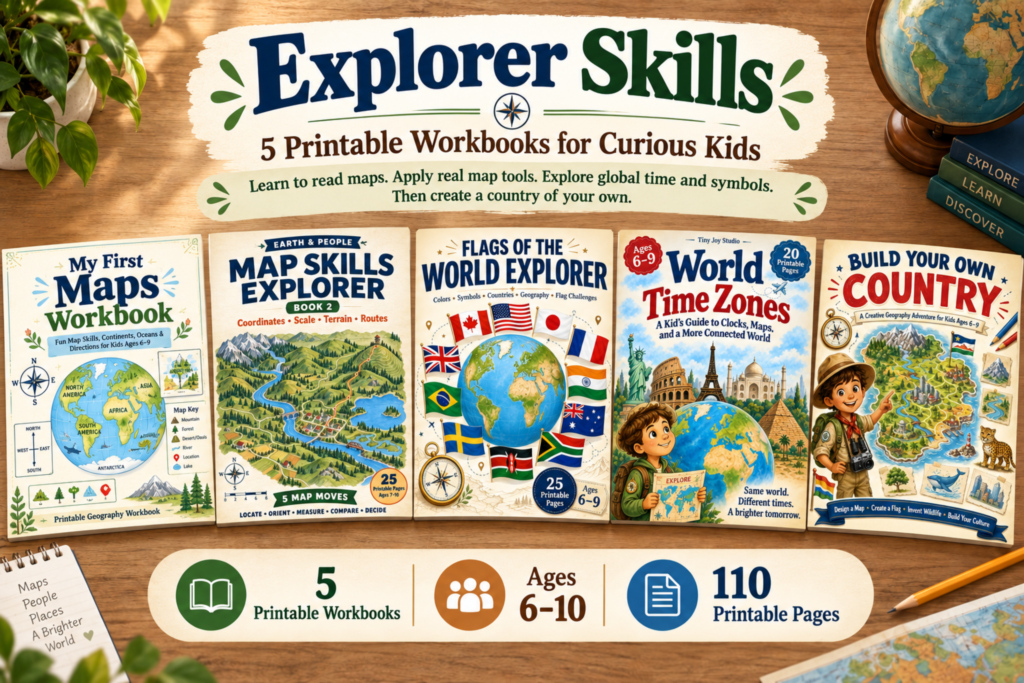
- Explorer Skills Workbook Bundle: Equips young geographers with the practical toolkit behind every map—mastering compass navigation, coordinate grids, route planning, scale reading, and field notebook logging.

Pillar 3: U.S. States Explorer Series (Upcoming 50-Volume Branch)
As families complete global and regional geography, many ask for the same depth and intellectual respect applied to individual American states. We are currently developing a major third pillar for Explore Our World: a 50-book U.S. States Explorer series modeled directly on the World Explorer Series (WES) philosophy.
Rather than recycling generic state-bird coloring pages and dry population tables, each standalone state volume will investigate:
- Physical Terrain & Watersheds: How mountain ridges, coastlines, plains, and river systems shaped where towns grew and how local industries developed.
- Historical Turning Points & Civic Identity: Primary clues, regional crossroads, and authentic state symbols placed in real historical context.
- Map Literacy & Regional Connections: Coordinate challenges, border dynamics, and economic links connecting each state to its neighbors and the wider nation.
Quick Guide: Matching Explore Our World to Your Homeschool Goals
| Learning Focus | Recommended Starting Point | Ideal Ages | What Learners Practice |
| Complete Sequential World Geography | World Explorer Series (WES) 3-Step Path | Ages 6–10 | Continents, map projections, regional corridors, and country deep dives |
| Landforms, Geology & Physical Earth | World Landscapes & Amazing Earth Adventures Bundles | Ages 7–10 | Topographic contours, watersheds, erosion, tectonics, and park stewardship |
| World Cultures, Cities & Civic Systems | People & Places Bundle & Single Cultural Titles | Ages 6–10 | Settlement logic, transport engineering, languages, symbols, and traditions |
| Hands-On Navigation & Map Reading | Explorer Skills Workbook Bundle | Ages 7–10 | Compass bearings, coordinate grids, timetable routing, and field logs |
Connecting Geography to History & Economics Across Tiny Joy Studio
Geography is the stage on which human history and economic decisions unfold. Once your learner understands how rivers, mountain barriers, and coastlines shape human movement, extend their curiosity into our companion curriculum hubs:
- See How Terrain Shaped Ancient & Modern Events: Pair regional geography and landscape studies with our Explore the Past history curriculum for kids to trace how Nile floods sustained Ancient Egypt, how Mediterranean sea routes built Rome, and how deep geological time reshaped prehistoric continents.
- Connect Trade Routes & Logistics to Microeconomics: Move from global transport corridors into real-world operational strategy with our Build, Decide & Grow kids business curriculum, where learners manage delivery routes, supply chains, pricing, and resource trade-offs across 10 playable businesses.
Whether you are building a full-year homeschool geography spine or exploring one fascinating corner of the globe at a time, the explore our world geography curriculum for kids turns flat maps into a living, connected story of Earth and the people who call it home.