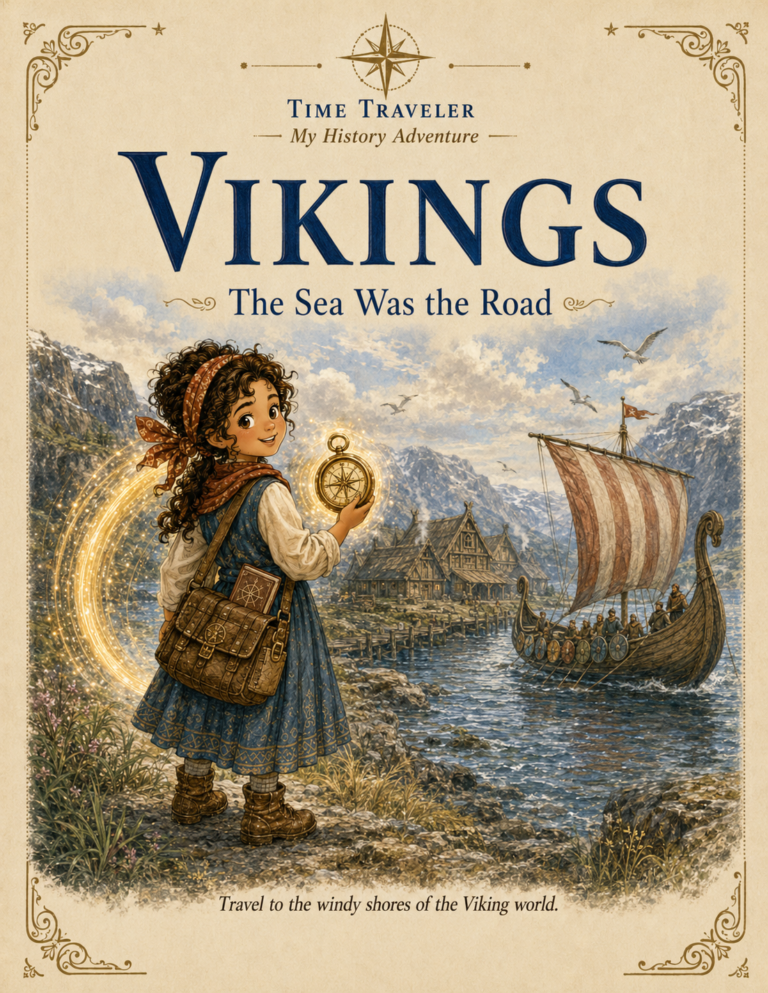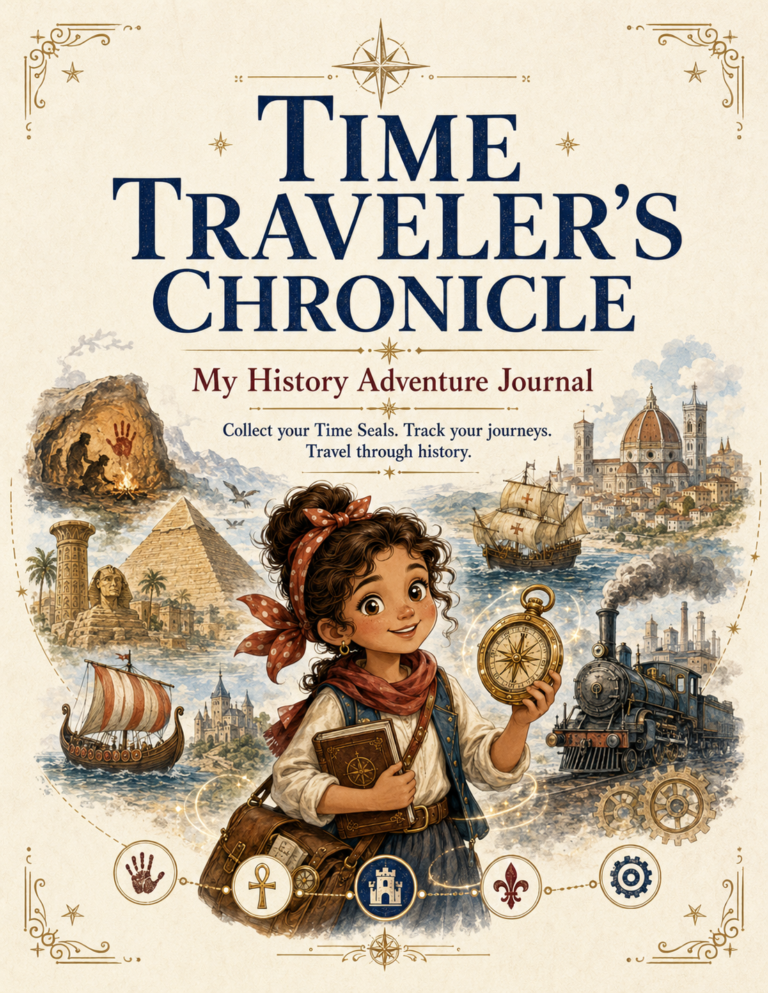
Focused History Unit Studies for Kids: Examining How the Past Actually Worked
When elementary learners study ancient civilizations or pivotal historical eras, standard curriculum packs often race across centuries of kings, dynasties, and battle dates without ever explaining how those societies actually functioned. Designed to replace surface trivia with deep, thematic investigation, focused history unit studies for kids slow down the clock so young learners can examine the mechanics of the past up close. Instead of skimming an entire empire in four pages, our focused history unit studies for kids act like an analytical microscope—isolating one civilization, engineering feat, belief system, or turning point and asking: How did this work, what physical clues did it leave behind, and why did it matter?
Whether your learner is fascinated by how Roman engineers sloped aqueducts across valleys, how scribes decoded Egyptian hieroglyphs using the Rosetta Stone, or how a medieval castle withstood a siege, each standalone printable unit turns history into structured detective work for ages 7 to 11.

Two Complementary Lenses: Focused History vs. Time Traveler
Within TinyJoy Studio’s broader Explore the Past history curriculum for kids, families have access to two distinct, complementary ways to investigate human history:
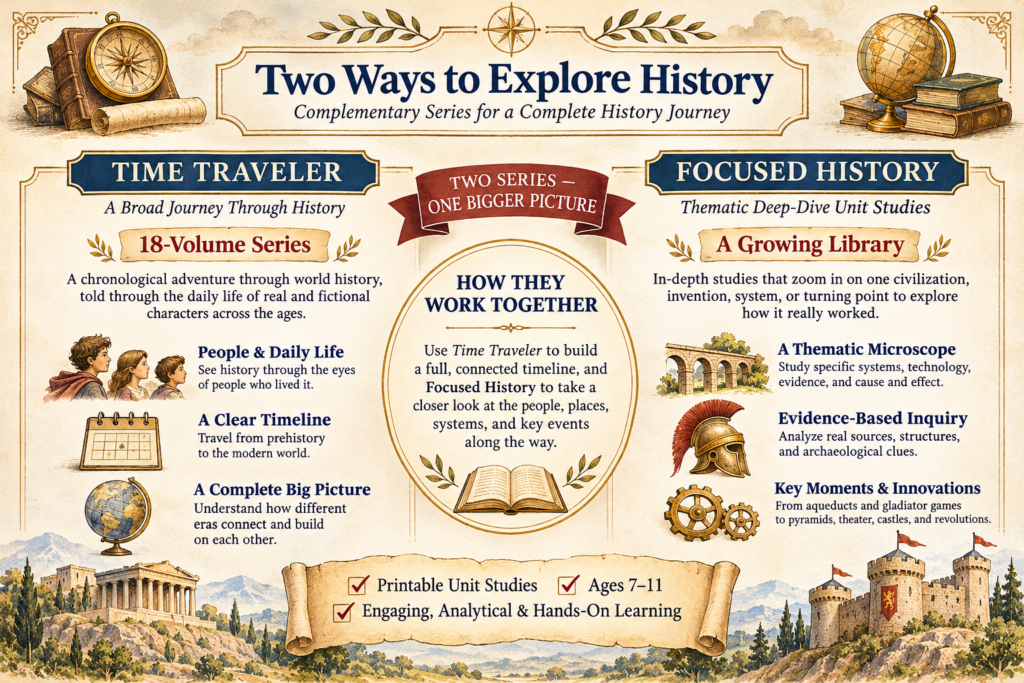
| Curriculum Line | Core Perspective | How Children Experience the Past | Best Paired When… |
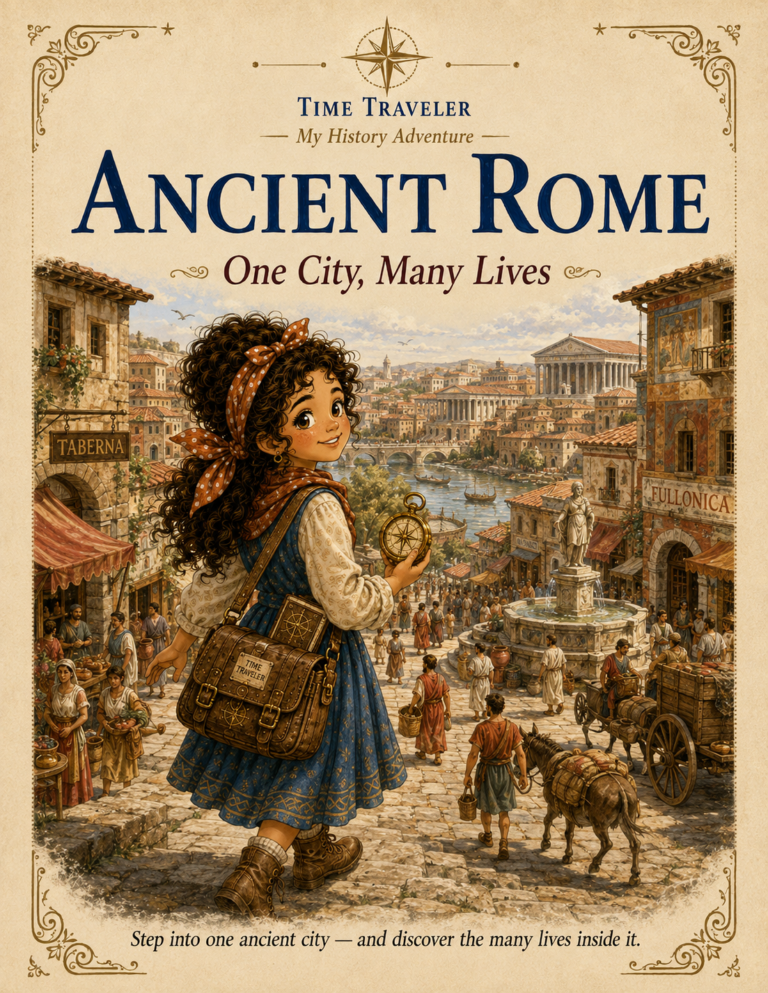
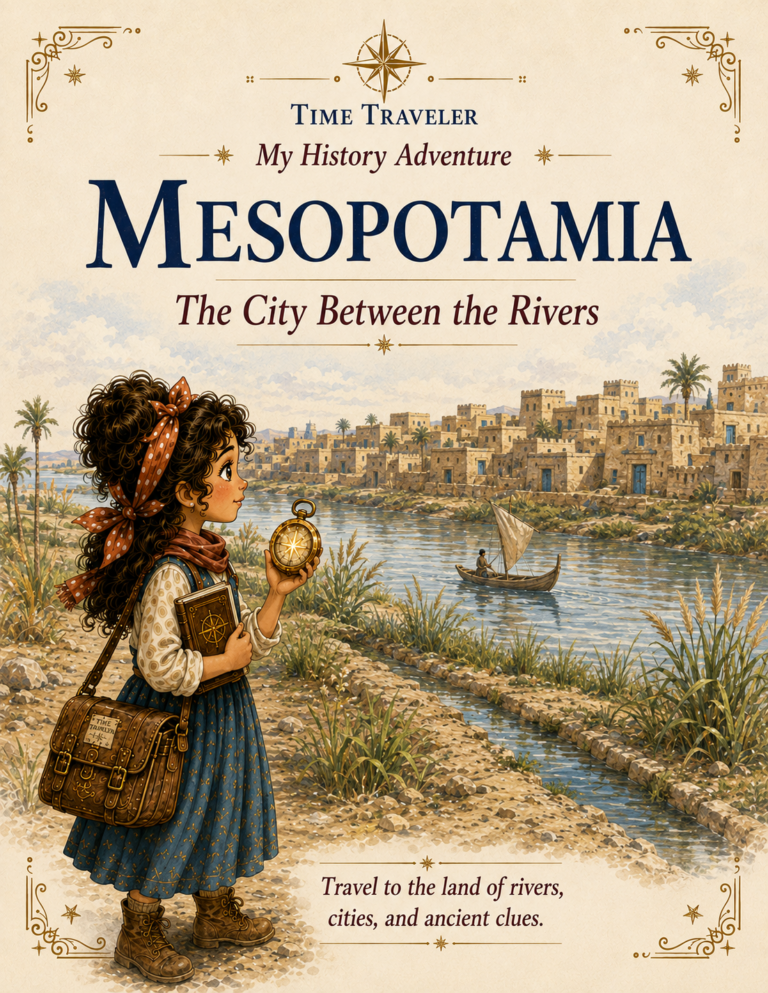
| Time Traveler (18 Adventures with Mia) | Social History from the Inside (“One Day”) | Drops learners into a specific moment—such as 125 CE during the reign of Hadrian—to experience daily life alongside ordinary residents (Junia, Lucius, Felix, and Daphne) through housing, legal rights, markets, and street life, intentionally without a chronology of wars or rulers. | You want children to feel what everyday life was like for real people living inside an era. |
| Focused History (Thematic Deep-Dive Units) | Thematic Microscope (“How It Worked”) | Pauses the timeline to dissect specific systems, technologies, cultural institutions, and turning points—analyzing aqueduct gradients, gladiatorial logistics, architectural defense, and primary historical records. | You want sustained analytical depth on a specific civilization, invention, or historical crisis. |
You can explore all 18 immersive day-in-the-life missions inside our interactive history for kids curriculum (Time Traveler). Used together, the two series create a complete historical picture: a student can spend a day walking the streets of Hadrian’s Rome with Mia in Time Traveler, and then open Focused History to inspect the engineering blueprints behind the roads and aqueducts keeping that city alive.
Inside the Current Focused History Catalog (And What Is Growing Next)
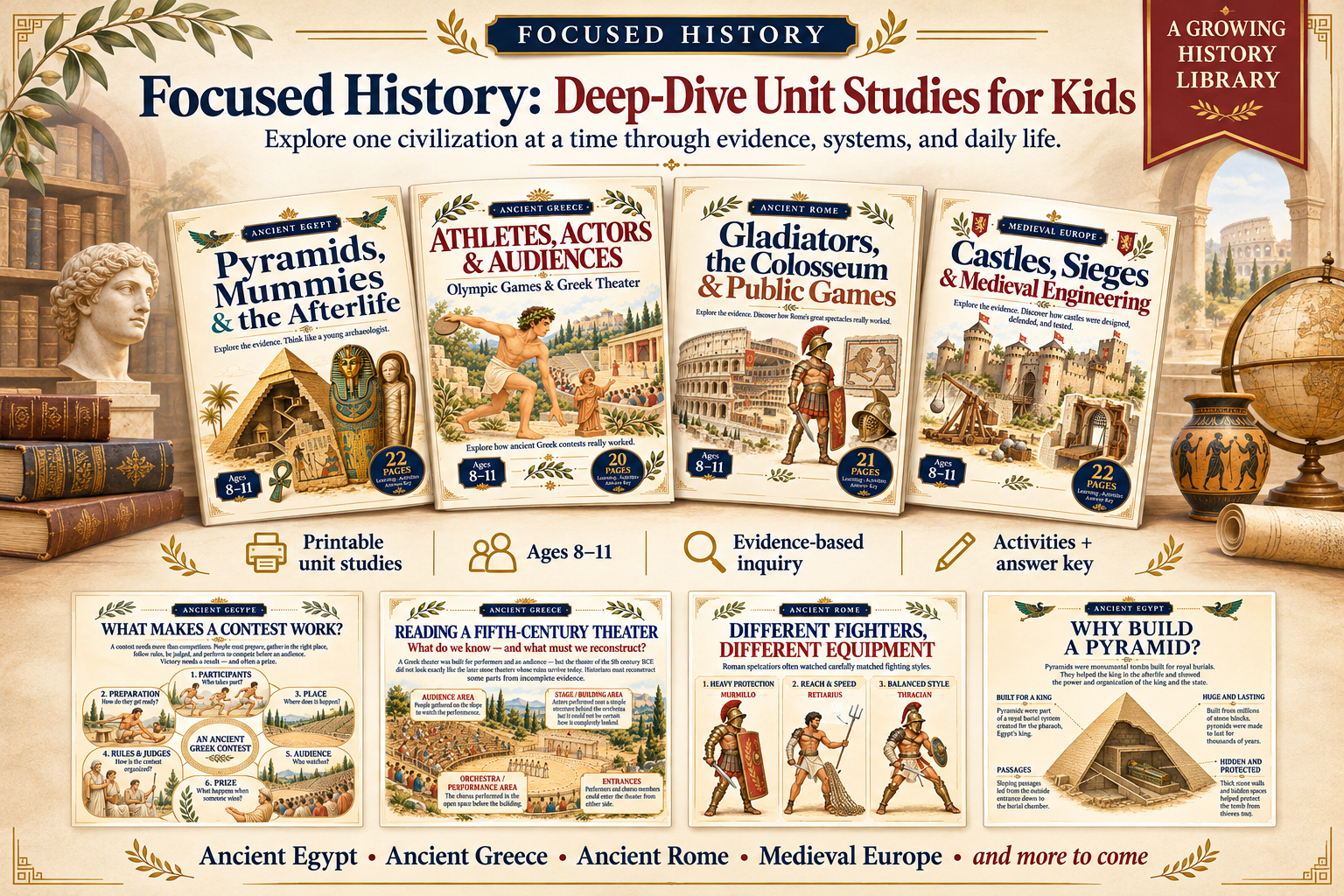
Every volume in Focused History is engineered as a self-contained, screen-free printable unit with clear visual scaffolds, primary-source reasoning prompts, and full answer keys. Currently, the growing library spans five major historical clusters—with dozens of additional civilization, invention, and turning-point units actively in development:
1. Ancient Egypt: Monumental Architecture, Scribes & Sacred Belief (Ages 8–11)
Rather than squeezing three thousand years of Nile civilization into a single overview, our Egyptian cluster divides the ancient world into three specialized investigations:
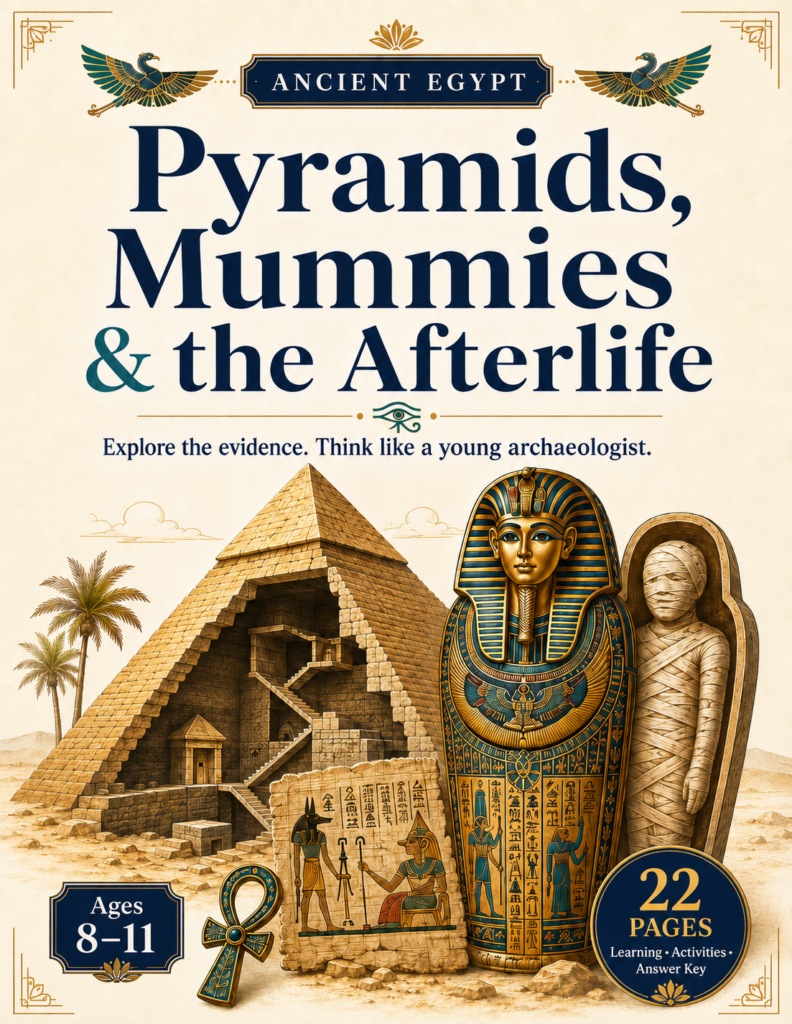
- Engineering & Burial Traditions: In our Ancient Egypt activities for kids (Pyramids, Mummies & Afterlife), students examine pyramid construction methods, mummification chemistry, tomb architecture, and how material artifacts reveal ancient beliefs about the afterlife.
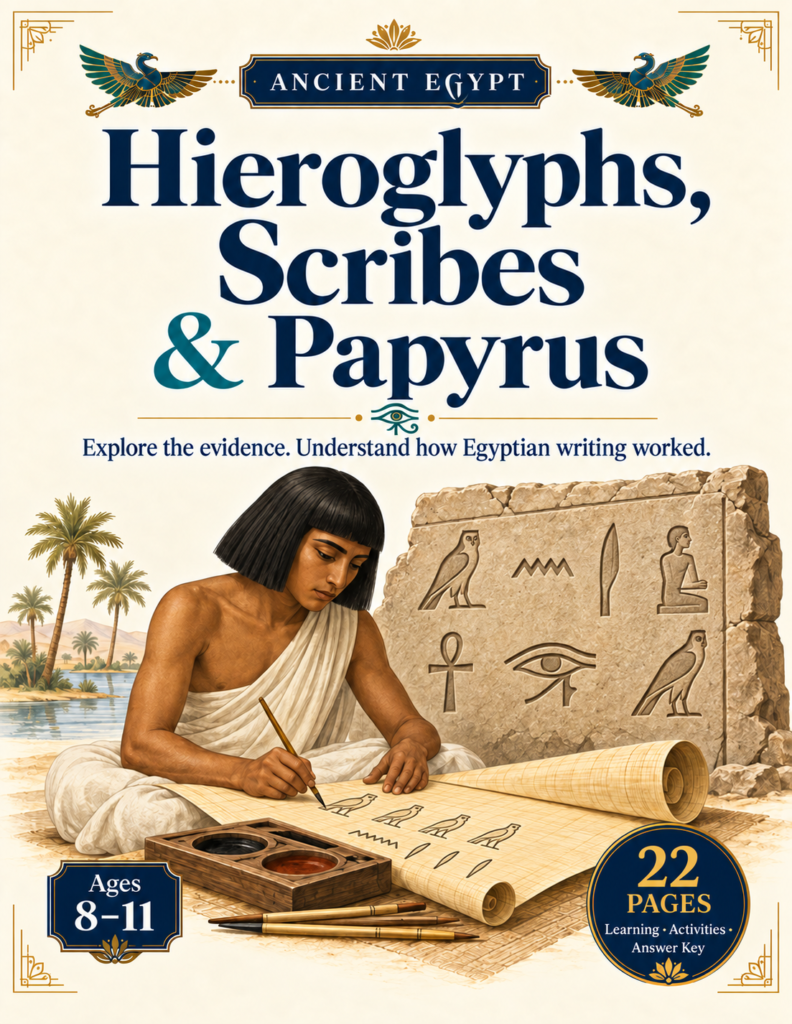
- Writing Systems & Historical Decipherment: Our Ancient Egypt unit study (Hieroglyphs, Scribes, Papyrus & Rosetta Stone Activities) puts learners in the shoes of royal scribes and linguistic detectives—exploring papyrus production, scribal training, and how the multilingual Rosetta Stone unlocked a lost script.
- Governance, Temples & Mythology: With our Ancient Egypt religion unit study (Pharaohs, Gods & Temples), children analyze the dual role of the pharaoh as political ruler and sacred intermediary, alongside temple complexes and mythological cycles.

2. Ancient Greece: Myths, Civic Culture & Public Spectacle
Our Greek studies move beyond isolated storybook myths to show how religion, athletics, and theater anchored civic life across independent city-states:
- Sacred Geography & Mythology: Our Ancient Greece unit study (Gods, Myths & Sacred Places) connects Mount Olympus, oracles, and temple sanctuaries to how ancient Greeks explained natural forces and civic identity.
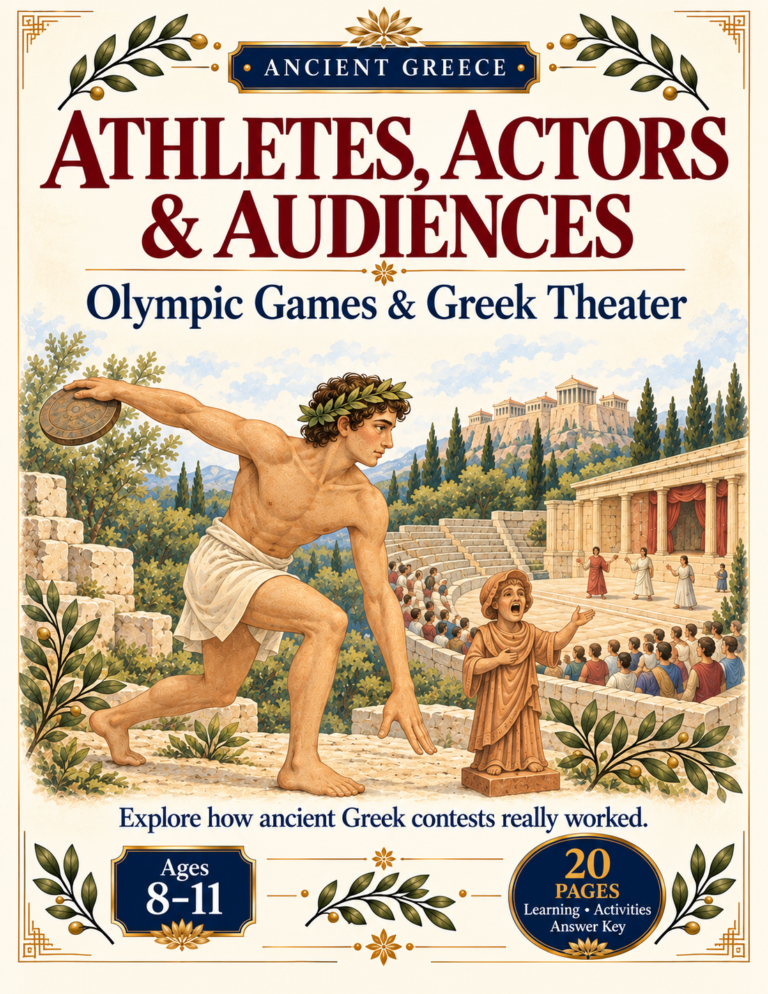
- Athletics & Dramatic Arts: In our Ancient Greece activities for kids (Olympic Games & Greek Theater), learners investigate the truces, events, and civic pride of Olympia alongside the acoustics, masks, and storytelling structure of open-air Greek amphitheaters.


3. Ancient Rome: Civic Engineering & Public Spectacle (Ages 8–11)
Rome’s longevity rested on both monumental infrastructure and carefully managed public entertainment. Our two Roman units examine both pillars side by side:
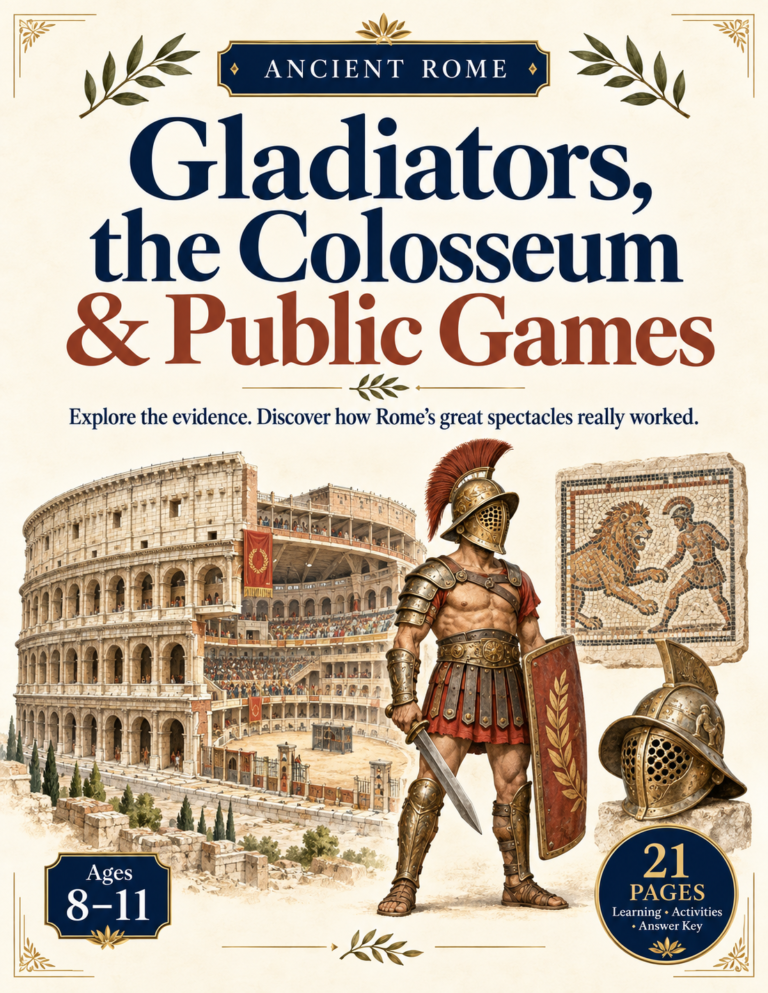
- The Mechanics of the Arena: In our Ancient Rome unit study (Gladiators & Colosseum: Roman Public Games), students look past Hollywood myths to investigate gladiator training schools, arena engineering, crowd management, and the political role of public games.
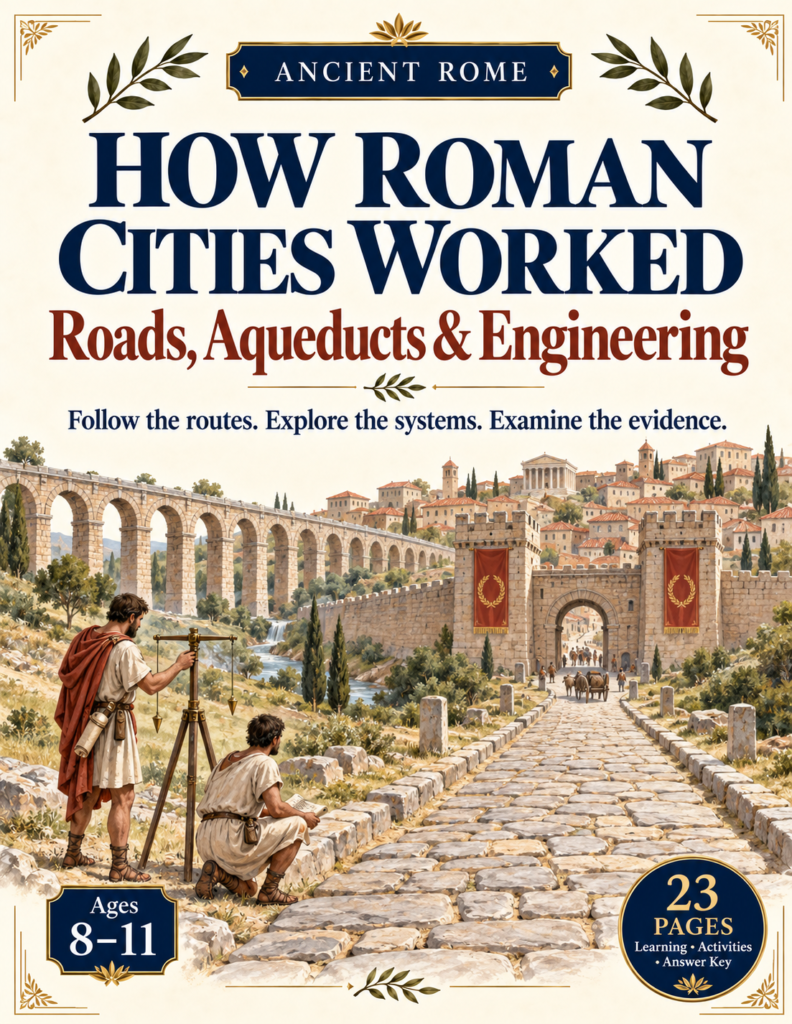
- Infrastructure That Built an Empire: Our companion Ancient Rome unit study on engineering (Roman Roads, Aqueducts & Engineering) unpacks multi-layered road construction, gravity-fed aqueduct gradients, arches, and concrete—showing how physical infrastructure unified distant provinces.

4. Medieval Europe: Chivalry, Armor & Siege Engineering (Ages 8–11)
Middle Ages units often blur centuries of European history into generic fairy-tale castles. Our medieval volumes focus on the practical realities of defense, training, and warfare:
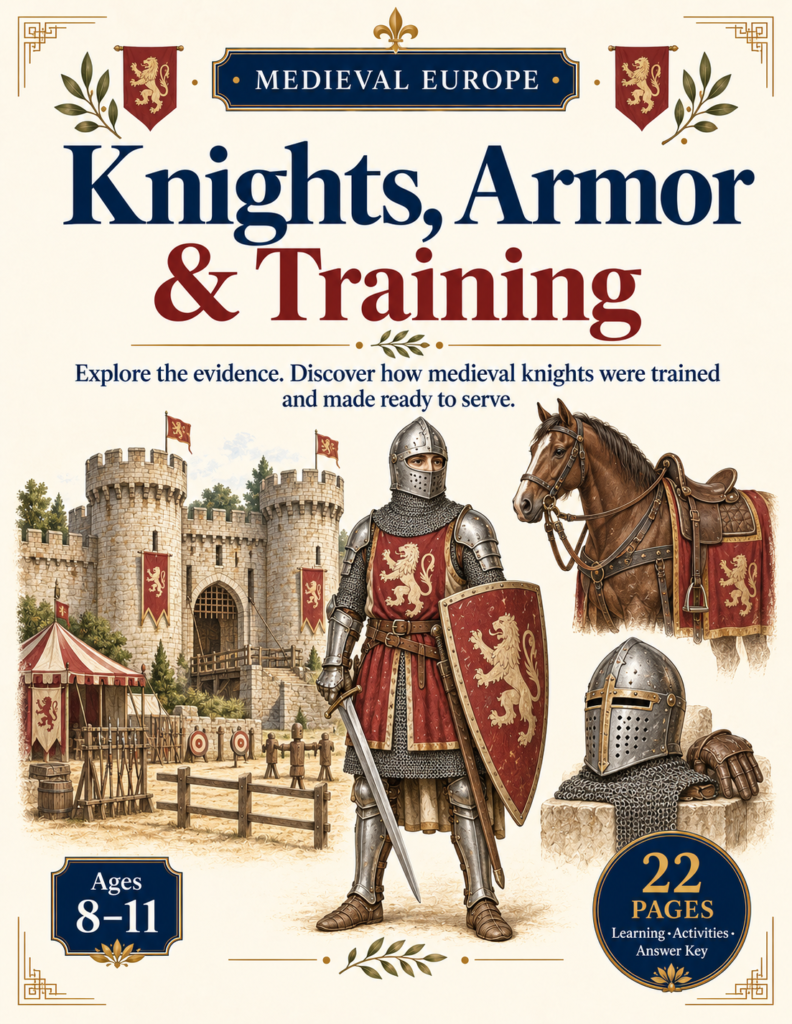
- Training, Heraldry & Armor Systems: In our Medieval Knights unit study (Knight Armor & Training Workbook), learners trace the progression from page to squire to knight, analyze how plate and chain armor balanced protection against mobility, and decode heraldic shields.
- Fortification Design & Siege Tactics: Our Medieval Castle activities (Sieges & Engineering) treat castles as evolving defensive machines—examining concentric walls, gatehouses, trebuchets, and the engineering tug-of-war between attackers and defenders.

5. Modern Turning Points: The Road to the American Revolution (Ages 7–10)
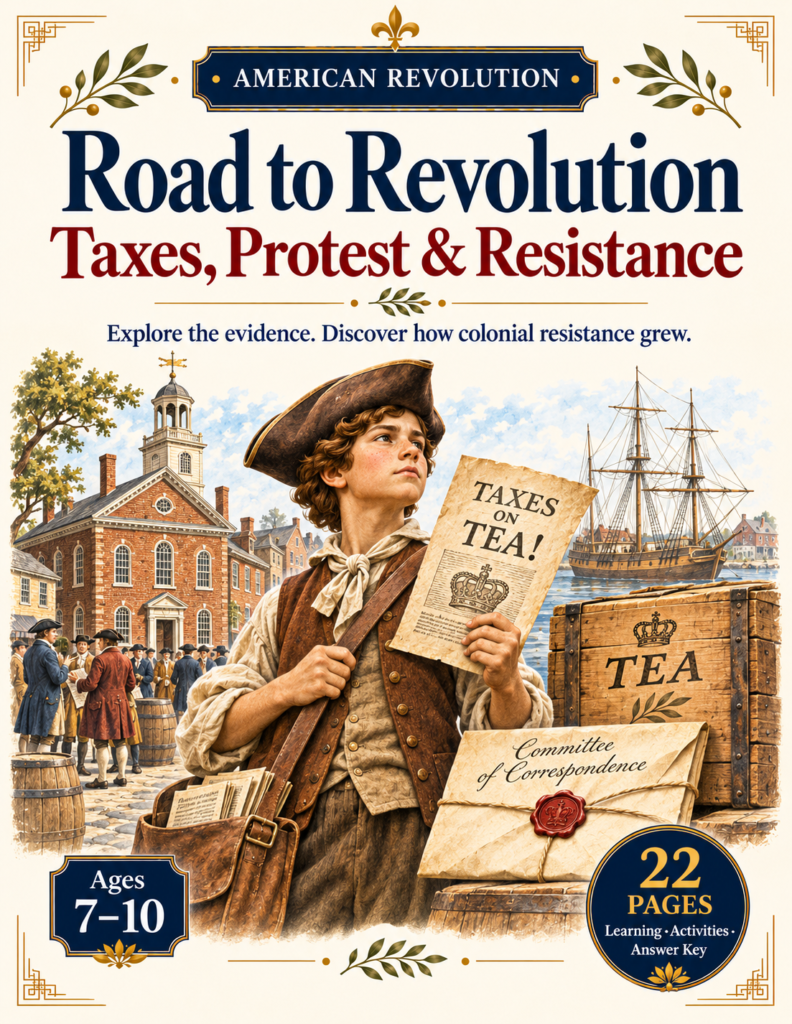
- Cause, Escalation & Primary Perspectives: Designed for younger elementary investigators, our American Revolution unit study for homeschool (Road to Revolution) traces the step-by-step chain of taxation debates, colonial protests, and pivotal decisions that transformed thirteen colonies into an independent nation—teaching children to read historical events as a sequence of human choices rather than inevitable outcomes.
Why a Thematic Microscope Builds Stronger Historical Thinkers
Across every civilization and era, focused history unit studies for kids cultivate four core habits that transfer across all humanities and STEM subjects:
- Systems & Engineering Literacy: Children see that pyramids, aqueducts, Greek theaters, and concentric castles were solutions to real physical, geographic, and logistical problems.
- Primary-Source Detective Work: Whether auditing a Rosetta Stone inscription, a heraldic crest, or a colonial broadside, learners practice separating direct physical evidence from later assumptions.
- Cause-and-Effect Precision: Instead of memorizing isolated dates, students trace why one event or technological breakthrough triggered the next.
- Living Catalog Growth: Because Focused History is an active, expanding pillar within the Tiny Joy Studio Learning Library, families can bookmark this guide as dozens of new thematic units—spanning additional world civilizations, scientific breakthroughs, and pivotal historical eras—join the lineup.
Practical Ways to Use Focused History in Your Homeschool or Classroom
Because every unit is print-and-go with embedded visual diagrams and complete answer keys, you can tailor the series to fit your schedule:
- Deep-Dive Civilization Blocks: Combine all three Ancient Egypt units or pair both Ancient Rome volumes for an immersive, multi-week thematic study that examines a single society from multiple angles.
- The “Microscope + Day-in-the-Life” Pairing: Read a Time Traveler adventure to experience daily social life in an era, then follow up with the matching Focused History unit to unpack the architecture, technology, or events behind the story.
- Multi-Age Sibling & Co-Op Units: Use the visual diagrams, artifact sorting, and mapping activities with younger learners (ages 7–8) while challenging older students (ages 9–11) to write evidence-backed explanations using the answer-key rubrics.
If you are ready to move past dry timeline memorization and show your young learners how ancient engineers, scribes, builders, and citizens actually shaped their world, pick a topic in Focused History and put the past under the microscope.
Ready to Investigate the Past?
Start with a civilization, invention, or historical turning point that sparks your child’s curiosity. Each Focused History workbook offers a self-contained opportunity to explore how the past worked through evidence, illustrations, and hands-on activities.